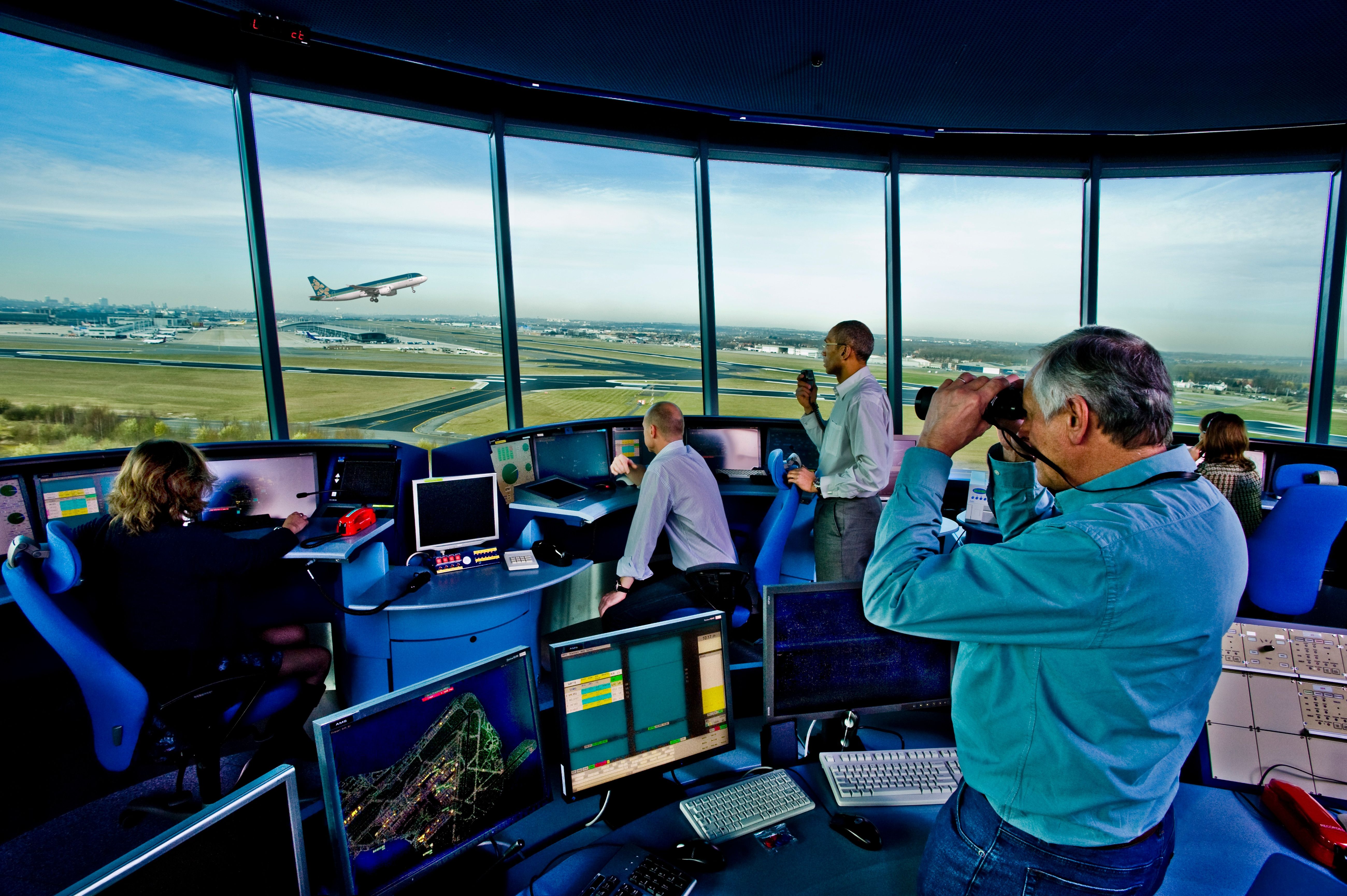
The International Civil Aviation Organization (ICAO) sets a minimum standard of spoken English for pilots and air traffic controllers. On its six-level scale, Level 4, called "Operational", is that minimum.
Pilots and controllers must prove it before they use aviation radio. Like a driving licence, the endorsement records a result and carries a date for renewal. That renewal date is where HR and training leaders come in.
What does Level 4 mean on the ICAO scale?
Level 4 is the Operational level, the minimum ICAO sets for working on aviation radio, on a scale of six.
The European Union Aviation Safety Agency (EASA), 2024 publishes the scale. ICAO describes Level 4 as a minimum operational level that should be valid across all its Member States.
| Level | Name | Where it sits against the minimum |
|---|---|---|
| 1 | Pre-elementary | Below the minimum |
| 2 | Elementary | Below the minimum |
| 3 | Pre-operational | Below the minimum |
| 4 | Operational | The minimum |
| 5 | Extended | Above the minimum |
| 6 | Expert | Highest level |
Source: EASA, Language Proficiency Rating Scale, 2024.
"Operational" describes what a speaker can do on the job. In EASA's scale, an Operational speaker handles common, concrete, work-related topics, speaks at an appropriate pace and usually keeps grammar under control. Misunderstandings get resolved by checking, confirming or clarifying. An unexpected complication may slow understanding or call for clarification.
The Civil Aviation Authority of Singapore (CAAS), 2025 lists the six areas an assessment covers: pronunciation, structure, vocabulary, fluency, comprehension and interactions. The overall rating follows the weakest area. A candidate who rates well on five areas and one level lower on the sixth receives the lower overall level.
That rule has a practical consequence. Strong fluency can't cover for weak comprehension, so the weakest skill is the one worth practising.
Who has to hold a Level 4 endorsement, and who runs the test?
Pilots, flight navigators and air traffic controllers need a valid language endorsement to use radio communication.
The UK Civil Aviation Authority lists those roles. It also states that anyone below Level 4 can't get a licence with radiotelephony privileges.
ICAO publishes the requirements. The ICAO page describes a service that supports formal recognition of tests that meet them, rather than a test of its own. In Singapore, the assessment runs through authorised testing centres, with two language testers (CAAS, 2025).
ELSA Business helps staff prepare for the test with AI-powered speaking practice and individualised feedback.
How often is Level 4 re-assessed?
Level 4 holders are re-assessed every three years in Singapore and every four years under EASA and UK CAA rules.
Higher levels run on longer cycles, and Level 6 is treated differently by each authority.
| Level | Name | Singapore (CAAS) | EASA | UK CAA |
| 4 | Operational | Every 3 years | Every 4 years | Every 4 years |
| 5 | Extended | Every 6 years | Every 6 years | Every 6 years |
| 6 | Expert | No interval set | No reassessment | For life; controllers every 9 years |
Sources: CAAS AC FCL-2(4), effective 1 July 2025; EASA, reassessment of language proficiency; UK CAA, language proficiency.
Check the authority that licenses your crews. The interval sets how often a programme owner needs a retest plan.
How does an ICAO-style assessment work, step by step?
An assessment checks six language areas, gives one overall level, and records the level and re-test date on the licence.
In Singapore, the process runs like this (CAAS, 2025):
- The candidate books the test with an authorised testing centre.
- Two language testers assess the candidate.
- Each of the six areas receives a level.
- The weakest area sets the overall rating.
- The level, assessment date and any re-test date go onto the licence.
Other authorities set their own processes, so treat this as one worked example.
Why does Level 4 matter for safety?
A 2023 ICAO regional safety group paper identified nearly 50 language-related communication failures in voluntary NASA ASRS reports from 2017 to 2022.
The ICAO RASG-PA working paper, 2023 focuses on Latin America and the Caribbean. Several of the events appear to involve airports in Colombia, Mexico, Panama and the Dominican Republic. The paper adds that reporting is voluntary, so many events probably go unreported.
That's a small, voluntary sample. It isn't an incident rate, and it says nothing about any one airline. For the wider safety case, read English for Aviation: Why Language Is a Safety-Critical Skill.
What doesn't a Level 4 result tell an airline?
A Level 4 result records one assessment for one licence holder, so it can't show how a whole workforce speaks.
The endorsement belongs to licence holders such as pilots, flight navigators and controllers. Cabin crew, ramp, dispatch and maintenance teams also work in English, and the airline sets the standard for them.
Between assessments, the endorsement records a date, not a trend. The interval is the part an HR or training leader controls: how often staff speak, with what feedback, in which scenarios. Weekly classes can limit that. Corporate English Training: Why Weekly Classes Limit Speaking Time explains why.
How can training support staff between assessments?
Regular speaking practice with feedback gives staff more chances to speak before the next retest.
ELSA Business provides AI-powered speaking practice and individualised feedback for employees developing their spoken English. Organisations can build role-relevant practice around situations such as a ramp handoff or a passenger conversation, and programme owners can see progress across teams.
That visibility has a practical use. A programme owner can see who needs more practice before a retest date arrives. Specific capabilities can vary by configuration and product version.
What have airline and air traffic control programmes reported?
Two ELSA Business aviation customers report gains in speaking confidence and proficiency, but each result belongs to its own programme.
An anonymised APAC airline coached 2,117 cabin crew and frontline employees. After six months, 91% of survey respondents reported improved English speaking ability. The figures are self-reported, from 473 respondents, about 22% of active learners (APAC airline case study). These are the teams a licence endorsement doesn't cover.
The University of Languages and International Studies (ULIS), part of Vietnam National University, Hanoi, ran a blended programme for 172 air traffic control learners, with 60% classroom teaching and 40% self-directed practice on ELSA. Average ELSA Proficiency Score rose from 60.6 to 70.0 between June and July 2026. All 48 survey respondents reported improved English (ULIS case study). The page doesn't report ICAO levels or test results.
What should an airline ask a training vendor about ICAO?
Ask whether the vendor offers an ICAO-recognised test or practice, because the two are different products.
- Is the product a recognised test or a practice tool, and who recognised it?
- Which of the six areas does the feedback cover?
- How is progress reported by role, base or shift?
- Do the scenarios match the roles in your operation, not only pilots and controllers?
- What does the vendor claim about test results, and what evidence sits behind the claim?
- Where does learner data sit, and who can see it?
Frequently asked questions
Is Level 4 the top of the ICAO scale?
No. The scale has six levels. Level 4 is the minimum operational level, Level 5 is Extended and Level 6 is Expert. Re-assessment gets less frequent as the level rises, and Level 6 is handled differently by each authority, as the table above shows.
Does ICAO run the English test itself?
The ICAO page describes a service that supports formal recognition of tests that meet ICAO requirements, rather than a test of its own. In Singapore, assessments run through authorised testing centres. Check with the national authority that licenses your crews for the tests it accepts.
What happens if a licence holder is rated below Level 4?
In Singapore, a licence is invalidated if proficiency is certified below Level 4. The UK CAA states that anyone below Level 4 can't get a licence with radiotelephony privileges. Other authorities have their own rules, so check the one that applies to your crews.
Can ELSA Business help staff prepare for the test?
Yes. ELSA Business provides AI-powered speaking practice and individualised feedback, which helps staff prepare for the test. Organisations can build role-relevant practice and see progress across teams. Capabilities can vary by configuration and product version. The assessment itself runs through the testing centres your licensing authority accepts.
Who needs a language endorsement besides pilots?
The UK CAA lists pilots, flight navigators and air traffic controllers as the roles that need a valid endorsement to use radio. For other roles, such as cabin crew, ramp and dispatch teams, the airline sets its own standard for spoken English.
For airline HR, training and safety leaders who want speaking practice built around aviation roles, see how ELSA for Aviation works, or book a demo of ELSA Business.