Most language training can't prove efficacy. ELSA can.
ELSA is built on published second-language acquisition research and checked against expert human raters, so the proficiency gains you report are real, specific and repeatable.
Five research principles decide what a learner practices next
ELSA's curriculum design draws on established second-language acquisition theory, not app trends. Every lesson traces back to one of five principles.
01
Intelligibility over accent
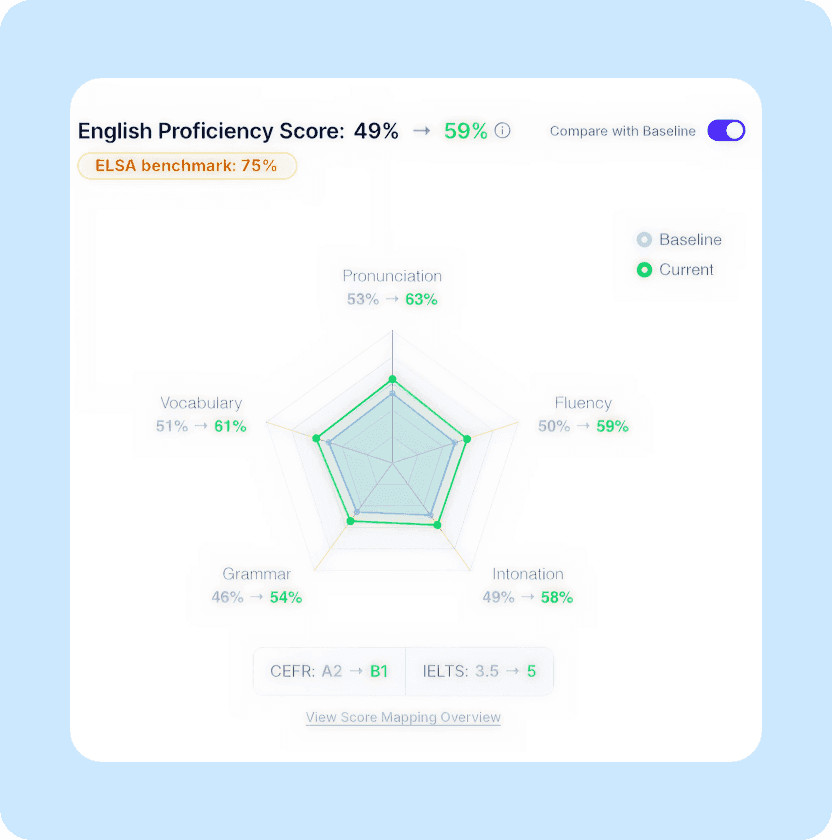
Learners are scored on being understood, not on sounding native. Clarity beats a perfect accent.
02
Real situations, not scripts
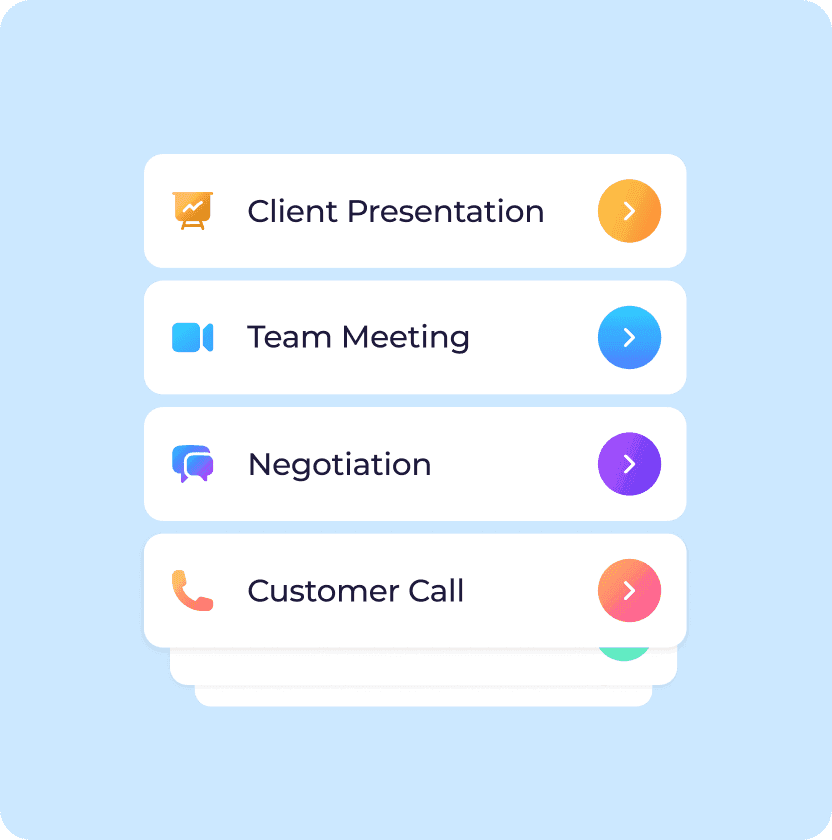
Practice mirrors the meeting, the pitch, the shift handoff. Not a textbook dialogue nobody actually has.
03
Difficulty optimized for learning
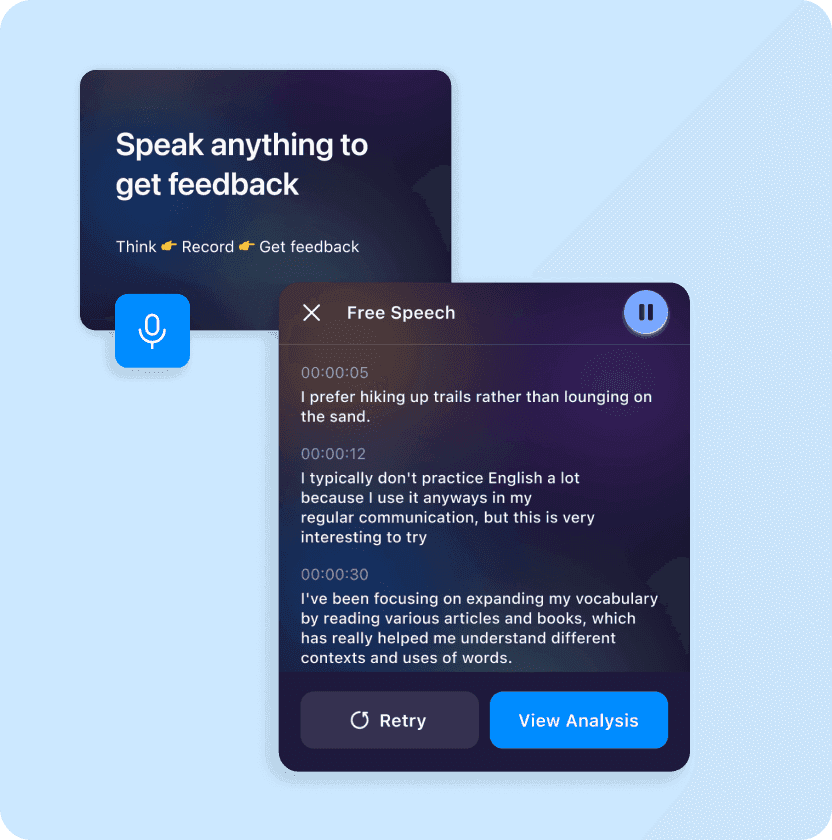
Content sits one step above what a learner already knows, the point at which language is actually acquired.
04
Practice without judgment
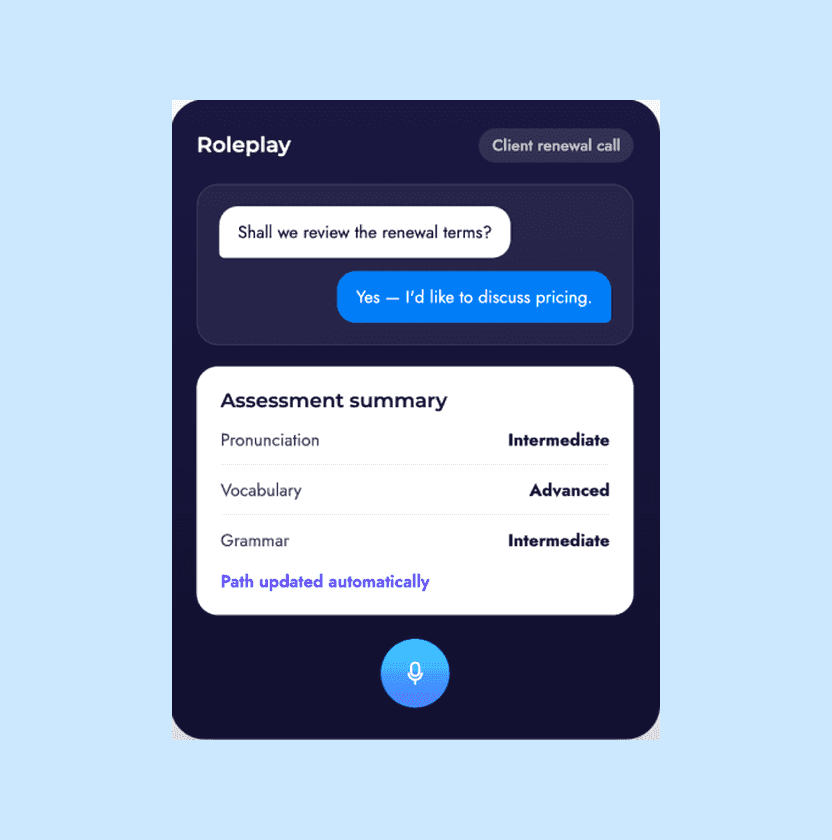
AI feedback removes the fear of getting it wrong in front of a colleague. A relaxed learner absorbs more.
05
A different path per learner
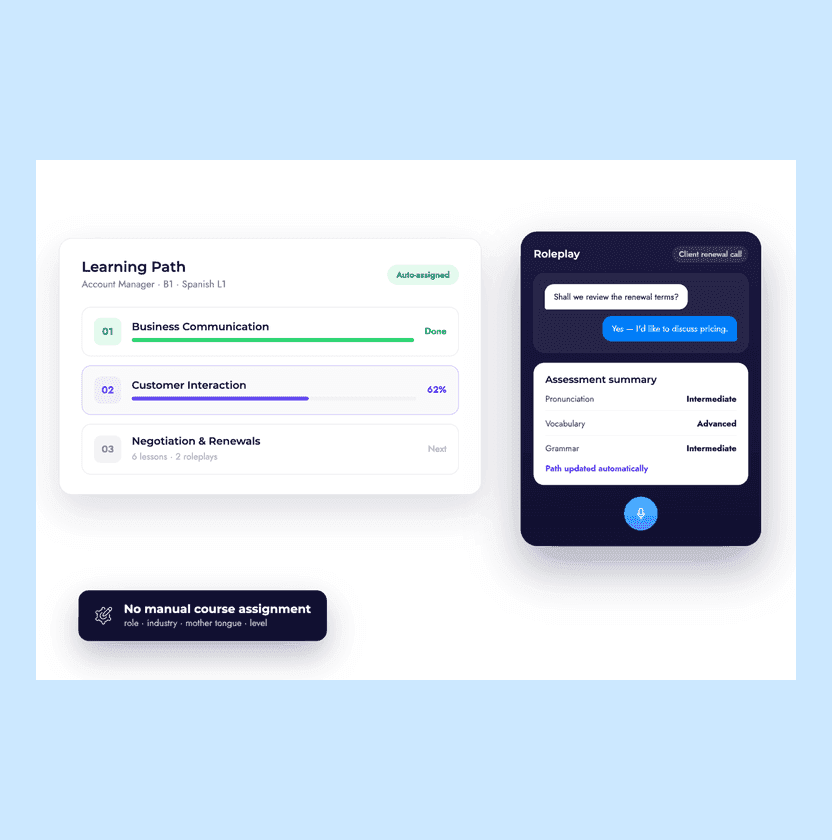
AI adjusts in real time to each person's level, goals and role, instead of one course for everyone.
One score. Five skills.
Mapped to standards HR and academia already trust.
The ELSA Proficiency Score (EPS) combines five measurable components into a single number, then maps that number to CEFR and IELTS, the benchmarks your organization already reports against.
EPS
0-100
Fluency
Intonation
Pronunciation
Grammar
Vocabulary
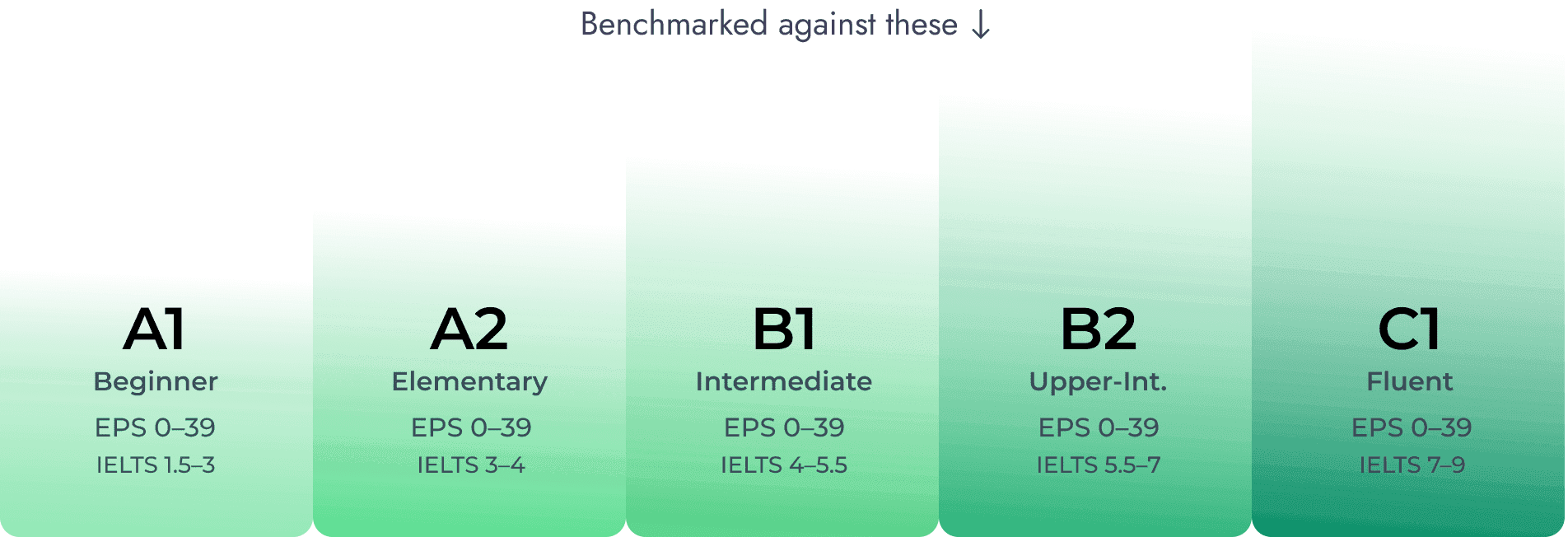
Benchmarked against
expert human ratings.
Independent testing shows strong alignment with established proficiency standards: 94.23% of EPS predictions fall within ±1.0 IELTS band of expert ratings, with 93.88% agreement with human CEFR raters.
Active learners show measurable gains
before day 30
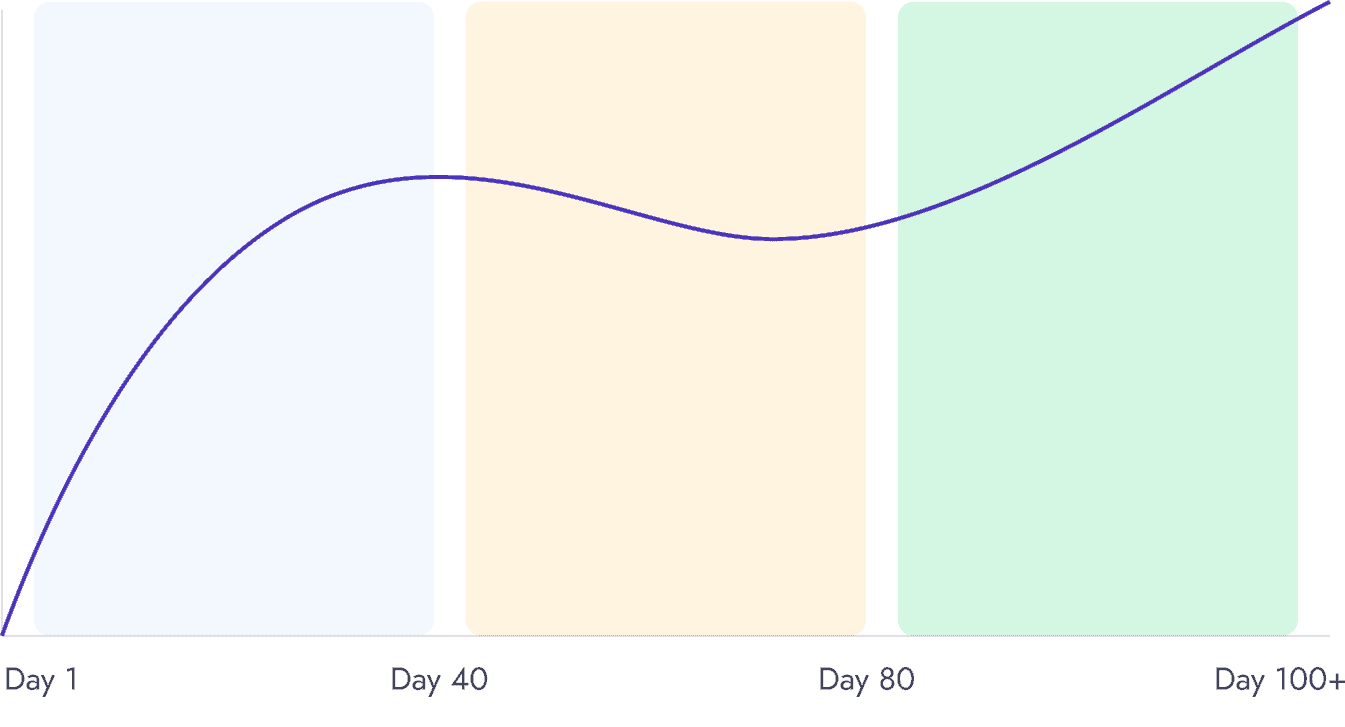
Rapid gains — Days 1–30
The steepest improvement window, as foundational pronunciation and fluency habits form.
Consolidation — Days 40–80
A normal consolidation phase. Gains slow as harder skills (grammar, vocabulary range) come into focus.
Steady competency — Day 100+
Consistent, compounding gains as learners move toward CEFR-level fluency.
What this looks like inside your organization
Learner
Practices real workplace scenarios, meetings, calls, reviews, in a private space, and gets feedback on exactly what to fix next.
Manager
Sees team readiness at a glance through the Admin Dashboard and monthly reporting, not just course-completion checkboxes.
Company
Tracks proficiency lift, engagement and productivity gains as one dataset leadership can act on.
100%
Sales learners +1 CEFR level
95%
Factory learners +1 CEFR level
275%
Growth in learner participation


Student
Builds the confidence to speak up in class, closing the gap between what a student knows and what a student says.
Teacher
Gets a dashboard that tracks progress automatically, cutting the workload of manual speaking assessments.
Admin
Sees measurable fluency and participation gains across a cohort, ready to report to boards, parents or accreditors.
79%
Students improved measurably
74%
Weekly engagement rate
2,500
Practice hours in 3 months


Your team already speaks English.
Now make it perform.
See how ELSA Business turns communication into a measurable competitive advantage — for the teams that need to build it, and the teams that need to refine it.
Book a Demo