

15+ best ways to learn English vocabulary and actually remember it
elsaspeakadmin
August 17, 2026
English for beginners
Learning new English vocabulary can feel overwhelming when you do not know where to start or how many words to study each day. In this guide, you’ll discover the best ways to learn vocabulary and how to remember new words longer.
How many new words should you learn per day?
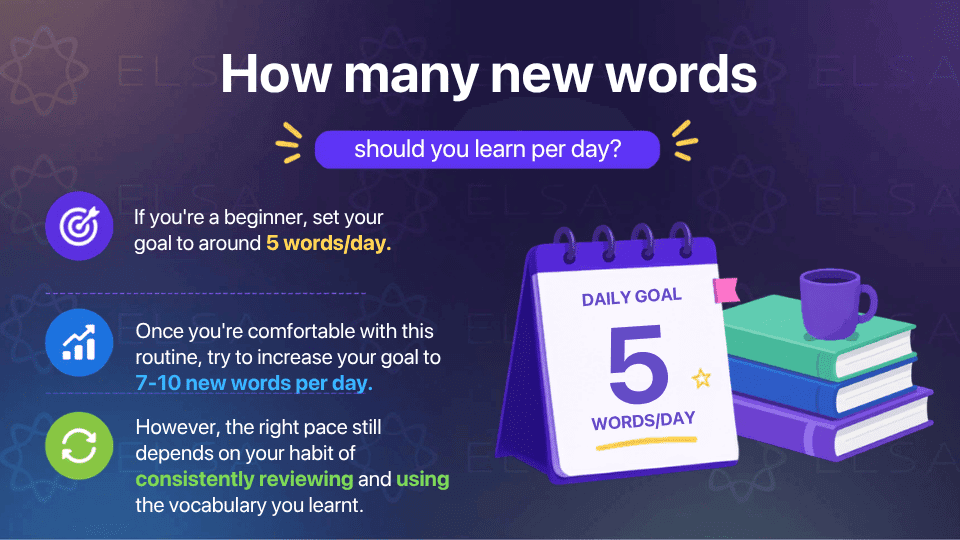
If you’re just starting to learn English vocabulary, one of the best ways to learn new vocabulary is to set your goal to around 5 words/day. This number can help you focus on understanding each word, remembering its meaning without memorizing too much at once.
Once you’re comfortable with this routine, try to increase your goal to 7-10 new words per day. However, the right pace still depends on your habit of consistently reviewing and using the vocabulary you learned.
How to choose the right vocabulary to learn
Choosing the right words to learn is one of the best ways to learn vocabulary. Here are a few practical tips to build a useful vocabulary list:
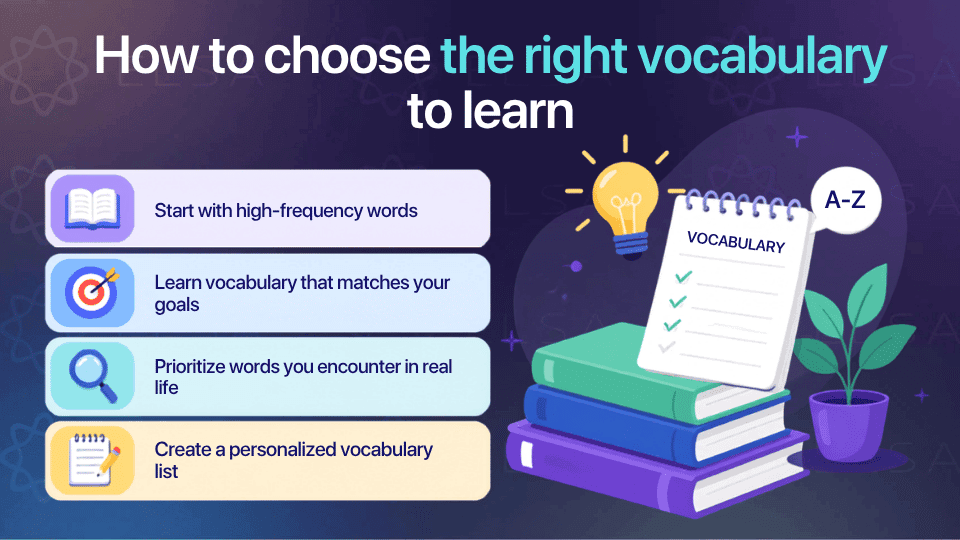
- Start with high-frequency words. Focus on the 3,000 most common words, which account for more than 90% of the words found in everyday situations.
- Learn vocabulary that matches your goals. The words you need depend on how you plan to use English. Use the table below to choose vocabulary that is most relevant to your needs.
| Goal | What to prioritize |
| Everyday communication | High-frequency words, phrases, small talk |
| Work and emails | Business vocabulary, formal writing phrases |
| IELTS/TOEIC preparation | Academic word list, topic-specific vocabulary |
| Travel | Travel phrases, directions, food and hospitality |
| Watching movies | Informal vocabulary, idioms, slang |
- Prioritize words you encounter in real life. Pay attention to words that repeatedly appear in conversations, social media, articles, movies, or at work. Learning vocabulary in context makes it easier to understand and remember.
- Create a personalized vocabulary list. Keep track of useful words based on your level, interests, and everyday needs. Instead of trying to memorize random word lists, build a collection you can actually use.
15+ best ways to learn English vocabulary effectively
Here are some of the best ways to learn basic English vocabulary:
Use the Write, Look, Cover, Repeat method (WLCR)
Learning vocabulary has always been a classic pen and paper type exercise. In order to use this method effectively, follow these steps:
- Take a piece of paper and draw a vertical line in the middle
- On one side, write down the vocabulary words in your native language and on the other side in your target language.
- Memorize the list.
- Cover one side and tick off all the words that you can remember. Then repeat.
Learn words in context, not in isolation
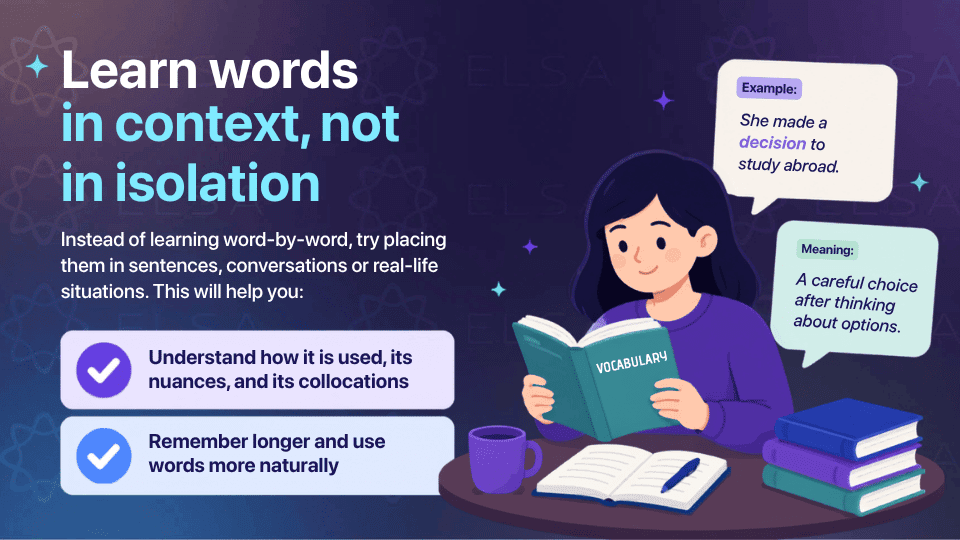
Instead of learning word-by-word, try placing them in sentences, conversations or real-life situations. This will not only help you understand how it is used, its nuances, and the words it commonly appears with (collocations), helping you remember longer and use words more naturally.
| Tips: To remember longer, try pairing this method with the WLCR and spaced repetition methods. This combination can help you remember vocabulary longer while also improving your ability to use words accurately in both spoken and written English. |
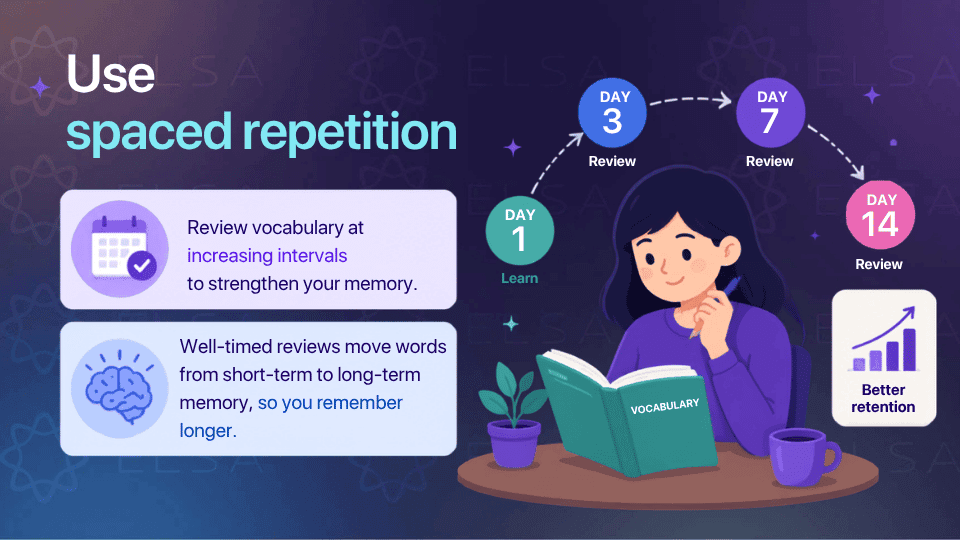
Use spaced repetition
One of the best ways to learn vocabulary in foreign language is using the spaced repetition method. This is a study technique that involves reviewing vocabulary at a gradually increasing amount of time.
By revisiting words you learned just before you’re likely to forget them, your memory will be reinforced and information will be moved gradually from short-term to long-term memory. With regular, well-timed reviews, you can remember words without having to relearn them from scratch.
Learn in chunks and phrases, not single words
Instead of learning individual words, learn common chunks and phrases. This helps you understand how words fit together, recognize them in context, and use the right structure in your spoken and written English.

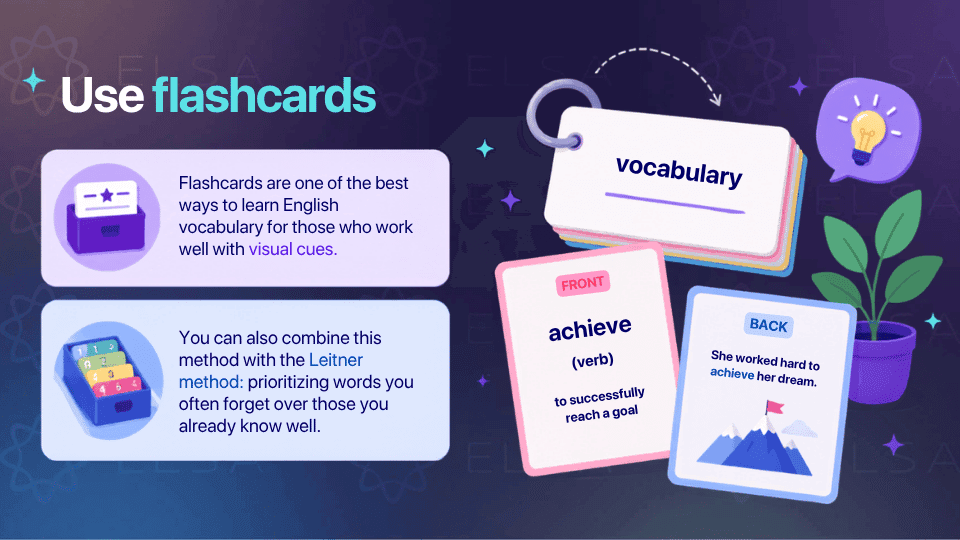
Use flashcards
Flashcards are one of the best ways to learn English vocabulary for those who work well with visual cues. This way of learning can also be more effective if you combine it with the Leitner method: prioritizing words you often forget over those you already know well.
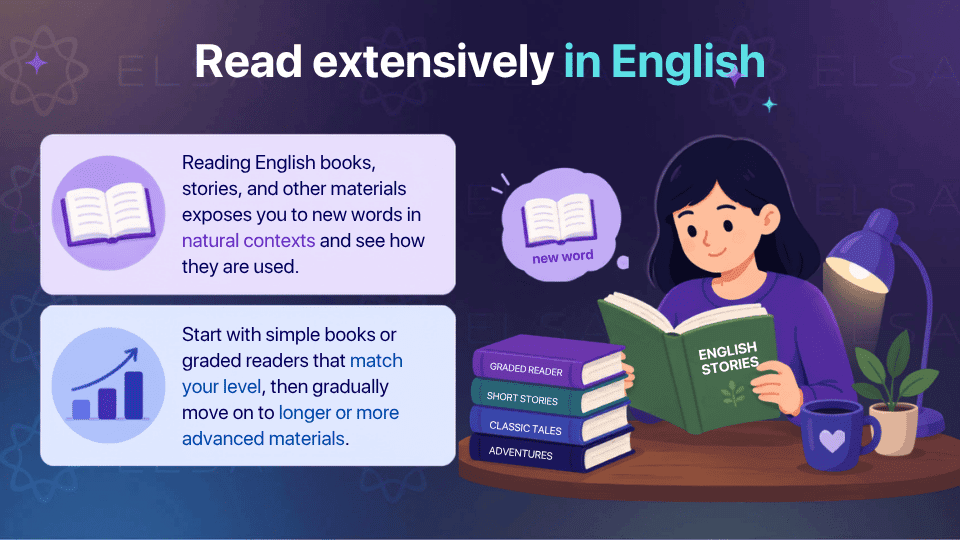
Read extensively in English
Reading English books, stories, and other materials exposes you to new words in natural contexts and gives you repeated opportunities to see how they are used. Start with simple books or graded readers that match your level, then gradually move on to longer or more advanced materials as your reading skills improve.
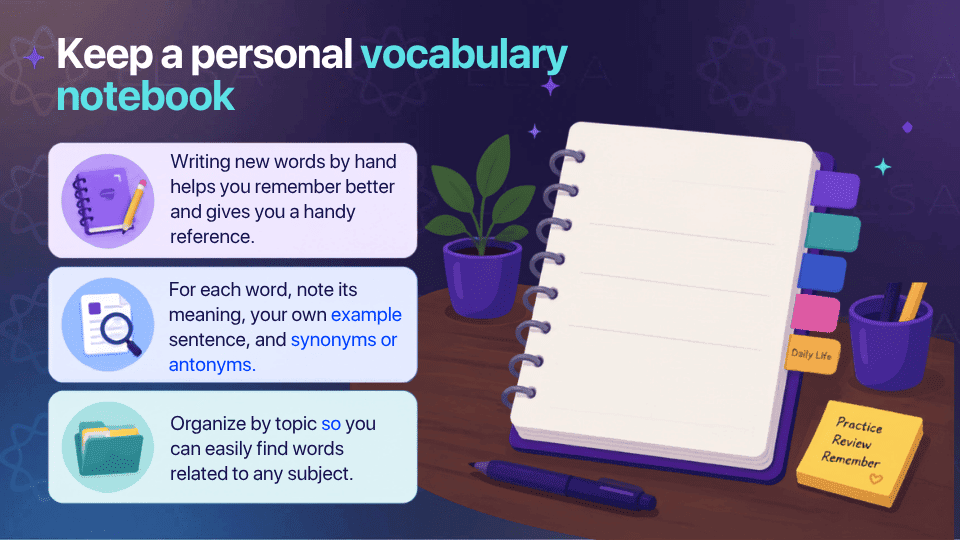
Keep a personal vocabulary notebook
Writing down new words by hand can make them easier to remember and gives you a useful reference for review. For each word, note its meaning, an example sentence of your own, and synonyms or antonyms. Organize your notebook by topic rather than by study date so you can quickly find vocabulary related to a specific subject.
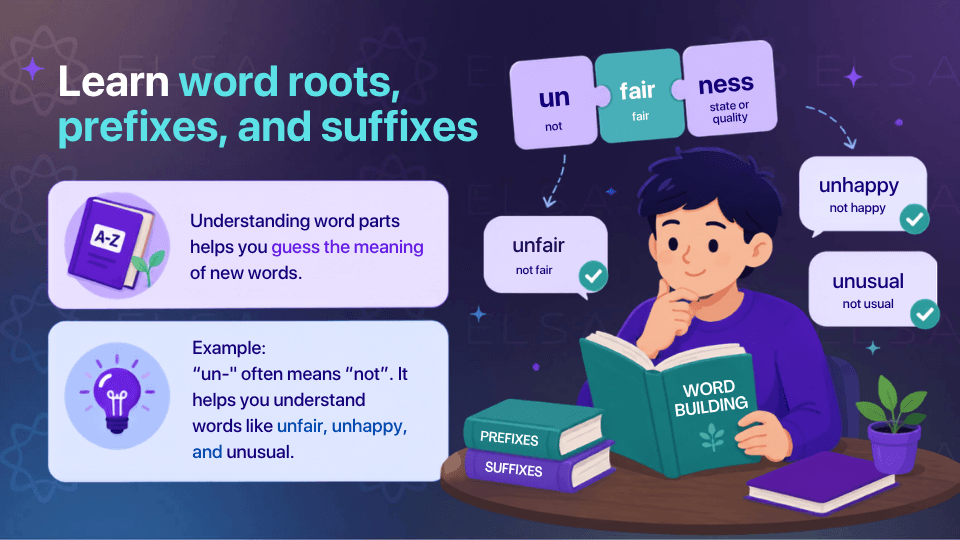
Learn word roots, prefixes, and suffixes
Understanding word roots, prefixes, and suffixes can help you guess the meaning of unfamiliar words without immediately reaching for a dictionary. For example, knowing that “un-” often indicates negation can help you understand words such as unfair, unhappy, and unusual even when you encounter them for the first time.
Watch movies and series in English
Did you know that one of the best ways to learn English vocabulary effectively is to watch movies and TV series in English? This method allows you to hear new words in real-life contexts. Visual cues, emotions, and storyline will also make those words easier to understand and remember.
If you’re an English beginner learning vocabulary, try these shows below:
- Friends
- Modern Family
- The good place
- Forrest Gump
- Toy Story
- Shrek
| Tips: Start with English subtitles instead of subtitles in your native language. When you hear a new word or useful phrase, pause the video, check its meaning, and repeat the sentence aloud to practice both vocabulary and pronunciation. |

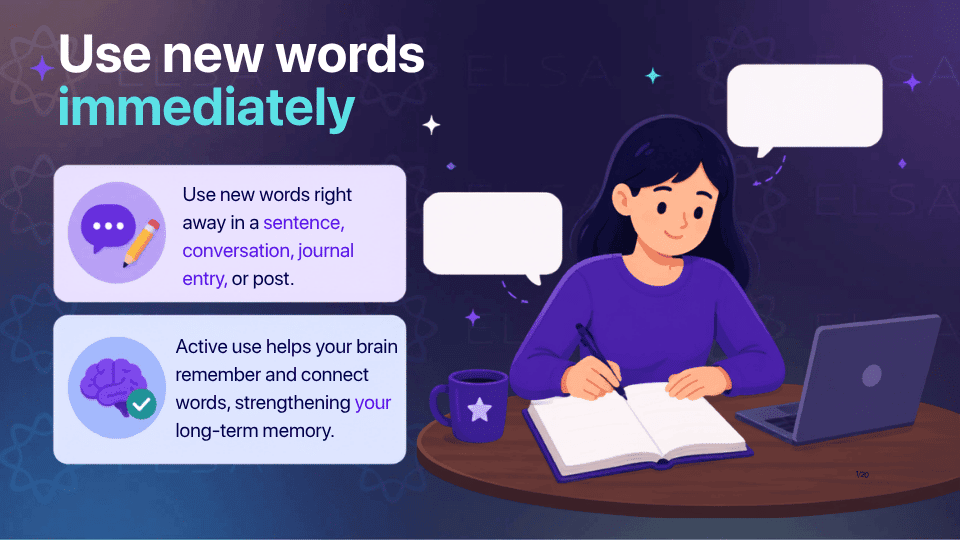
Use new words immediately
Remember the principle “use it or lose it”? Once you learn a new word, try to use it immediately in a sentence, conversation, journal entry, or a social media post. By actively applying this principle, your memory will continuously retrieve and connect the word, strengthening your long-term memory rather than simply recognizing it when you read.
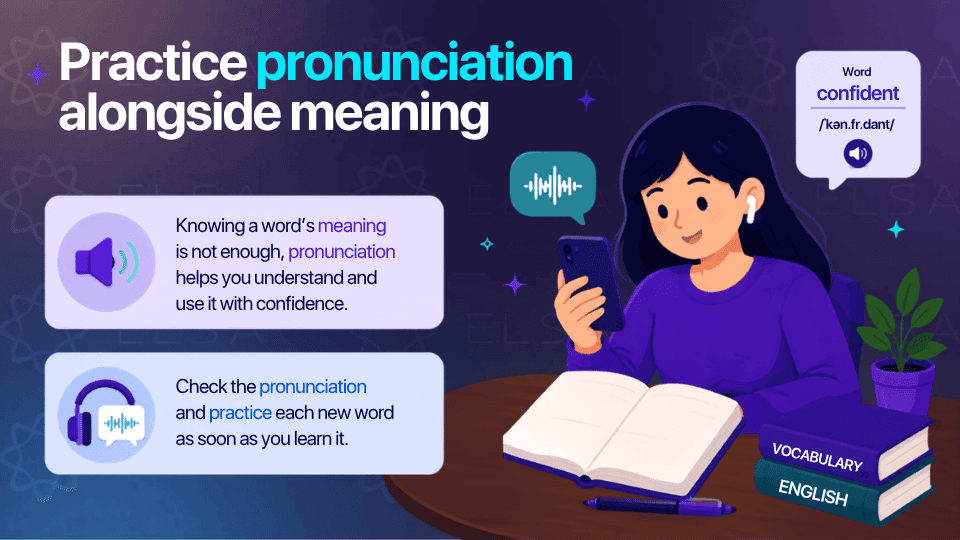
Practice pronunciation alongside meaning
Knowing what a word means is only part of learning it. If you do not know how to pronounce it, you may struggle to recognize the word when listening or feel hesitant when using it in conversation. Make pronunciation practice part of your vocabulary routine by checking the pronunciation and practicing each new word as soon as you learn it.
>> To practice this method, ELSA Speak can help you practice individual words and get instant AI-powered feedback on your pronunciation, so you can build both vocabulary and speaking confidence at the same time. Try using ELSA now!
Learn vocabulary by topic/theme
Learning vocabulary grouped by a topic or a theme is one of the best ways to learn new vocabulary. This is because the same words often appear together in real-life situations. You can use mind maps or digital flashcards to help organize and review words as connected sets.

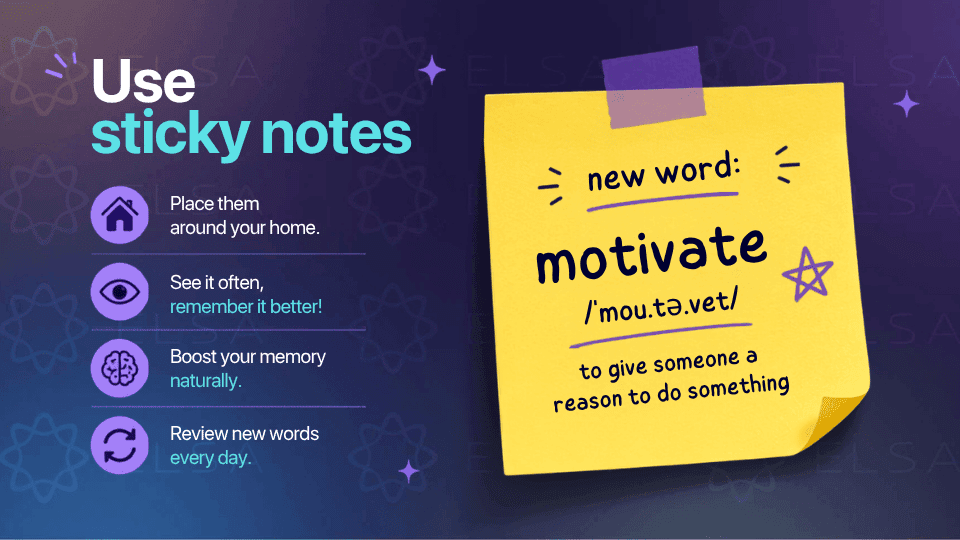
Use sticky notes
Sticky notes are a great way to remind us about new vocabularies! Try to place them everywhere around the house: from the fridge, to the mirror, computer screen, etc. This can help you revise new words naturally without needing to sit at a desk.
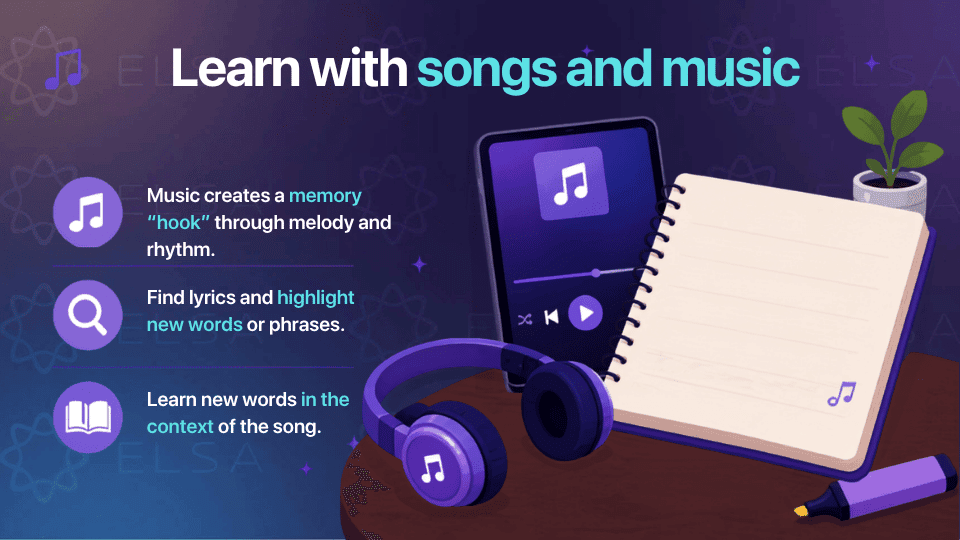
Learn with songs and music
Music can make new vocabularies easier to remember by creating a memory “hook” through its melody and rhythm. Pick your favorite song, find the lyrics, and highlight unfamiliar words or phrases, then learn them in the context of the song instead of remembering them as isolated words.
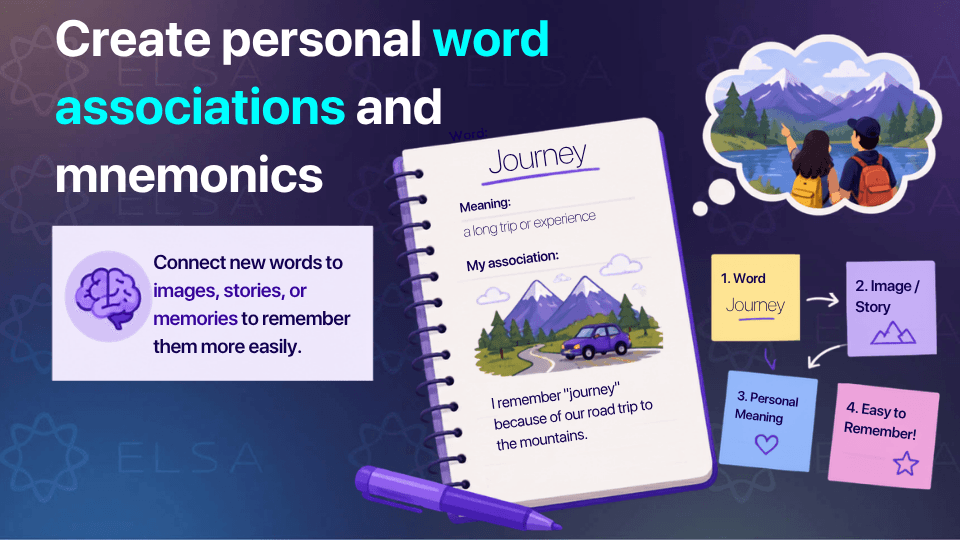
Create personal word associations and mnemonics
This is one of the best ways to learn basic English vocabulary. By creating a personal connection between new words and an image, story, or personal meaningful memory, these associations will give your brain a variety of ways to remember the word easier.
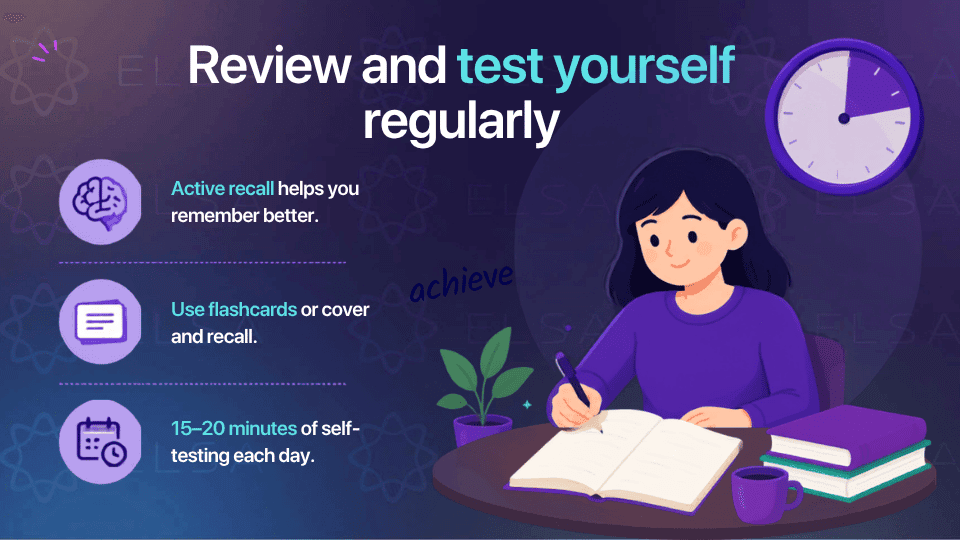
Review and test yourself regularly
Did you know that testing is also one of the best ways to learn vocabulary in foreign language? Active recall is often more effective than passive review. Try testing your memory by using flashcards, or simply cover up the meanings and try to recall them yourself. Even 15-20 minutes of self-testing each day can be more effective than cramming vocabulary into 1 long study session once a week.
Frequently Asked Questions
What is the fastest way to learn new vocabulary?
The fastest way to learn vocabulary is active recall, spaced repetition, and learning words in context.
Is it better to learn vocabulary by topic or randomly?
Learning words grouped by a topic or theme is more effective because related-words are easier to remember, and use in real-life situations.
What app is best for learning English vocabulary?
The best learning app heavily depends on your goal, but ELSA Speak is a strong choice for building vocabulary alongside pronunciation and speaking skills. With ELSA Speak, you can:
- Search up vocabulary using the dictionary feature.
- Learning new vocabulary through roleplaying with ELSA AI
- ELSA gives instant feedback on pronunciation
- You sound more natural and confident
- New lessons help you stay updated with English trends
Each person has their own best ways to learn vocabulary, but the effectiveness depends heavily on how committed you are to your own learning schedule. For more beginner-friendly tips, visit ELSA Speak’s English Communication Tips category for practical lessons and strategies to improve your English skills.