

How to Learn English: 12 effective steps to speak fluently fast
elsaspeakadmin
September 22, 2026
English for beginners
For beginners, how to learn English can be a difficult question when you do not know where to start. But with the right strategy, your skills can be built step by step without trying to learn everything at once. This guide below covers 12 practical steps to help you learn English more effectively and speak with greater confidence.
Step 1: Set clear and realistic goals
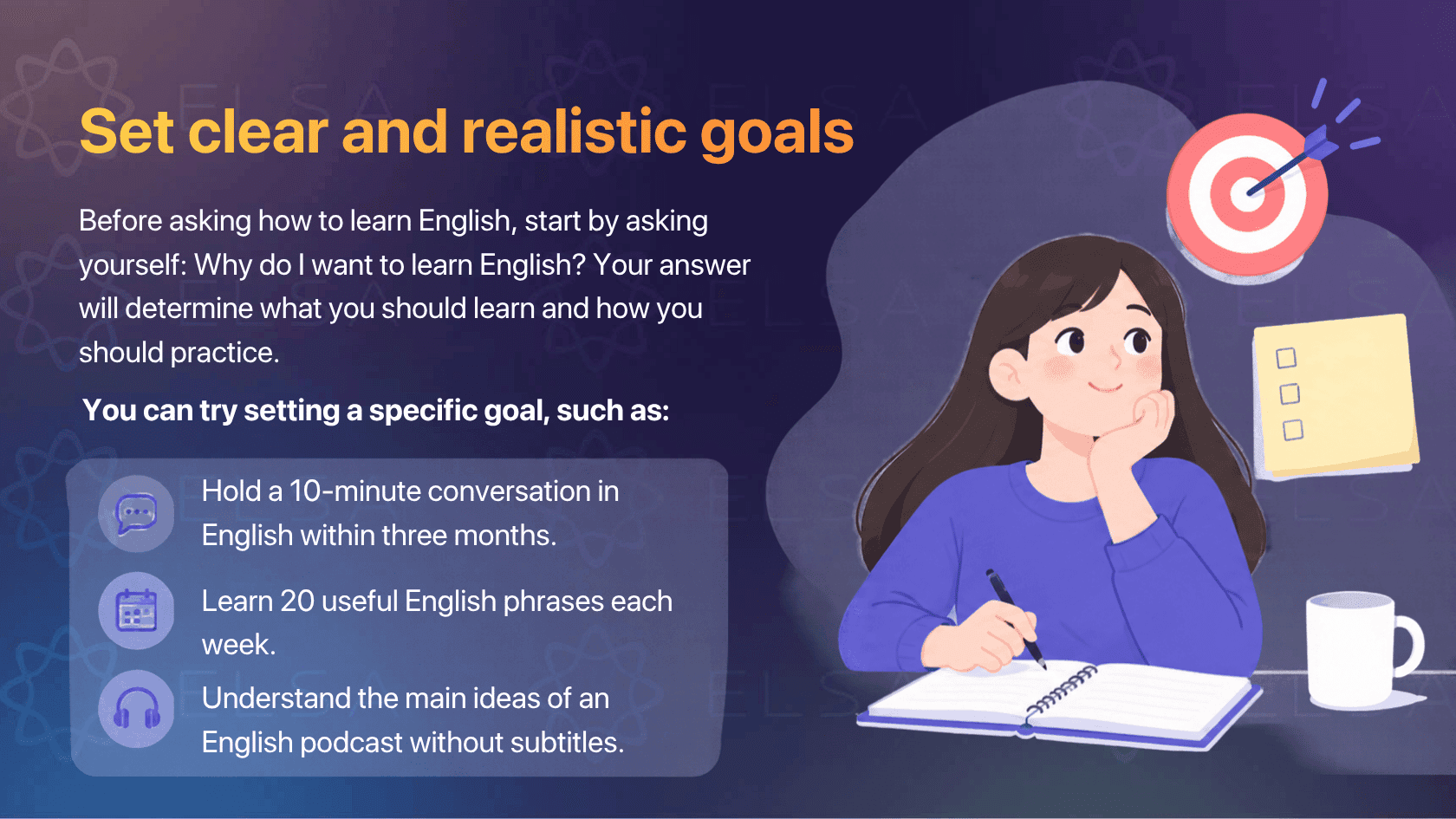
Before asking how to learn English, start by asking yourself: Why do I want to learn English? Your answer will determine what you should learn and how you should practice.
You can try setting a specific goal, such as:
- Hold a 10-minute conversation in English within three months.
- Learn 20 useful English phrases each week.
- Understand the main ideas of an English podcast without subtitles.
You can also set your goals by using the SMART (Specific - Measurable - Achievable - Relevant - Time-bound) framework:
- Specific: Define exactly what you want to achieve.
- Measurable: Choose something you can track.
- Achievable: Set a realistic target for your current level.
- Relevant: Make sure the goal supports your actual needs.
- Time-bound: Give yourself a deadline.
For example: Instead of saying “I want to improve my English,” try:
→ I will practice speaking for my IELTS test for 15 minutes a day, five days a week for the next three months.
Step 2: Build a strong foundation with high-frequency vocabulary
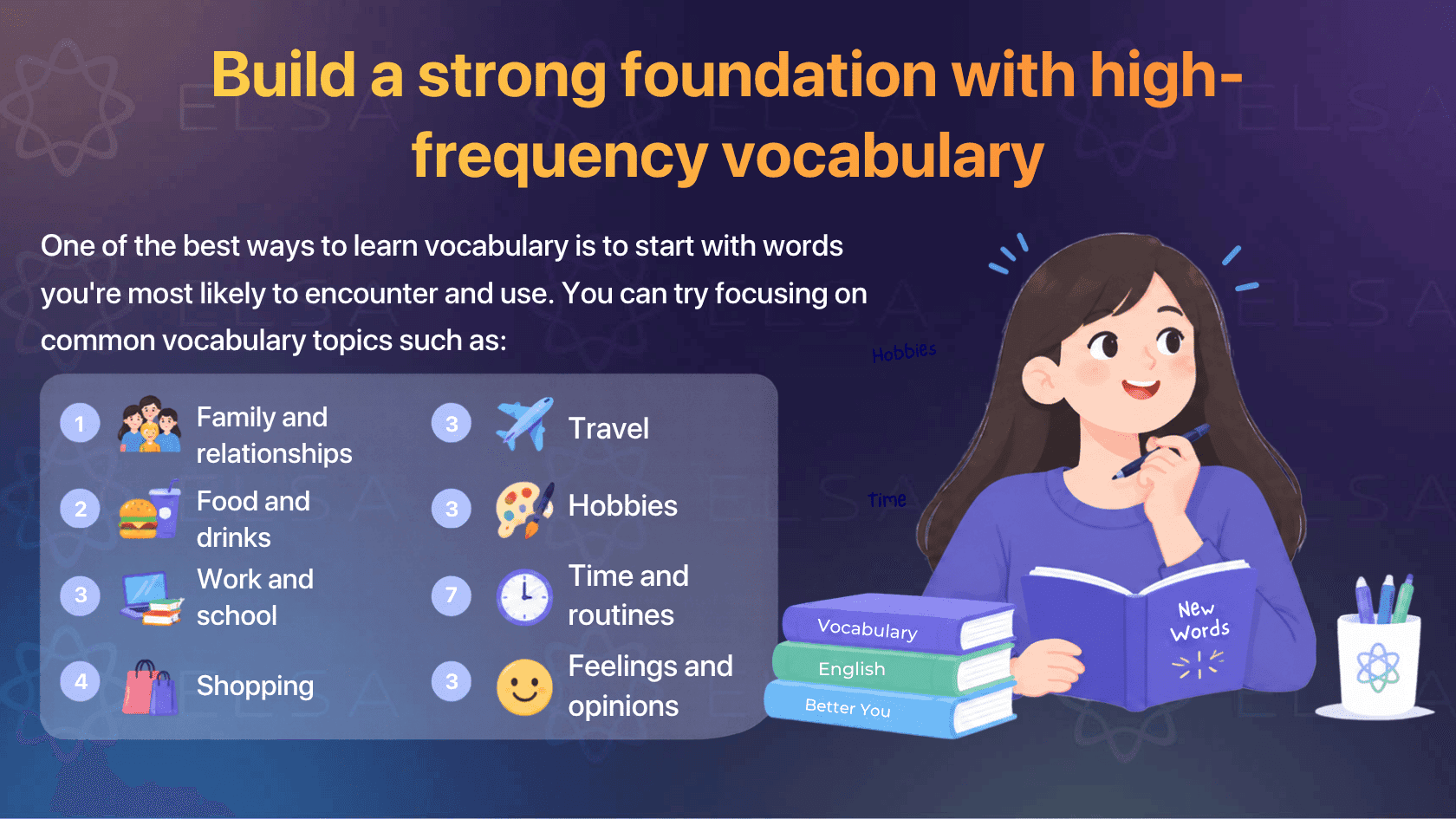
How to learn English vocabulary is a common question among learners. One of the best ways to learn vocabulary is to start with words you’re most likely to encounter and use. You can try focusing on common vocabulary topics such as:
- Family and relationships
- Food and drinks
- Work and school
- Shopping
- Travel
- Hobbies
- Time and routines
- Feelings and opinions
It is suggested that when learners learn around 3,000 word families, they can achieve substantial coverage of informal spoken English. But depending on the context, sometimes the exact vocabulary also varies.
Step 3: Practice daily immersion at home
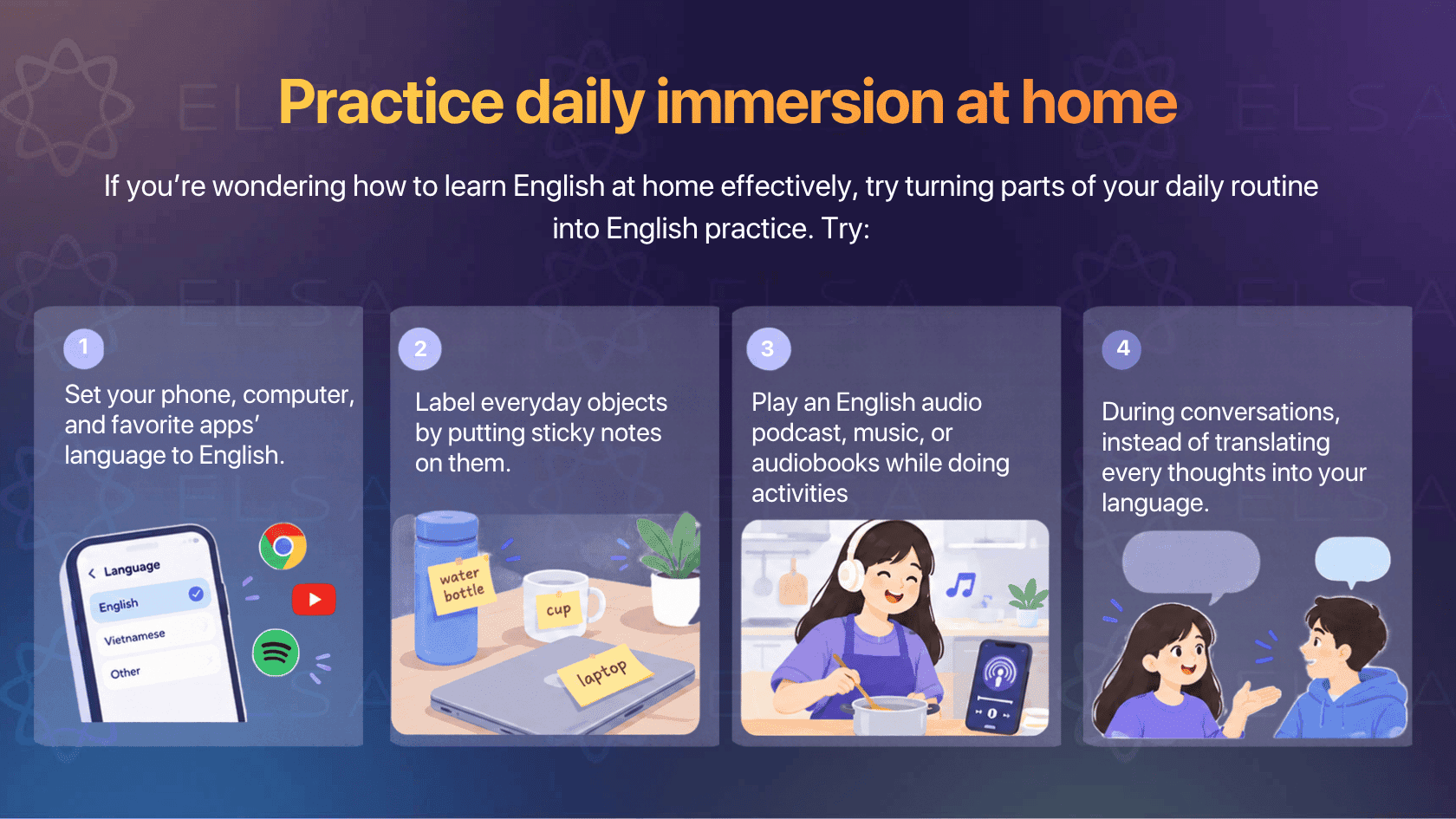
If you're wondering how to learn English at home effectively, try turning parts of your daily routine into English practice. Try:
- Set your phone, computer, and favorite apps’ language to English.
- Label everyday objects by putting sticky notes on them.
- Listen to English audio podcasts, music or audiobooks while doing activities such as cooking, studying, cleaning, etc.
- During conversations, instead of translating every thought into your language, try saying simple sentences such as:
- I’m hungry.
- What should I have for dinner?
- I need to leave in 2 minutes.
It’s okay if you don’t understand anything at first. Keep in mind that the goal is to make English part of your everyday routine, not to force yourself to immediately understand all of it.
Step 4: Focus heavily on speaking from day one
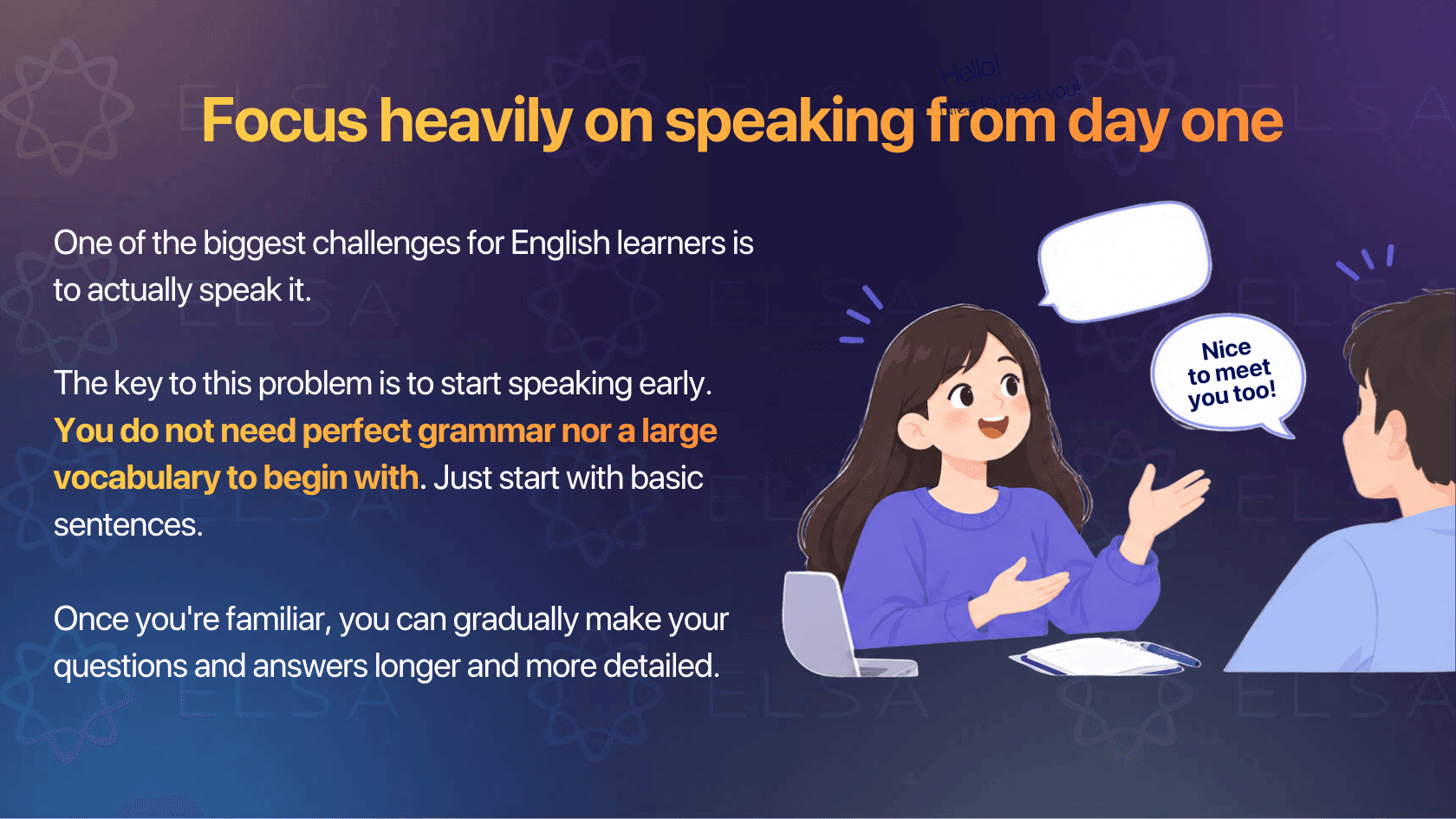
One of the biggest challenges for English learners is to actually speak it. This often happens when learners spend too much time studying grammar and vocabulary without actually using them in conversation.
The key to this problem is to start speaking early. You do not need perfect grammar nor a large vocabulary to begin with. Just start with basic sentences such as:
- I went to school yesterday.
- I usually sleep at 9 p.m.
- I work in a hospital.
Once you’re familiar, you can gradually make your questions and answers longer and more detailed.
>>> If you don’t have someone to practice with, try using ELSA Speak! With this app, learners can practice with ELSA AI with different role-plays to simulate real-life speaking situations and practice without worrying about making mistakes in front of another person. Try ELSA Speak today!
Step 5: Improve your pronunciation and listening simultaneously
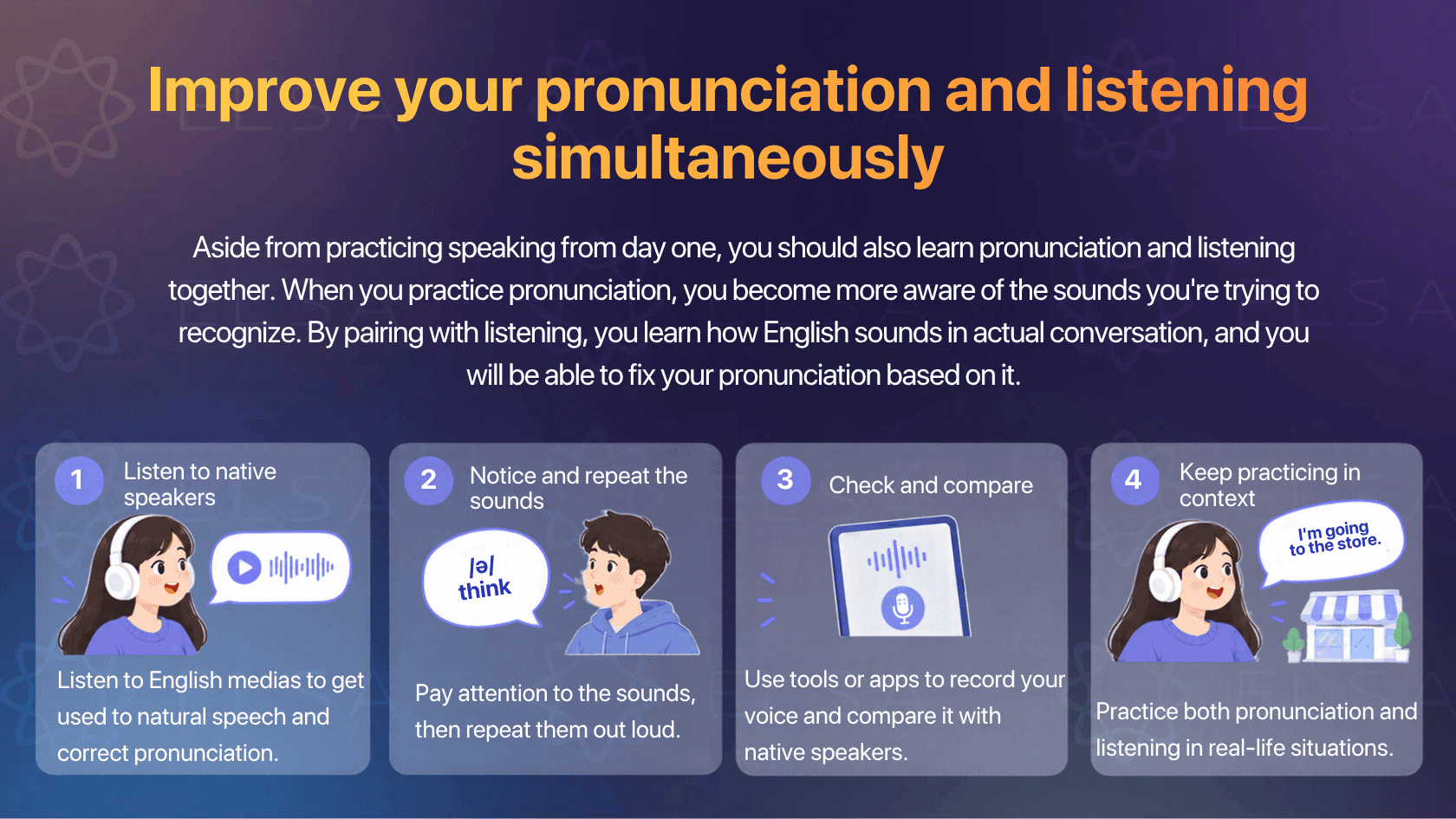
Aside from practicing speaking from day one, you should also learn pronunciation and listening together. When you practice pronunciation, you become more aware of the sounds you’re trying to recognize. By pairing it with listening, you learn how English sounds in actual conversation, and you will be able to fix your pronunciation based on it.
Therefore, try to focus on:
- Vowel sounds
- Consonant sounds
- Word stress
- Sentence stress
- Intonation
- Linking sounds
- Rhythm
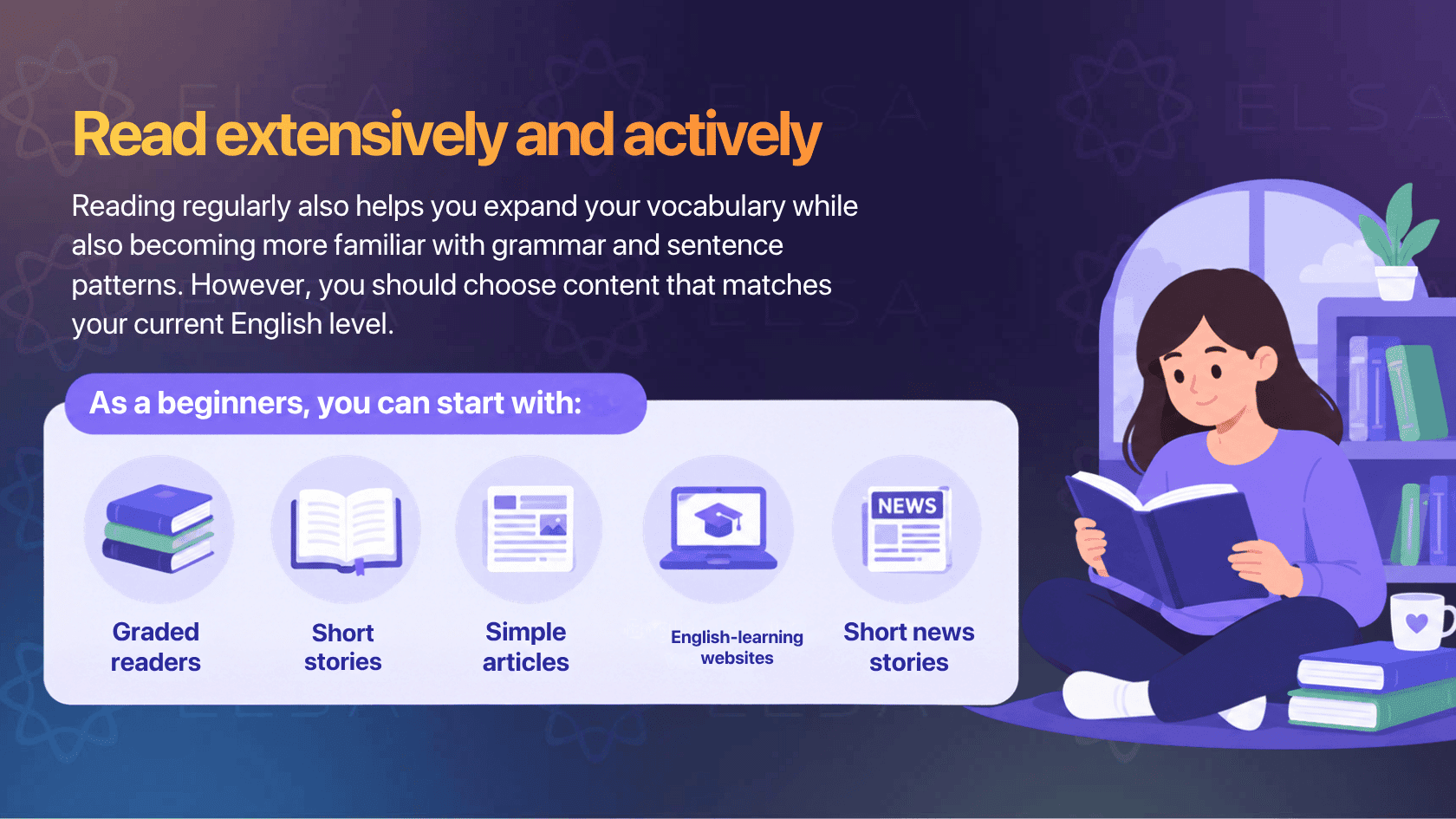
Step 6: Read extensively and actively
Reading regularly helps you expand your vocabulary while also becoming more familiar with grammar and sentence patterns. However, you should choose content that matches your current English level. As a beginner, you can start with:
- Graded readers
- Short stories
- Simple articles
- English-learning websites
- Short news stories
As your reading skills improve, move on to longer articles, books, magazines, and news websites.
Step 7: Master basic grammar without overthinking
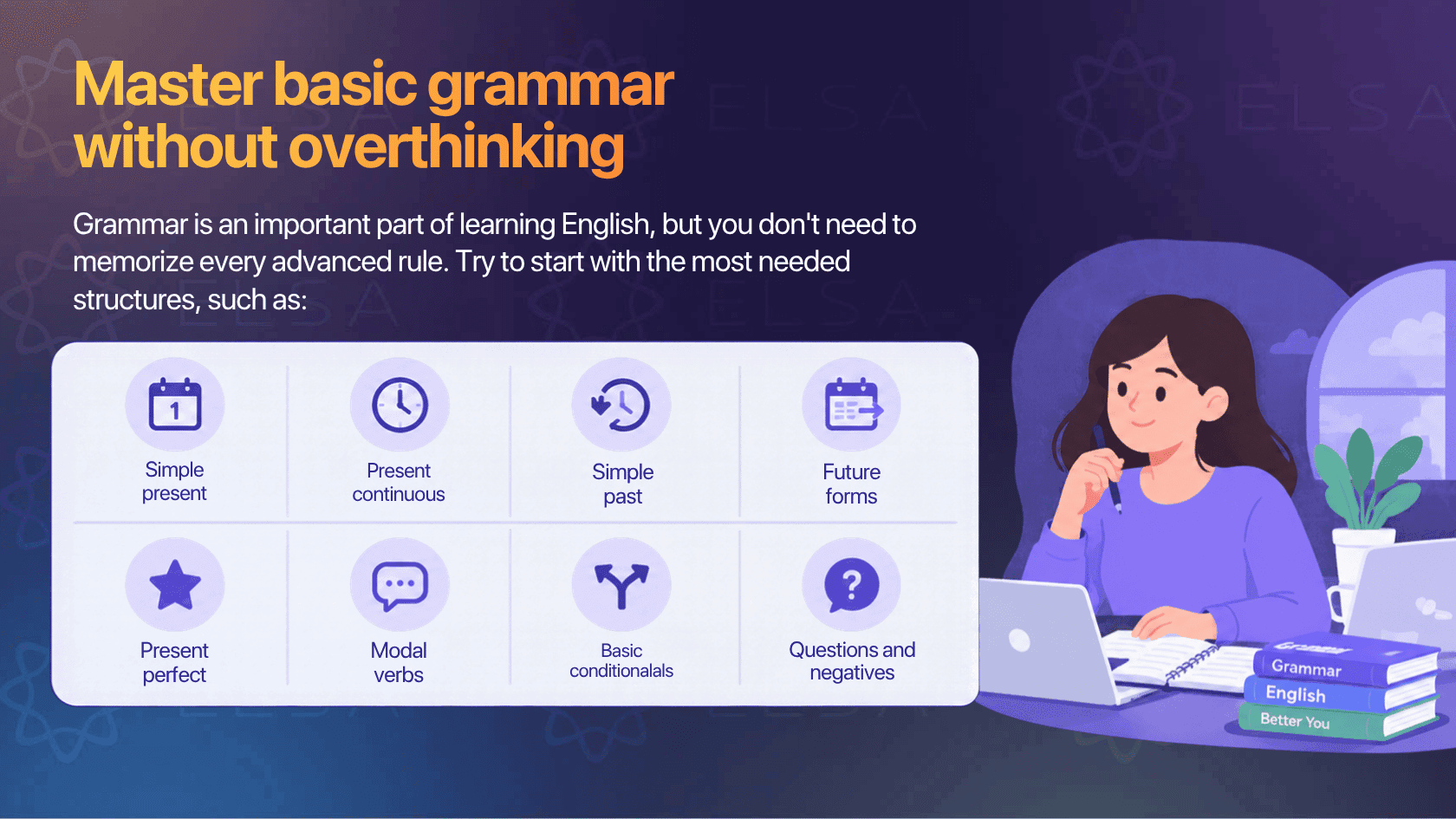
Grammar is an important part of learning English, but you don’t need to memorize every advanced rule. Try to start with the most needed structures, such as:
- Simple present tense
- Present continuous tense
- Simple past tense
- Future forms
- Present perfect tense
- Modal verbs
- Basic conditionals tenses
- Questions and negatives
By understanding the basic structures, you can talk about different situations and time periods.
Step 8: Leverage language learning apps for 24/7 practice
A major challenge when learning English is finding enough time to practice. This is where language learning apps come in, as they make it easier to turn small pockets of free time into learning opportunities.
The key is to choose an app that fits your learning goals and gives you opportunities to practice different English skills. You can review vocabulary while commuting, work on pronunciation during a short break, or practice speaking before bed. Even 10–15 minutes of focused practice each day can help you build a consistent learning habit.
Step 9: Use spaced repetition for long-term memory
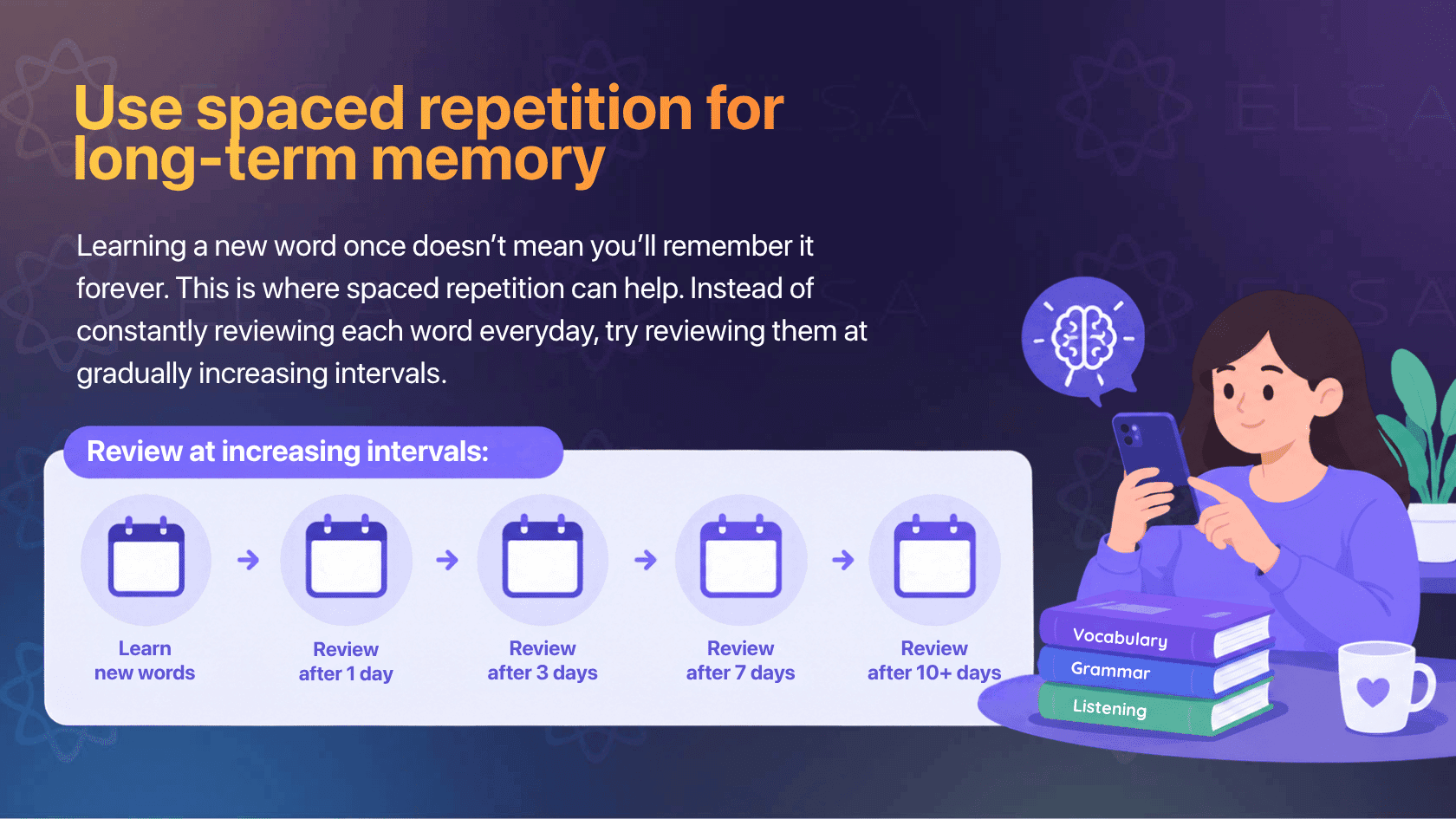
Learning a new word once doesn’t mean you’ll remember it forever. This is where spaced repetition can help. Instead of constantly reviewing each word everyday, try reviewing them at gradually increasing intervals.
For example:
- Day 1: Learn new vocabulary
- Day 2: Review
- Day 4: Review again
- Day 7: Review
- Day 14: Test yourself
Step 10: Learn from native content
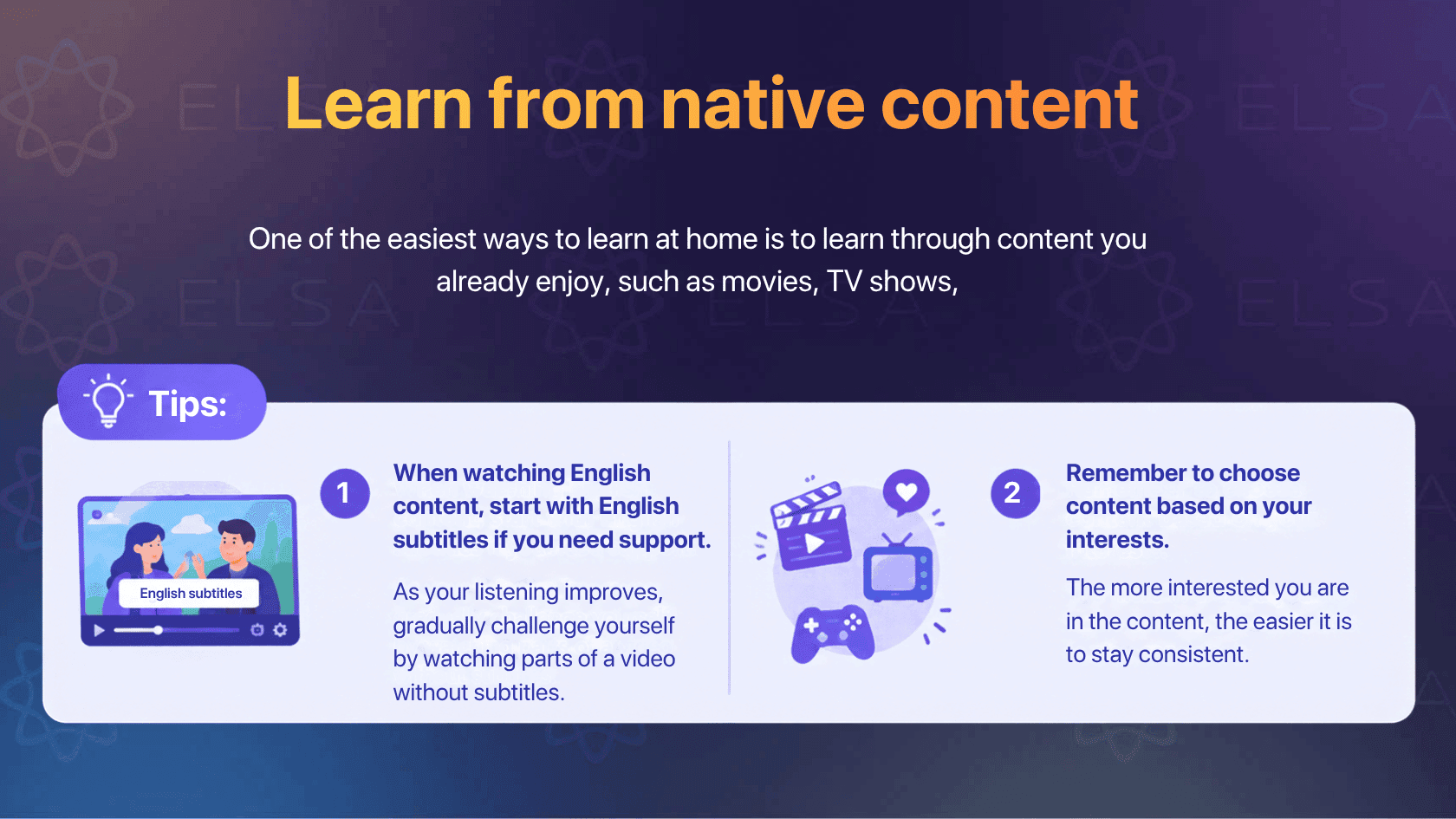
“How to learn English at home?” is one of the most common questions when it comes to learning English. One of the easiest ways to learn at home is to learn through content you already enjoy, such as movies, TV shows, YouTube videos, music, podcasts, etc.
Here are some beginner-level content you can enjoy:
- Movies and TV shows: Friends, Modern Family, The Intern
- YouTube videos: English-learning channels, daily vlogs, cooking videos, or travel vlogs with English subtitles
- Interviews: Celebrity interviews, simple street interviews, or short Q&A videos
- Podcasts: 6 Minute English by BBC Learning English, The English We Speak by BBC Learning English
- English songs: “Count on Me” by Bruno Mars, “Perfect” by Ed Sheeran, “Love Story” by Taylor Swift
- Short-form videos: English-learning tips, everyday conversations, pronunciation clips, or simple storytelling videos on TikTok, Instagram Reels, and YouTube Shorts.
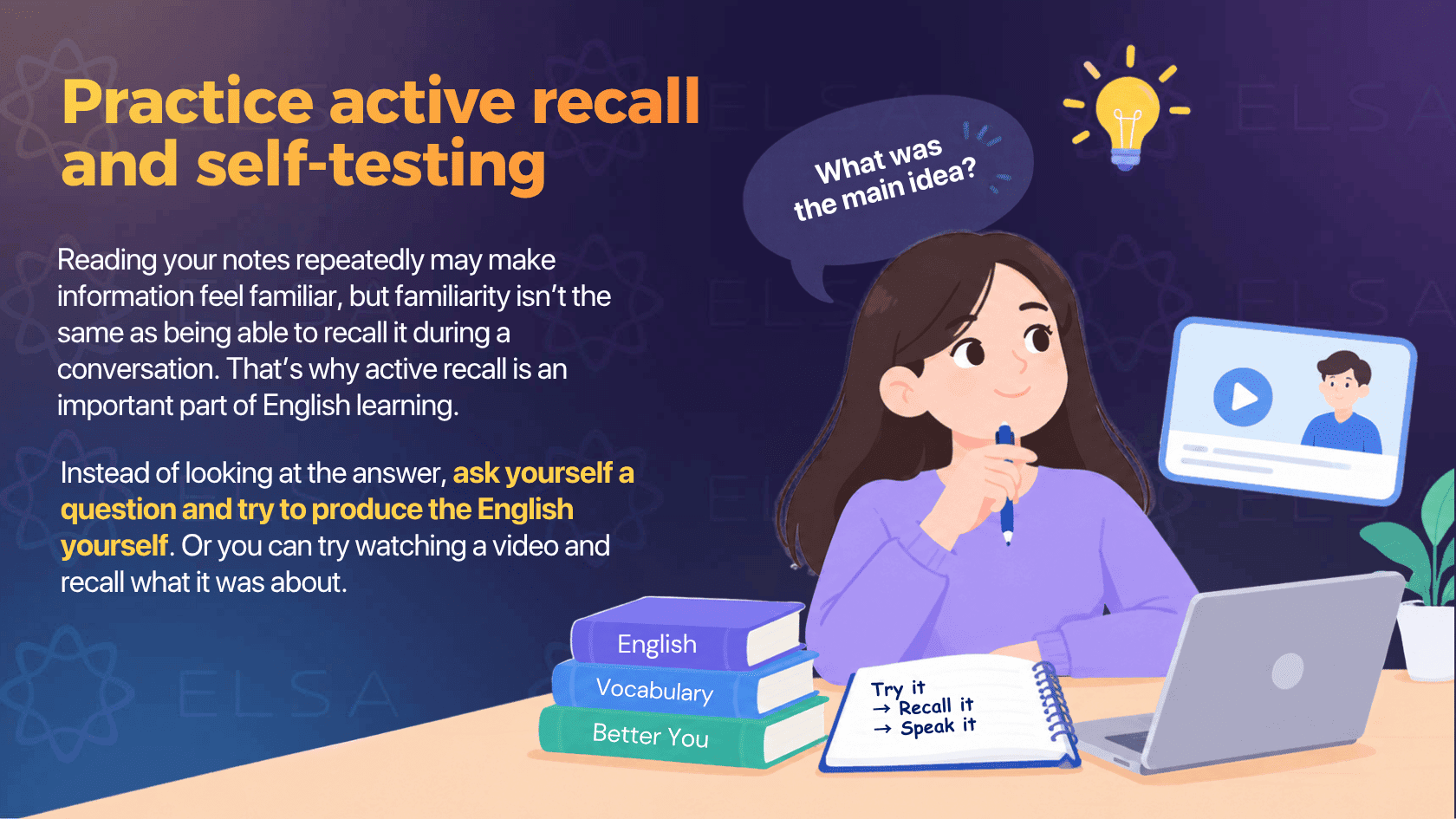
Step 11: Practice active recall and self-testing
Reading your notes repeatedly may make information feel familiar, but familiarity isn't the same as being able to recall it during a conversation. That's why active recall is an important part of English learning.
Instead of looking at the answer, ask yourself a question and try to produce the English yourself. Or you can try watching a video and recalling what it was about.
For example:
- What did I do yesterday?
- I went to work yesterday.
By consistently using this method, it will train your brain to retrieve English when you need it, which is important for speaking.
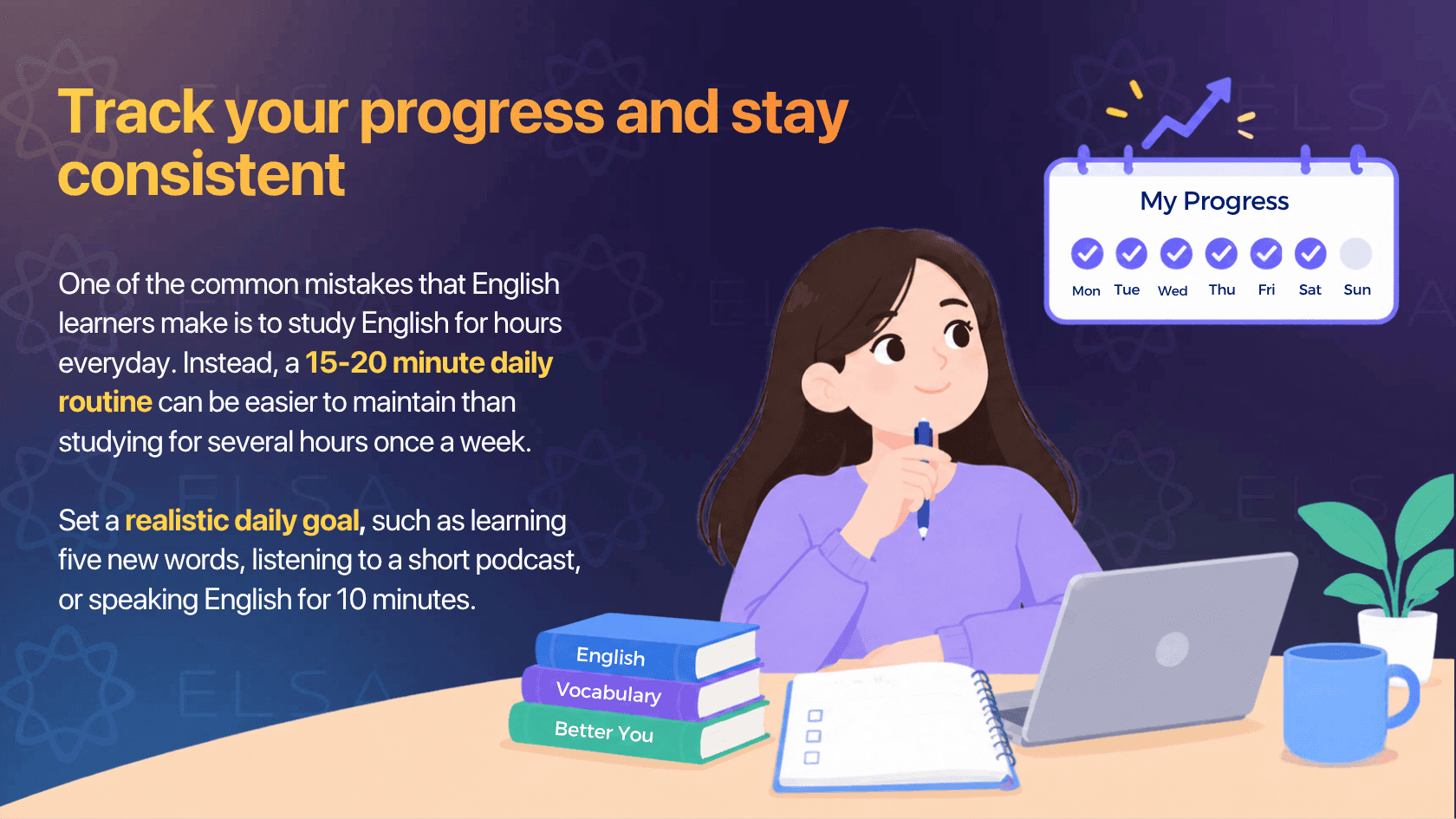
Step 12: Track your progress and stay consistent
One of the common mistakes that English learners make is to study English for hours everyday. Instead, a 15-20 minute daily routine can be easier to maintain than studying for several hours once a week.
Consistency matters more than the number of hours you study at once. Set a realistic daily goal, such as learning five new words, listening to a short podcast, or speaking English for 10 minutes. Choose activities that fit naturally into your schedule so that practicing English becomes a habit rather than a chore. It is also helpful to track your progress along the way.
By reviewing your progress every few weeks, you can see what has improved and identify the areas that still need more practice.
Practice with ELSA Speak
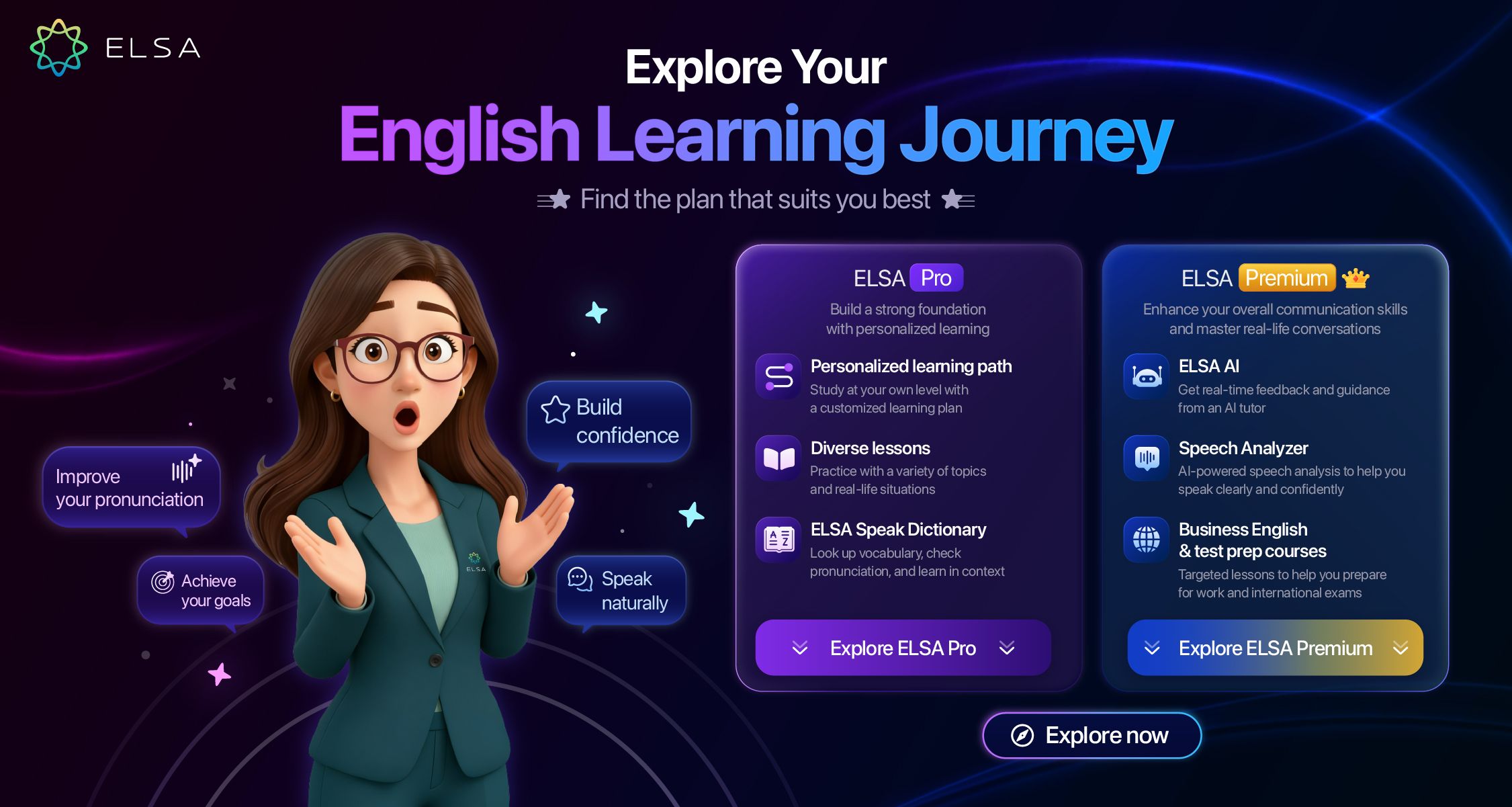
If you're wondering how to learn English effectively, an English learning app can make daily practice more convenient and engaging. ELSA Speak combines personalized lessons with real-time feedback, helping you practice English at your own pace and focus on the skills you want to improve.
With ELSA Speak, you can
- Set your personalized English journey with ELSA
- Learn everywhere, anytime with online lessons.
- Access over 220 topics, 9,000 lessons, and 48,000 interactive exercises.
- Practice real-life scenarios with the role-play feature.
- Learn how to pronounce vocabulary words with the dictionary feature.
- Track your progress with Your Journey and use Today’s Task to keep up with daily practice.
Whether you're just starting to learn English or looking for new ways to improve, using an English learning app can be a practical part of your how to learn English routine. Regular practice can help you build confidence and make steady progress toward your learning goals.
Frequently Asked Questions (FAQs)
How to learn English quickly at home?
To learn English quickly, create an immersive environment, practice speaking with shadowing every day, and use AI-powered learning apps to make your practice more efficient.
What is the best step-by-step method for beginners?
To learn how to learn English step by step, start with pronunciation, build basic vocabulary, learn simple sentence structures, and practice listening and speaking every day.
How to learn English effectively if I'm busy?
To learn English effectively, use short 10–15-minute study sessions throughout the day and focus on personalized lessons that match your learning needs.
Knowing how to learn English effectively is a long-term journey, but a step-by-step strategy can make the process easier and more manageable. For more practical tips and lessons, explore the English Communication Tips category on the ELSA Speak blog to discover more ways to improve your English.