

Present perfect tense: How to use it correctly in English grammar
elsaspeakadmin
August 31, 2026
English tenses
The present perfect tense is an essential English grammar structure, but knowing when and how to use it correctly can be tricky for English learners. In this guide, you'll learn how to form and use the perfect present tense, with clear explanations and practical examples to help you understand the rules and use this tense more confidently in everyday English.
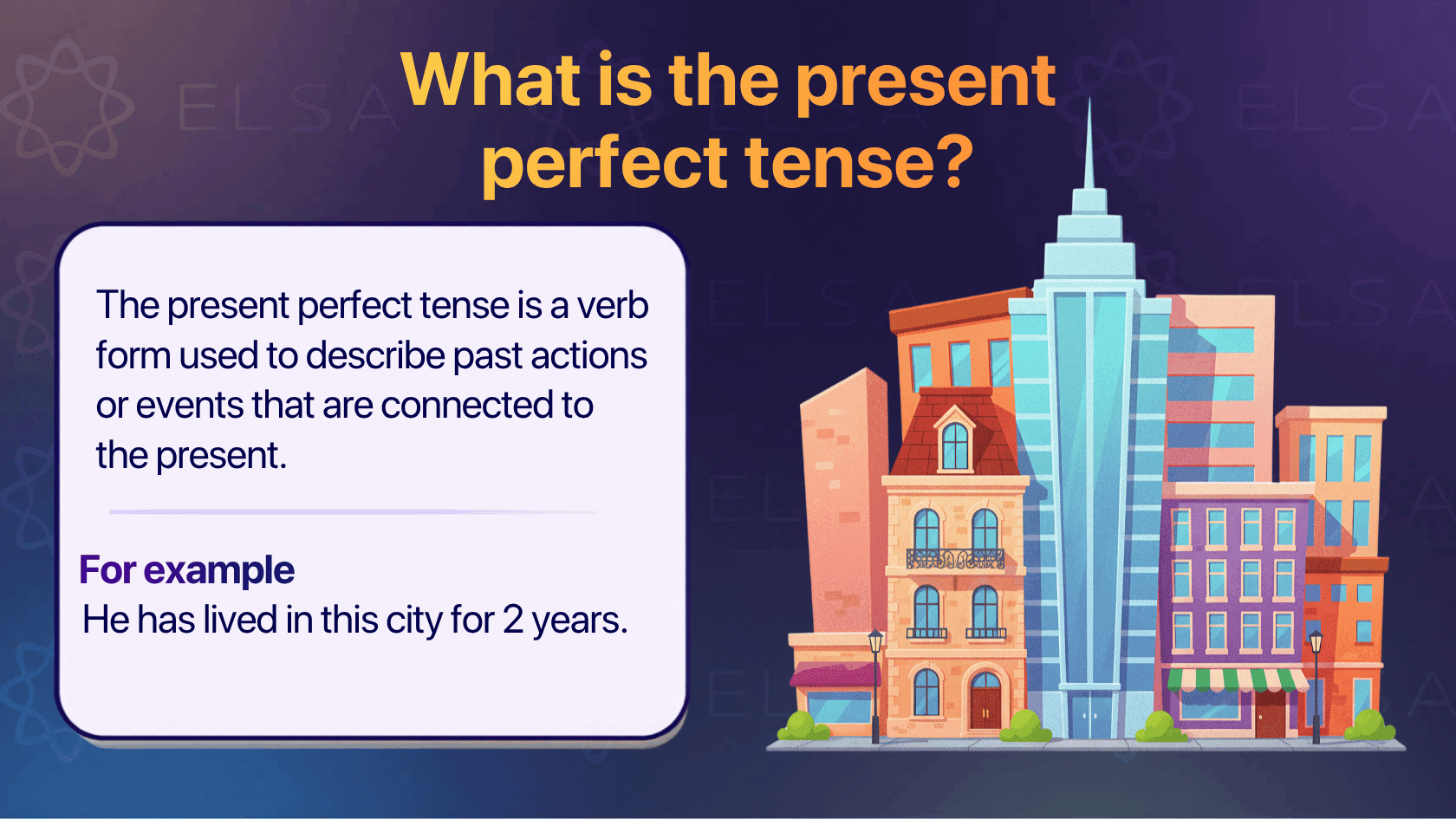
What is the present perfect tense?
The present perfect tense is a verb form used to describe past actions or events that are connected to the present.
Present perfect tense examples:
- They have visited Big Ben.
- He has lived in this city for 2 years.
When to use the present perfect tense English?
Below are common situations with present perfect tense usage examples:
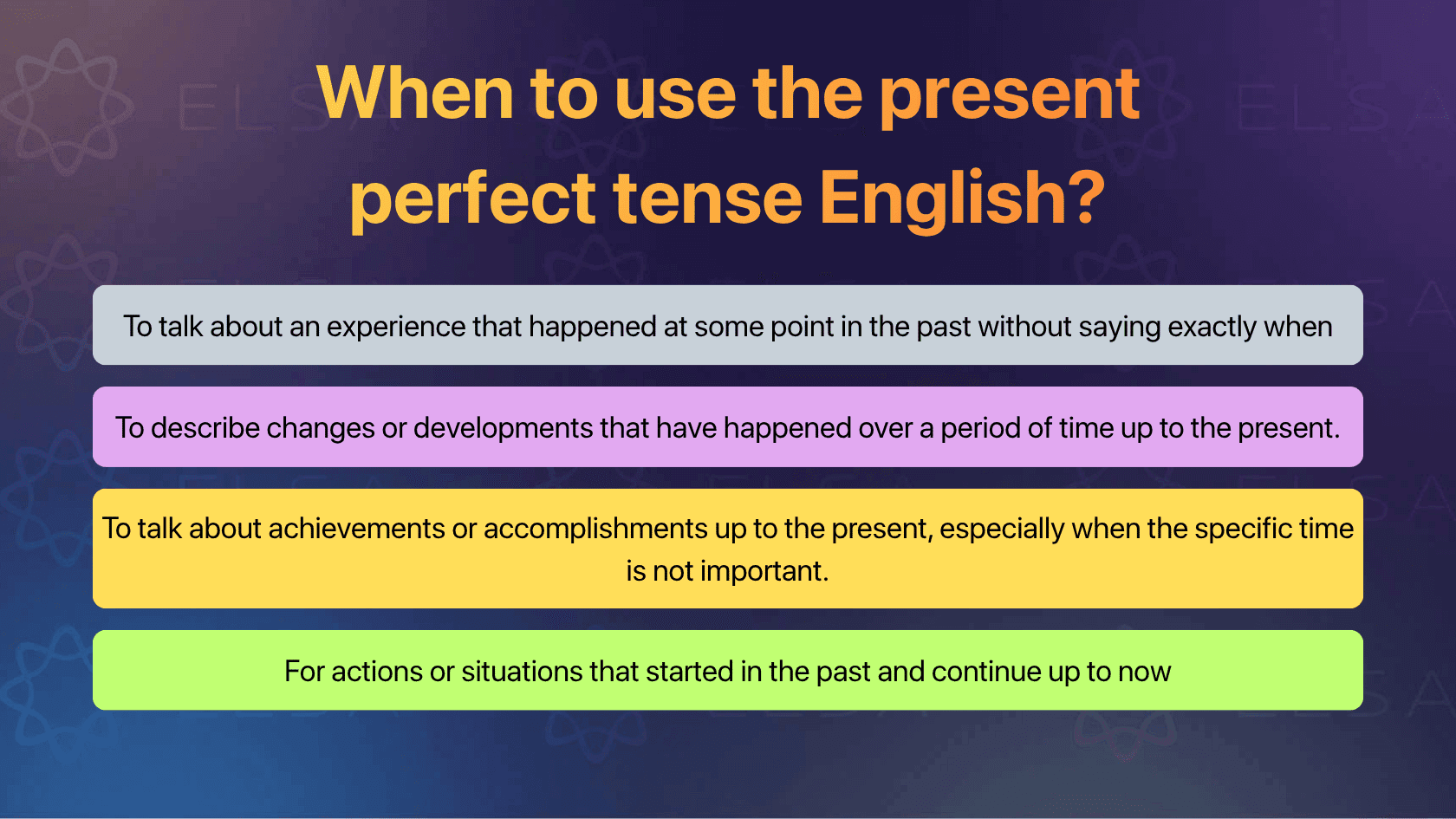
- To talk about an experience that happened at some point in the past without saying exactly when.
- For example: He has traveled to Africa.
- To describe changes or developments that have happened over a period of time up to the present.
- For example: The company has grown significantly over the past ten years.
- To talk about achievements or accomplishments up to the present, especially when the specific time is not important.
- For example: She has published 3 books.
- For actions or situations that started in the past and continue up to now.
- For example: My grandpa has lived in this town for 20 years.
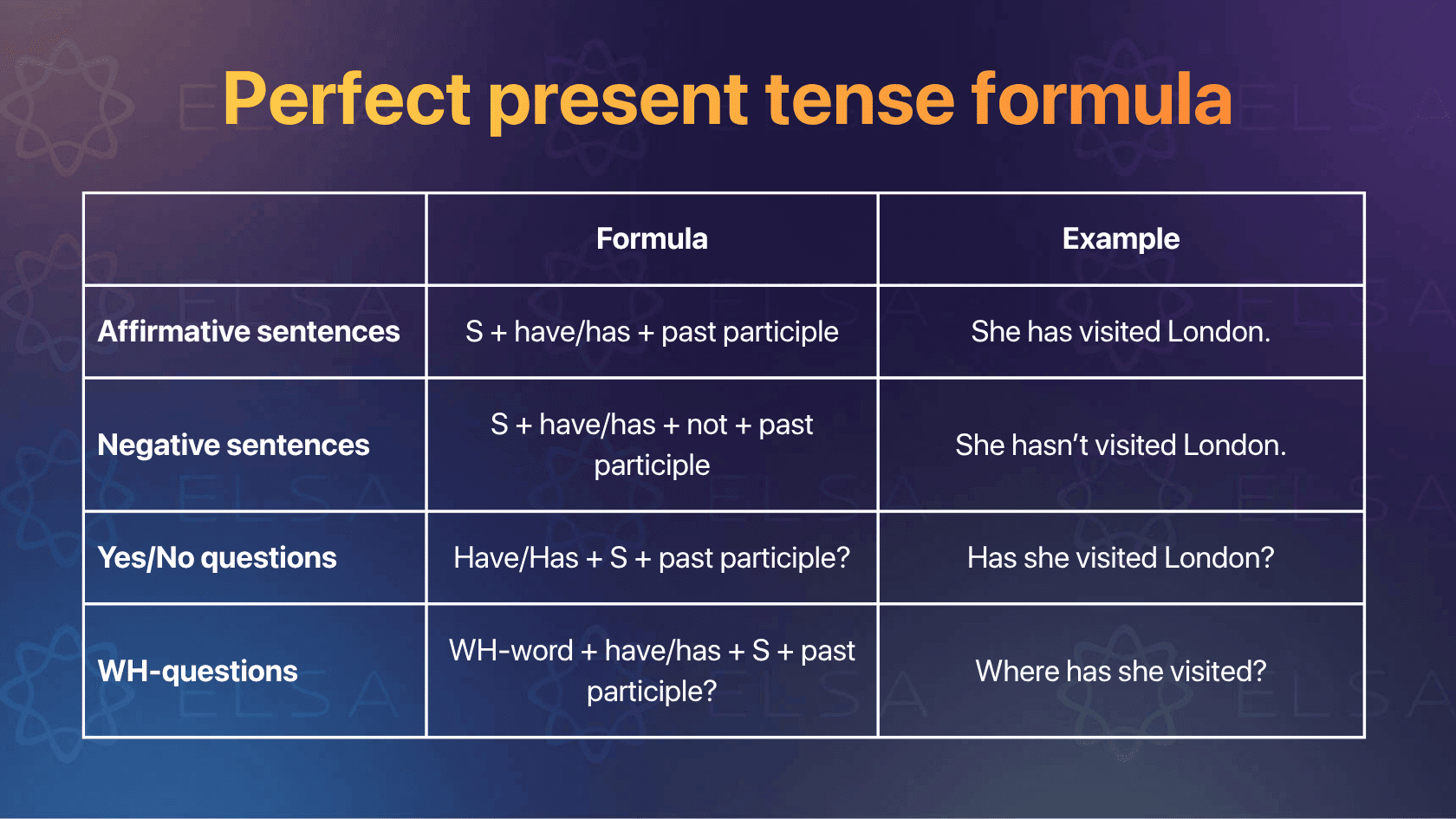
Perfect present tense formula
Affirmative sentences
Formula:
| S + have/has + past participle |
For example: She has visited London.
Remember:
- I/You/We/They + have + past participle
- He/She/It + has + past participle
Negative sentences
Formula:
| S + have/has + not + past participle |
For example: They haven’t returned for 10 years.
Remember:
- Have + not = haven’t
- Has + not = hasn’t
Question form
Yes/No questions
Formula:
| Have/Has + S + past participle? |
For example: Have you ever visited New York?
WH-questions
Formula:
| WH-word + have/has + S + past participle? |
For example: Where have you been this afternoon?
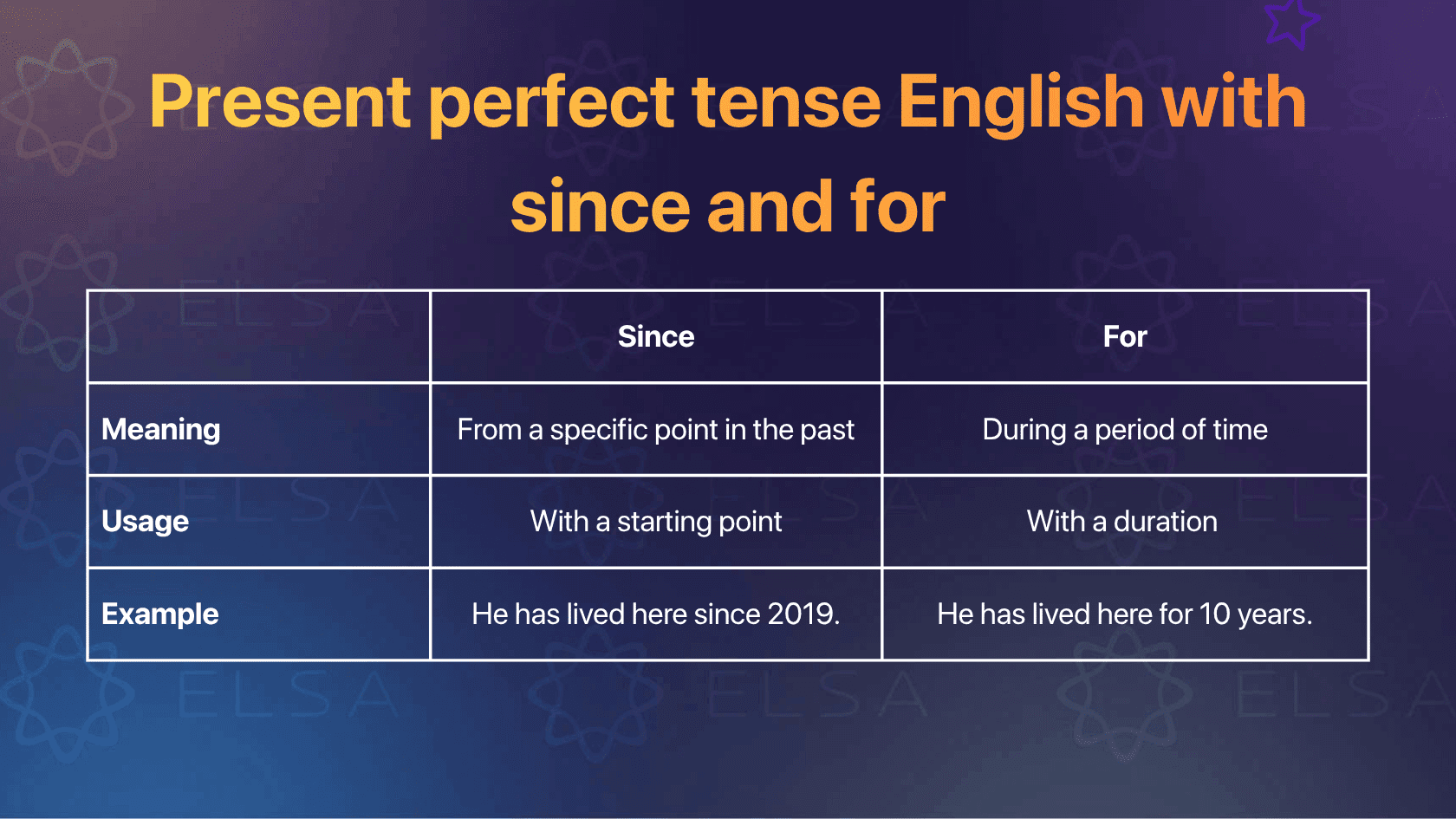
Present perfect with since and for
| Since | For | |
| Meaning | From a specific point in the past | During a period of time |
| Usage | With a starting point | With a duration |
| Example | He has lived here since 2019. | He has lived here for 10 years. |
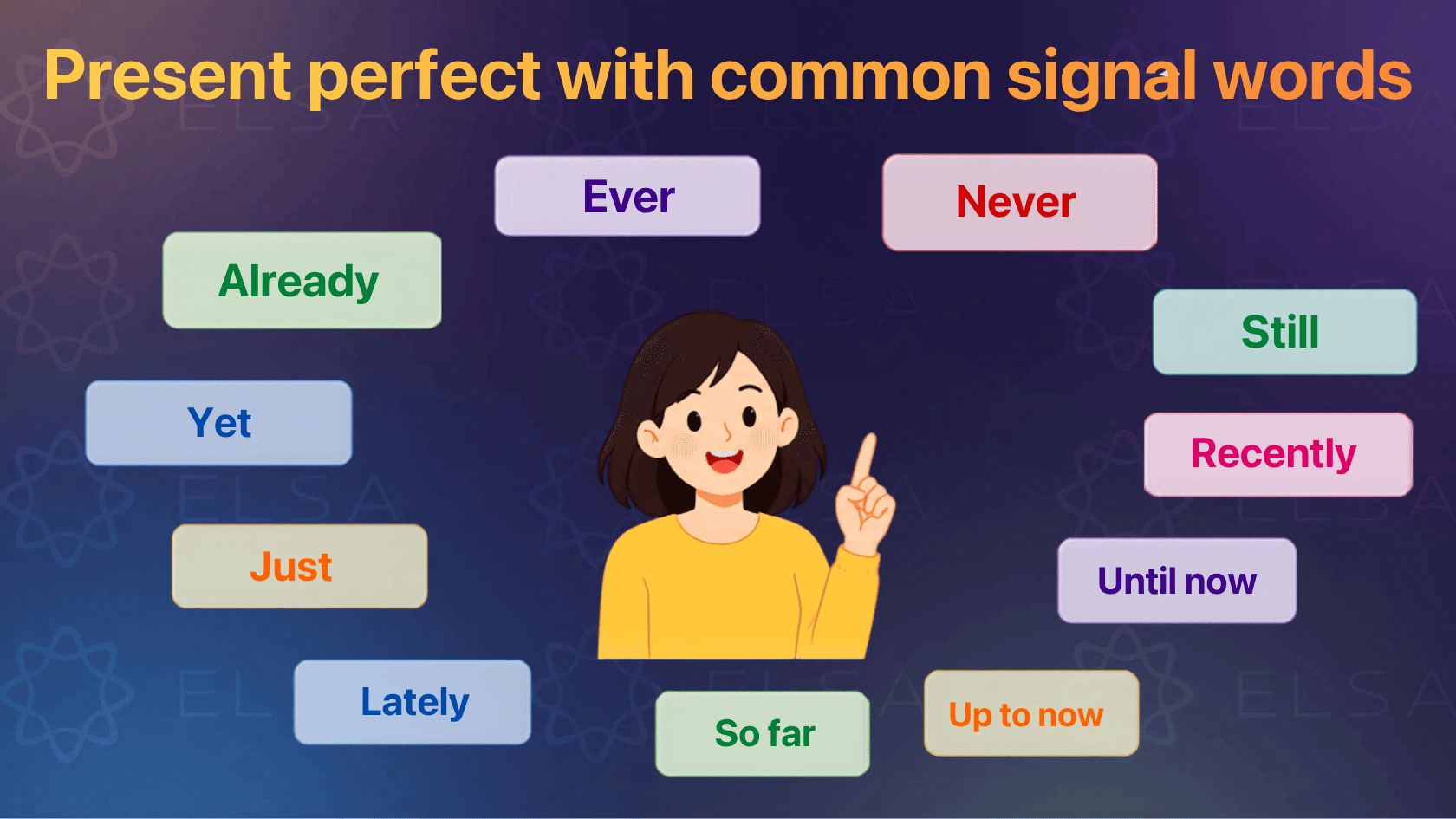
Present perfect with common signal words
| Signal word | Usage | Example |
| Already | Used to say that an action has happened, often earlier than expected. | They’ve already done their homework. |
| Yet | Used in questions and negative sentences to ask or say whether an action has happened. | He hasn’t arrived at the party yet. |
| Just | Used to say that an action happened very recently. | She has just left through the back door. |
| Ever | Used mainly in questions to ask about an experience. | Have you ever visited Paris? |
| Never | Used to say that an experience has not happened at any time. | I have never seen that post. |
| Still | Emphasizes that an action or situation has not changed. | It’s been an hour and she still hasn’t replied to my message. |
| Recently | Used to talk about an action that happened in the recent past. | We have recently moved to a new house. |
| Lately | Used to talk about actions or situations that have happened recently. | She hasn’t slept well lately. |
| So far | Refers to what has happened or been achieved up to the present. | We’ve read 2 books so far. |
| Up to now | Emphasizes the period from the past until the present. | Up to now, I’ve learnt a lot about you. |
| Until now | Refers to something that has or has not happened up to the present. | She hasn’t received the report until now. |
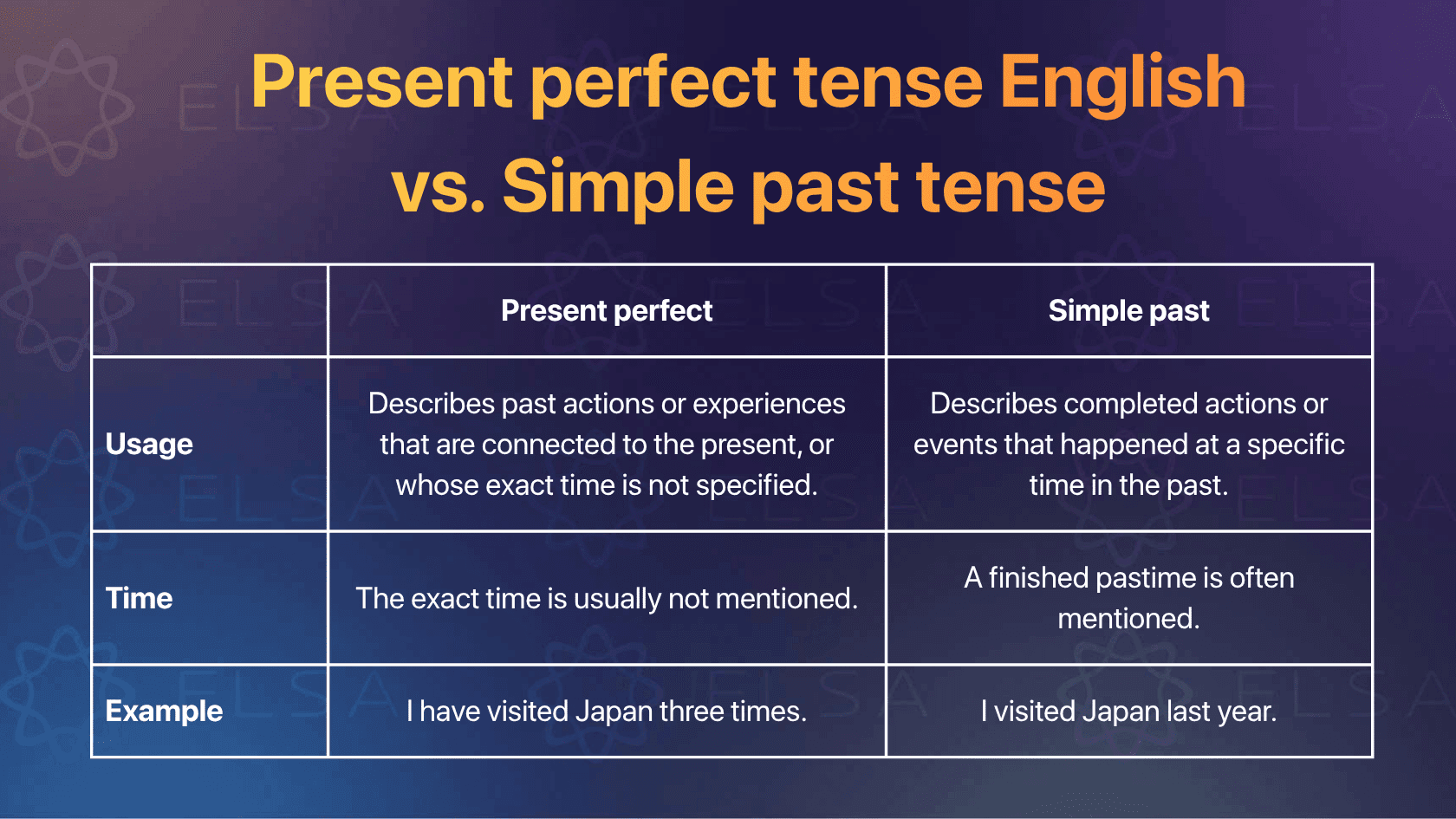
Present perfect tense English vs. Simple past tense
| Present perfect | Simple past | |
| Usage | Describes past actions or experiences that are connected to the present, or whose exact time is not specified. | Describes completed actions or events that happened at a specific time in the past. |
| Formula | S + have/has + V3 | S + V2/ed |
| Time | The exact time is usually not mentioned. | A finished past time is often mentioned. |
| Signal word | already, yet, just, ever, never, recently, lately, so far, since, for | yesterday, last week, ago, in 2020, when I was young, last month |
| Example | I have visited Japan three times. | I visited Japan last year. |
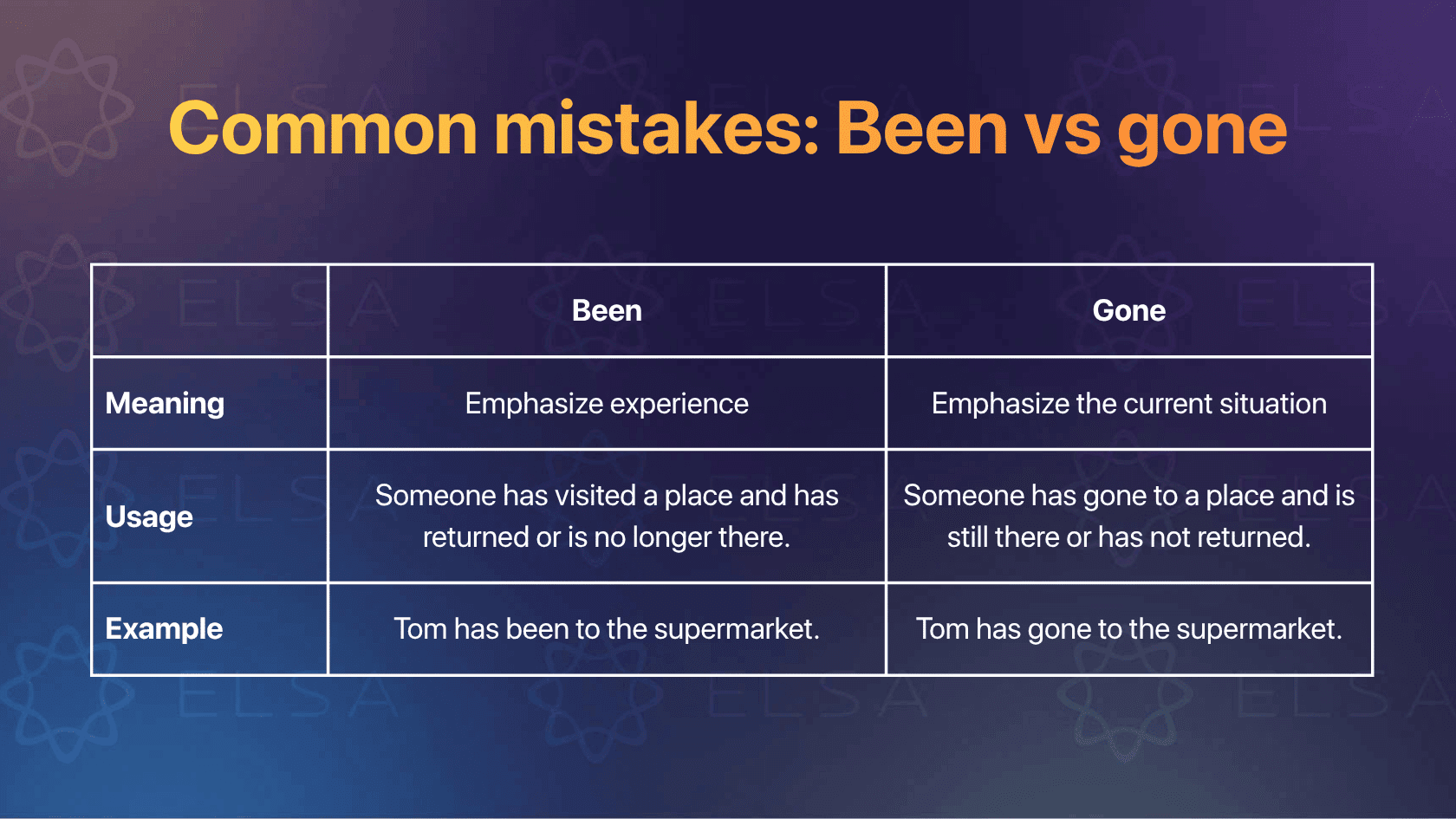
Common mistakes: Been vs gone
Although “been” and “gone” are both commonly used in the present perfect tense in English, they convey different meanings. The table below highlights their key differences in meaning, usage, formulas, and examples.
| Been | Gone | |
| Meaning | Emphasize experience | Emphasize the current situation |
| Usage | Someone has visited a place and has returned or is no longer there. | Someone has gone to a place and is still there or has not returned |
| Formula | S + have/has been to + place | S + have/has gone to + place |
| Example | Tom has been to the supermarket. | Tom has gone to the supermarket. |
Perfect present tense worksheet
Exercise 1: Fill in each blank with the correct present perfect tense form of the verb in parentheses.
- She ________ (finish) her homework already.
- I ________ (never / try) sushi before.
- They ________ (live) in this city for five years.
- ________ you ever ________ (visit) London?
- We ________ (not / see) that movie yet.
- He ________ (lose) his keys, so he can't open the door.
Answer key:
- has finished
- have never tried
- have lived
- Have / visited
- haven't seen
- has lost
Exercise 2: Choose the correct present perfect form to complete each sentence.
1. I ________ my English speaking skills a lot this year.
a. have improved
b. improved
2. Sarah ________ her project yet.
a. didn't completed
b. hasn't completed
3. We ________ each other since high school.
a. knew
b. have known
4. ________ you ever ________ a speech in English?
a. Have / given
b. Did / give
5. Tom ________ three books this month.
a. read
b. has read
6. They ________ to the new restaurant several times.
a. have been
b. went
Answer key:
- a. have improved
- b. hasn't completed
- b. have known
- a. Have / given
- b. has read
- a. have been
Mastering the present perfect tense can help you express experiences, recent actions, and situations that continue into the present more naturally. For more practical English lessons and grammar tips, visit the Grammar section on the ELSA Speak blog to keep improving your English skills with confidence.