

12 best websites to learn English in 2026 (free & paid)
elsaspeakadmin
October 26, 2026
English for beginners
Finding the best websites to learn English can help you build stronger language skills without spending a fortune on classes. From free listening lessons and grammar tutorials to AI-powered speaking practice, these online resources make it easier to study at your own pace. In this guide below, explore our top 12 picks to find the right platform for your goals, budget, and English proficiency level.
Top 12 websites to learn English
The following websites offer different approaches to learning English, including AI-powered pronunciation feedback, structured grammar lessons, real-world videos, and live tutoring.
| Website | Best for | Core skills | Pricing | Target level |
|---|---|---|---|---|
| ELSA Speak | AI-powered pronunciation and speaking practice | Speaking, pronunciation, intonation | Free access and paid plans; availability varies | Beginner to advanced |
| BBC Learning English | Free grammar, vocabulary, and British English audio | Listening, vocabulary, grammar | Free | Beginner to advanced |
| VOA Learning English | American English news and listening practice | Listening, reading, vocabulary | Free | Beginner to advanced |
| British Council LearnEnglish | Structured lessons and exam preparation | Grammar, vocabulary, usage | Free | Beginner to advanced |
| engVid | Video lessons on grammar, idioms, and slang | Reading, writing, listening, speaking | Free access and paid plans | Beginner to advanced |
| Breaking News English | News-based lessons at multiple difficulty levels | Reading, listening, vocabulary | Free | Beginner to advanced |
| Oxford Online English | Video lessons and personalized instruction | Speaking, pronunciation, writing | Free videos and paid lessons | Intermediate to advanced |
| Duolingo | Building vocabulary and daily study habits | Vocabulary, grammar, reading, listening | Free with ads and paid plans | Beginner to advanced |
| New York Public Library ESL Resources | Free educational resources for English learners | Reading, listening, vocabulary | Free resources | Beginner to advanced |
| Preply | One-on-one lessons with English tutors | Speaking, listening, business English | Paid lessons; tutor rates vary | Beginner to advanced |
| FluentU | Learning through authentic video content | Listening, vocabulary, comprehension | Free trial and paid subscriptions | Beginner to advanced |
1. ELSA Speak: Best for AI-powered speaking and pronunciation practice
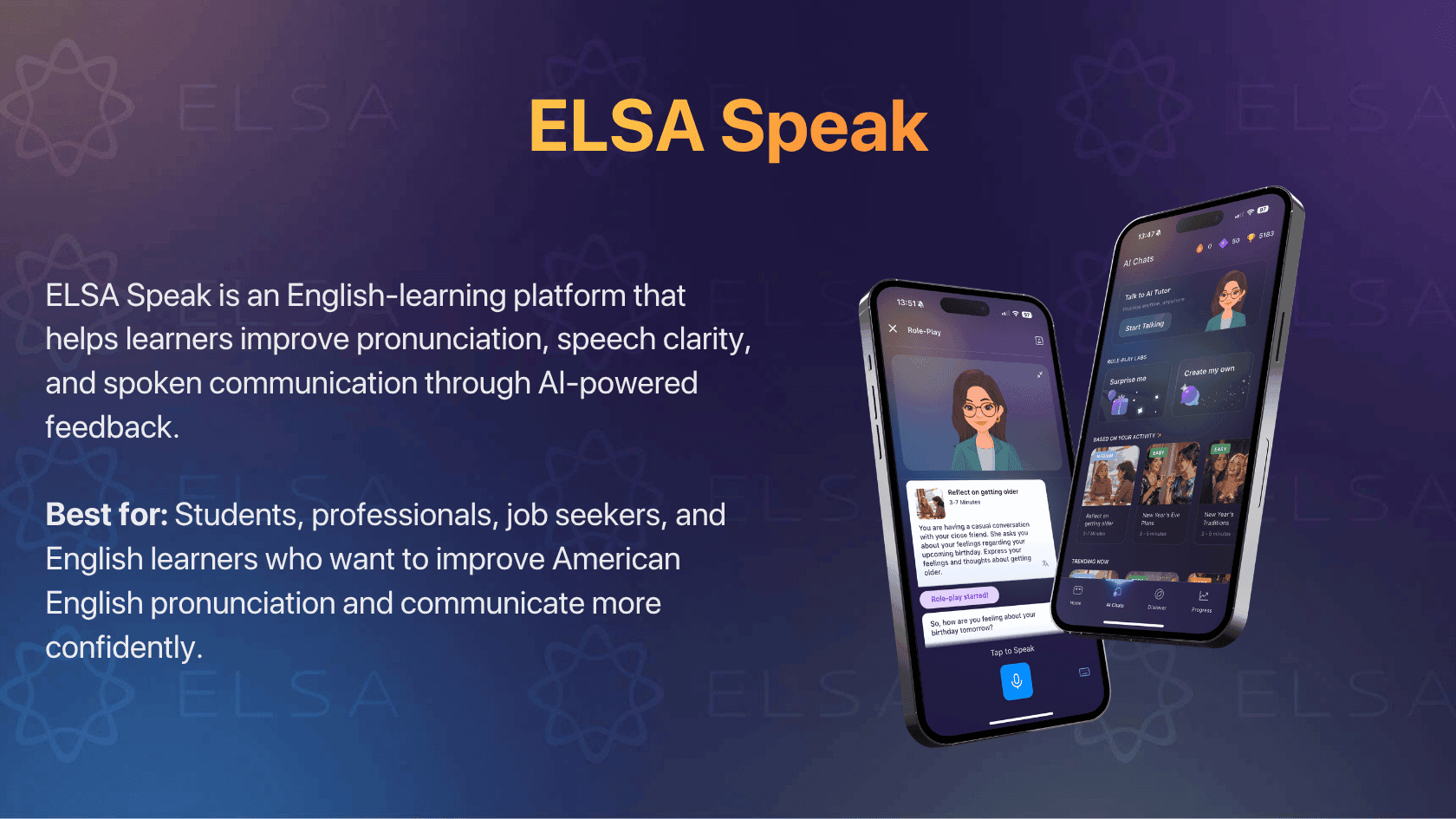
ELSA Speak is an English-learning platform that helps learners improve pronunciation, speech clarity, and spoken communication through AI-powered feedback. Its speaking-focused tools make it especially useful for people who understand English but struggle to pronounce words clearly or speak confidently in real-world situations.
Key features:
- Pronunciation feedback: Analyze individual sounds and identify pronunciation errors to understand which parts of a word need more practice.
- Five communication criteria: Speech analysis can evaluate pronunciation, word stress, intonation, fluency, and vocabulary and grammar.
- AI conversation practice: Practice English through interactive scenarios involving everyday conversations and professional situations.
- Personalized learning: Focus on specific pronunciation challenges and communication goals instead of following the same exercises as every other learner.
Best for: Students, professionals, job seekers, and English learners who want to improve American English pronunciation and communicate more confidently.
2. BBC Learning English: Best for free grammar, vocabulary, and British English audio
BBC Learning English offers a large collection of free resources designed to help learners understand and use English more effectively. Its lessons combine audio, video, explanations, and examples to make grammar and vocabulary easier to study independently.
Key features:
- 6 Minute English: Short audio episodes explore interesting topics and introduce useful vocabulary.
- The English We Speak: Learn idioms and expressions used in everyday British English.
- Grammar lessons: Study grammar rules through explanations, examples, and quizzes.
- News-based learning: Explore current topics while developing listening comprehension and vocabulary.
Best for: Learners who want to improve listening comprehension, expand vocabulary, and understand British English.
3. VOA Learning English: Best for American English News and Listening Practice
VOA Learning English is a useful resource for learners who want to develop listening skills through news, educational programs, and stories about American society. Its content includes language-learning materials designed for different proficiency levels.
Key features:
- Level-based content: Explore lessons at different difficulty levels, from introductory English to more advanced subjects.
- Slower audio: Many programs use carefully delivered speech to help learners follow the content.
- News and feature stories: Learn vocabulary through topics related to science, culture, history, and current affairs.
- Transcripts and supporting materials: Follow written text while listening to improve comprehension.
Best for: Beginners and intermediate learners who want to understand American English and build listening confidence.
4. British Council LearnEnglish: Best for structured lessons and exam preparation
British Council LearnEnglish provides educational resources for learners who prefer organized lessons and clear explanations. Its materials cover grammar, vocabulary, listening, reading, writing, and speaking.
Key features:
- Level-based learning: Find resources suited to your current English proficiency.
- Grammar practice: Review language rules through explanations and exercises.
- Listening and reading activities: Work with lessons designed for specific learning levels.
- Exam preparation: Explore resources that support learners preparing for English proficiency exams, including IELTS.
Best for: Students, IELTS candidates, and learners who want a structured approach to improving their English.
5. engVid: Best for free video lessons on grammar, idioms, and slang
engVid offers video lessons taught by English instructors on a variety of topics. Learners can explore specific language problems instead of working through a single fixed curriculum.
Key features:
- Grammar explanations: Review common errors, sentence structures, and essential grammar rules.
- Vocabulary lessons: Learn idioms, phrasal verbs, expressions, and everyday vocabulary.
- Specialized topics: Explore lessons related to business English, academic English, and standardized tests.
- Practice quizzes: Test your understanding of selected lessons.
Best for: Self-directed learners who want clear explanations of grammar, idioms, slang, and common English mistakes.
6. Busuu: Best for structured courses and community feedback
Busuu combines guided language lessons with opportunities to receive feedback from other members of its learning community. Its English course covers foundational language skills and includes materials for different proficiency levels.
Key features:
- Structured learning paths: Progress through lessons organized by language level and topic.
- Community feedback: Submit selected speaking and writing exercises for feedback from other users.
- Grammar and vocabulary review: Reinforce previously learned material through review activities.
- Additional speaking tools: Depending on the plan and availability, paid subscriptions may include AI conversations and pronunciation feedback.
Best for: Learners who want a guided curriculum and opportunities to receive feedback on their language practice.
7. Breaking News English: Best for news-based reading and listening practice
Breaking News English turns news stories into English-learning activities at multiple difficulty levels. It is particularly useful for learners who want to develop reading comprehension and vocabulary through current affairs.
Key features:
- Multiple reading levels: Study the same topic using materials at different levels of difficulty.
- Audio resources: Listen to news passages to practice comprehension and pronunciation awareness.
- Vocabulary exercises: Review key words and phrases from each story.
- Additional activities: Complete comprehension questions, gap-fill exercises, and discussion tasks.
Best for: Students, teachers, and independent learners who want to build vocabulary and reading comprehension through news.
8. Oxford Online English: Best for video lessons and personalized instruction
Oxford Online English provides English lessons through educational videos and paid online instruction. Its resources cover common learning needs, including pronunciation, speaking, grammar, and academic writing.
Key features:
- Video tutorials: Study explanations of grammar, pronunciation, vocabulary, and communication skills.
- Speaking guidance: Learn strategies for expressing ideas more clearly and naturally.
- Academic English: Explore writing and exam-related topics.
- Private lessons: Access personalized instruction through available paid lesson options.
Best for: Intermediate and advanced learners who want to refine their speaking, pronunciation, or academic English.
9. Duolingo: Best for vocabulary building and daily study habits
Duolingo uses short lessons, interactive exercises, and game-like features to make language learning easier to maintain. Its approach is particularly appealing to beginners who want to build a regular English study habit.
Best for: Beginners who want to develop foundational vocabulary and establish a consistent learning routine.
10. New York Public Library ESL Resources: Best for free English-learning materials
The New York Public Library provides educational resources and curated learning materials that can help people study English independently. Its broader digital collections include books, educational content, and other resources that may support language development.
Key features:
- Reading materials: Explore books and digital resources to develop reading comprehension.
- Listening practice: Use available audio resources to become more familiar with spoken English.
- Educational collections: Discover learning materials suitable for different interests and skill levels.
- Community resources: Find information about library programs and educational services where available.
Best for: Independent learners who want to supplement English study with reading materials and public educational resources.
11. Preply: Best for one-on-one lessons with English tutors
Preply connects learners with tutors who provide online language lessons. Instead of following only pre-recorded materials, students can practice speaking with a teacher and receive feedback based on their individual goals.
Key features:
- Personalized lessons: Choose topics such as everyday communication, business English, or interview preparation.
- Flexible scheduling: Find available tutors whose schedules fit your routine.
- Tutor selection: Compare tutor profiles, teaching experience, and rates.
- Live interaction: Ask questions and practice responding in real time.
Best for: Learners who want personalized speaking practice, professional English coaching, or support preparing for specific situations.
12. FluentU: Best for Learning Through Real-World Videos
FluentU uses authentic video content to help learners study English through context. Depending on the available content and subscription, learners can use videos, interactive subtitles, vocabulary tools, and review activities.
Key features:
- Real-world videos: Learn through clips from media, entertainment, and other authentic sources.
- Interactive subtitles: Explore unfamiliar words while watching supported videos.
- Contextual vocabulary: See how expressions are used in complete sentences and real situations.
- Review activities: Reinforce vocabulary with quizzes and spaced-repetition tools.
Best for: Learners who enjoy videos and want to understand natural English vocabulary, expressions, and listening patterns.
What makes a great English-learning website?
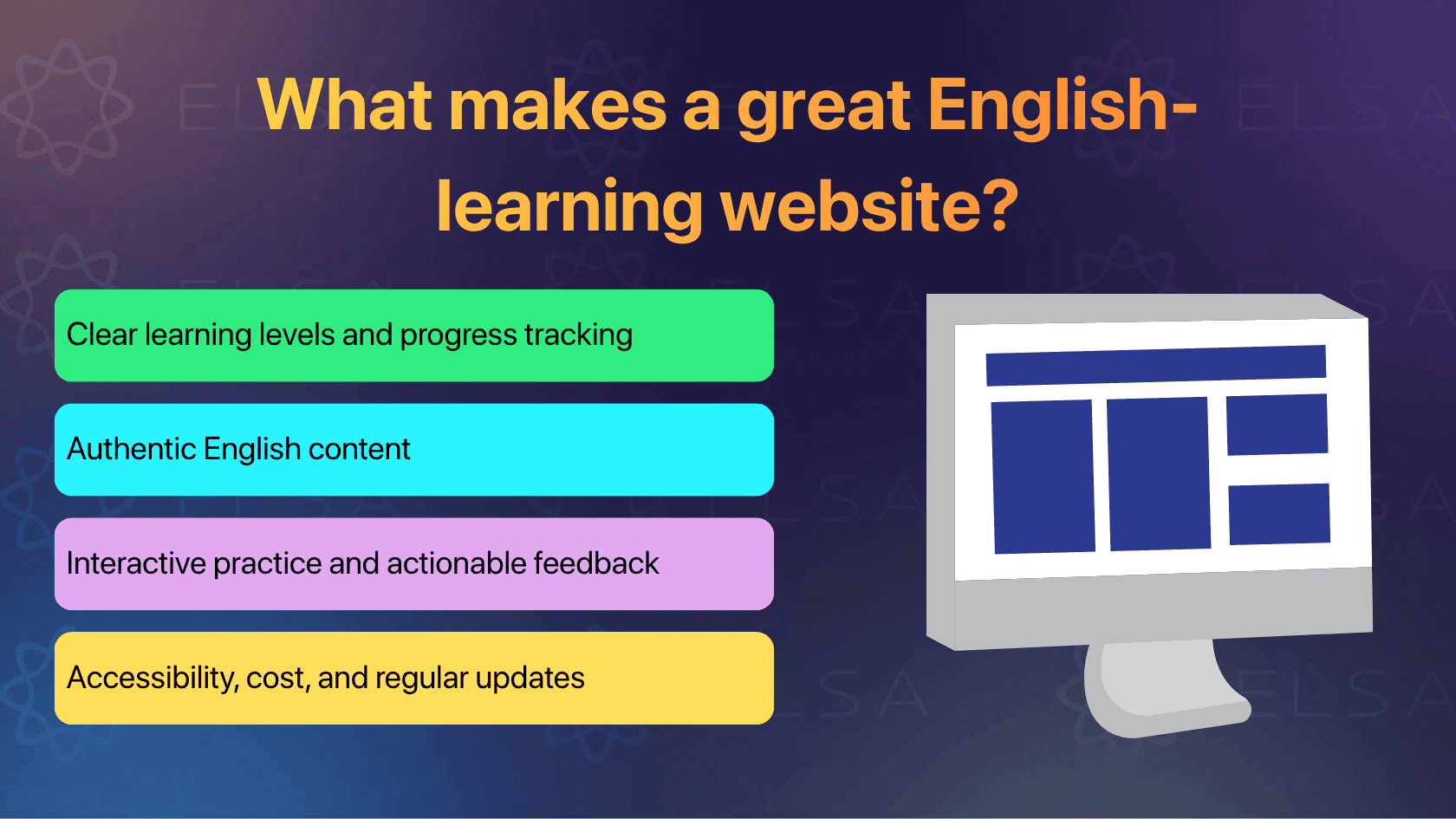
The best English-learning websites do more than provide a large collection of lessons. They help learners identify their current level, practice relevant skills, receive useful feedback, and maintain a consistent routine.
Consider these four factors before choosing a platform.
1. Clear learning levels and progress tracking
A useful website should help you understand what you can already do and what to learn next. Some platforms organize lessons according to the Common European Framework of Reference for Languages (CEFR), which includes six proficiency levels, from A1 to C2.
Look for placement tests, level-based courses, progress indicators, and review activities. These features can help you choose suitable lessons instead of repeatedly studying material you already know.
2. Authentic English content
Learning from real-world English can help you recognize how people communicate outside a textbook. News reports, podcasts, interviews, videos, and everyday conversations expose you to different vocabulary choices, accents, and speaking speeds.
For example, VOA Learning English is useful for American English listening practice, while BBC Learning English provides many resources featuring British English.
Choose content that challenges you without making comprehension consistently frustrating.
3. Interactive practice and actionable feedback
Watching lessons and memorizing vocabulary are important, but they do not automatically develop speaking confidence. Look for websites that allow you to apply what you learn through exercises, conversations, writing tasks, or pronunciation practice.
Depending on your goals, useful feedback might include:
- Corrections to grammar and word choice.
- Explanations of incorrect answers.
- Pronunciation guidance and speech analysis.
- Comments from teachers or other learners.
- Opportunities to repeat exercises and monitor improvement.
AI feedback can make independent practice more accessible, while teachers and conversation partners can provide additional context and human interaction.
4. Accessibility, cost, and regular updates
The right platform should fit your schedule, budget, and preferred way of learning. Check whether the website works on your devices, whether you need an account, and which features are available for free.
Also consider whether the content is relevant to your goals. A beginner learning everyday English may need a different resource from a professional preparing for presentations or a student studying for IELTS.
You do not need to pay for multiple subscriptions immediately. Start with free resources, identify your learning gaps, and upgrade only when a paid feature offers clear value.
How to choose the best English website for your specific goal
Choosing the best English learning website starts with identifying your primary learning goal. Whether you want to improve pronunciation, practice listening, prepare for an exam, build a daily habit, or speak with a tutor, the right platform can help you focus your time and effort.
- Pronunciation and workplace speaking: Prioritize ELSA Speak Web for AI-powered pronunciation feedback and realistic workplace conversation scenarios.
- American English listening practice: Choose VOA Learning English for beginner and intermediate listening practice with news content, or Breaking News English for news-based lessons across different proficiency levels.
- Grammar and IELTS or academic preparation: Combine British Council LearnEnglish and BBC Learning English for structured lessons and practice, then use engVid to reinforce concepts through video lessons.
- Building a habit as a beginner: Start with Duolingo for short, gamified lessons or Busuu for structured courses and selected community feedback.
- One-on-one conversations with native speakers: Use Preply to find a tutor and schedule personalized lessons based on your goals, availability, and budget.
FAQs about learning English online
What is the CEFR framework in English?
The Common European Framework of Reference for Languages (CEFR) is an international framework for describing language proficiency. It includes six levels: A1 and A2 for basic users, B1 and B2 for independent users, and C1 and C2 for proficient users.
These levels describe what learners can generally understand and communicate. They can help you select suitable courses and track your development, although different websites may use their own placement methods.
What is a good website to learn English speaking for free?
ELSA Speak, BBC Learning English, and other platforms with free resources can help you begin practicing English speaking. ELSA Speak focuses on pronunciation and AI-powered feedback, while BBC Learning English offers audio and video materials that you can use for listening, repetition, and shadowing practice.
Free access and available features may differ by platform. If you want live conversations with a tutor, you should also check the cost of individual lessons.
Can you realistically speak fluent English in 30 days?
You can make noticeable progress in 30 days, but reaching complete fluency in that time is unrealistic for most learners. Results depend on your starting level, study time, learning methods, and opportunities to use English.
A practical 30-day goal is to improve your confidence in familiar situations, learn useful expressions, work on recurring pronunciation errors, and practice speaking for longer periods. Consistent daily practice and regular feedback are more useful than expecting instant mastery.
Is it better to learn English on a website or through a mobile app?
Neither option is automatically better. Websites can be convenient for longer reading sessions, detailed lessons, writing practice, and studying on a computer. Mobile apps are useful for short lessons, vocabulary review, and practicing during breaks.
The best choice depends on your routine and goals. You can also combine both formats if a platform offers synchronized access across devices.
Can I learn English online for free?
Yes. Websites such as BBC Learning English, VOA Learning English, engVid, and Breaking News English provide free learning materials. Duolingo and Busuu also offer free access, although some features require a subscription.
You can make progress without paying for multiple platforms by following a consistent study plan, practicing all four language skills, and reviewing your mistakes regularly. Paid services may be useful when you need specialized tools, structured support, or personalized instruction.
How long should I study English each day?
The ideal study time depends on your goals and schedule. For many learners, 20–30 minutes of focused daily practice is a manageable starting point.
You might divide that time between listening, vocabulary review, grammar, and speaking. If you have a specific deadline, such as an exam or job interview, you may need a more intensive plan with additional practice and feedback.
The best websites to learn English in 2026 are the ones that match your current level, address your learning gaps, and help you practice consistently. Ready to improve your English speaking skills? Explore the English Communication Tips category on ELSA Speak Blog and start practicing pronunciation and real-world conversations at your own pace.