


300+ animal names in English with pictures
elsaspeakadmin
October 28, 2026
Common vocabulary
Animals are an important parts of our world, and knowing animal names in English can help you build vocabulary, describe an animal more accurately, and talk about nature with greater confidence. In this guide, we introduce you to 300+ animal names organized into categories, from animal breeds to American English IPA pronunciations and images to help you recognize each animal.
Common animal names in English
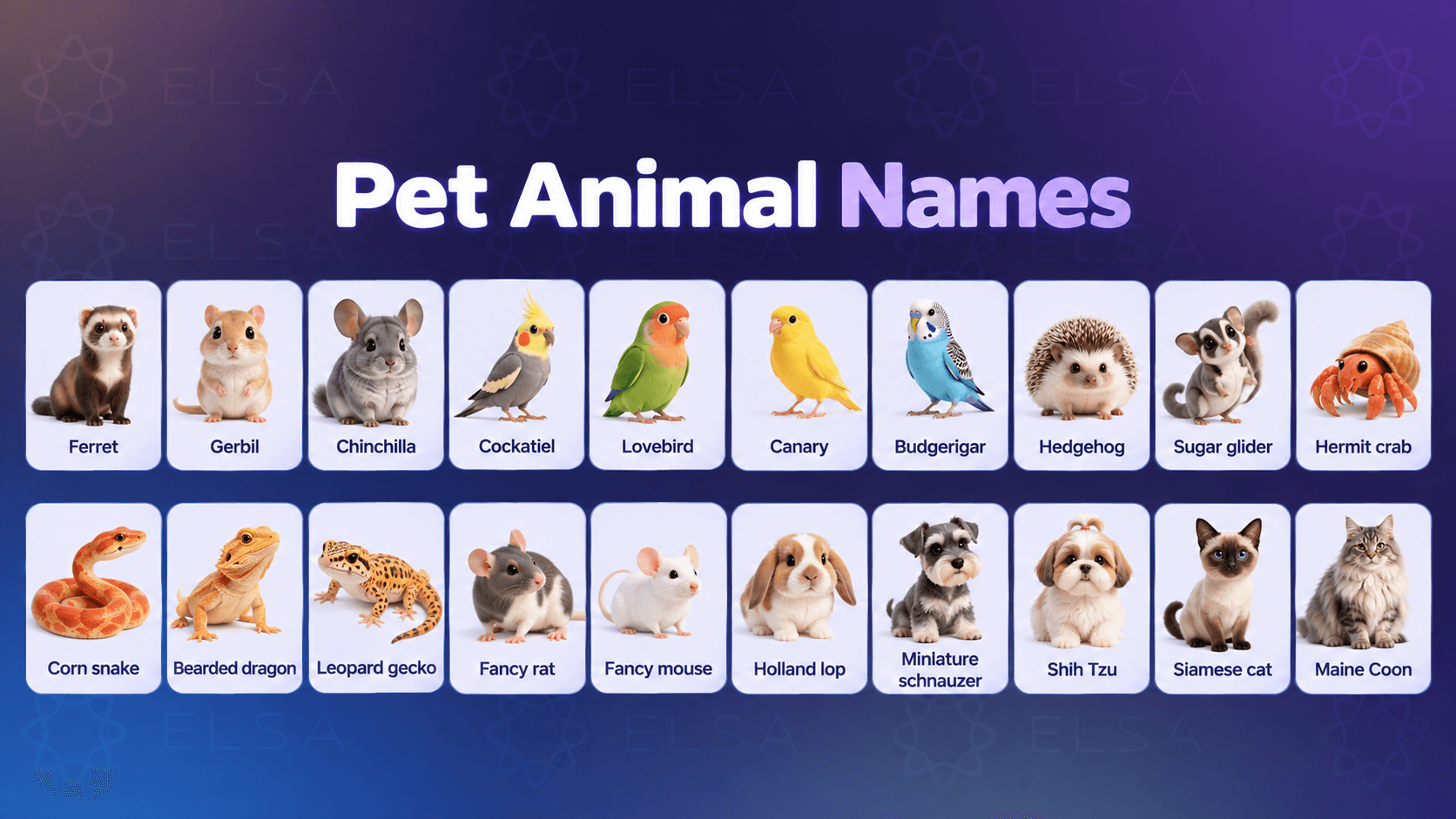
Pet animal names
Pets are animals that are kept by people for companionship. The following table introduces 20 pet animal names, including several popular breeds and less common companion animals.
| Animal names | IPA pronunciation |
|---|---|
| Ferret | /ˈfer.ɪt/ |
| Gerbil | /ˈdʒɝː.bəl/ |
| Chinchilla | /tʃɪnˈtʃɪl.ə/ |
| Cockatiel | /ˌkɑː.kəˈtiːl/ |
| Lovebird | /ˈlʌv.bɝːd/ |
| Canary | /kəˈner.i/ |
| Budgerigar | /ˈbʌdʒ.əˌɡɑːr/ |
| Hedgehog | /ˈhedʒ.hɑːɡ/ |
| Sugar glider | /ˈʃʊɡ.ɚ ˌɡlaɪ.dɚ/ |
| Hermit crab | /ˈhɝː.mɪt kræb/ |
| Corn snake | /ˈkɔːrn sneɪk/ |
| Bearded dragon | /ˈbɪr.dɪd ˌdræɡ.ən/ |
| Leopard gecko | /ˈlep.ɚd ˈɡek.oʊ/ |
| Fancy rat | /ˈfæn.si ræt/ |
| Fancy mouse | /ˈfæn.si maʊs/ |
| Holland lop | /ˈhɑː.lənd lɑːp/ |
| Miniature schnauzer | /ˈmɪn.i.ə.tʃɚ ˈʃnaʊ.zɚ/ |
| Shih Tzu | /ˌʃiː ˈtsuː/ |
| Siamese cat | /ˌsaɪ.əˈmiːz kæt/ |
| Maine Coon | /ˌmeɪn ˈkuːn/ |
Example sentences:
- My chinchilla enjoys exploring its enclosure.
- A cockatiel can learn to imitate certain sounds.
Farm animal names
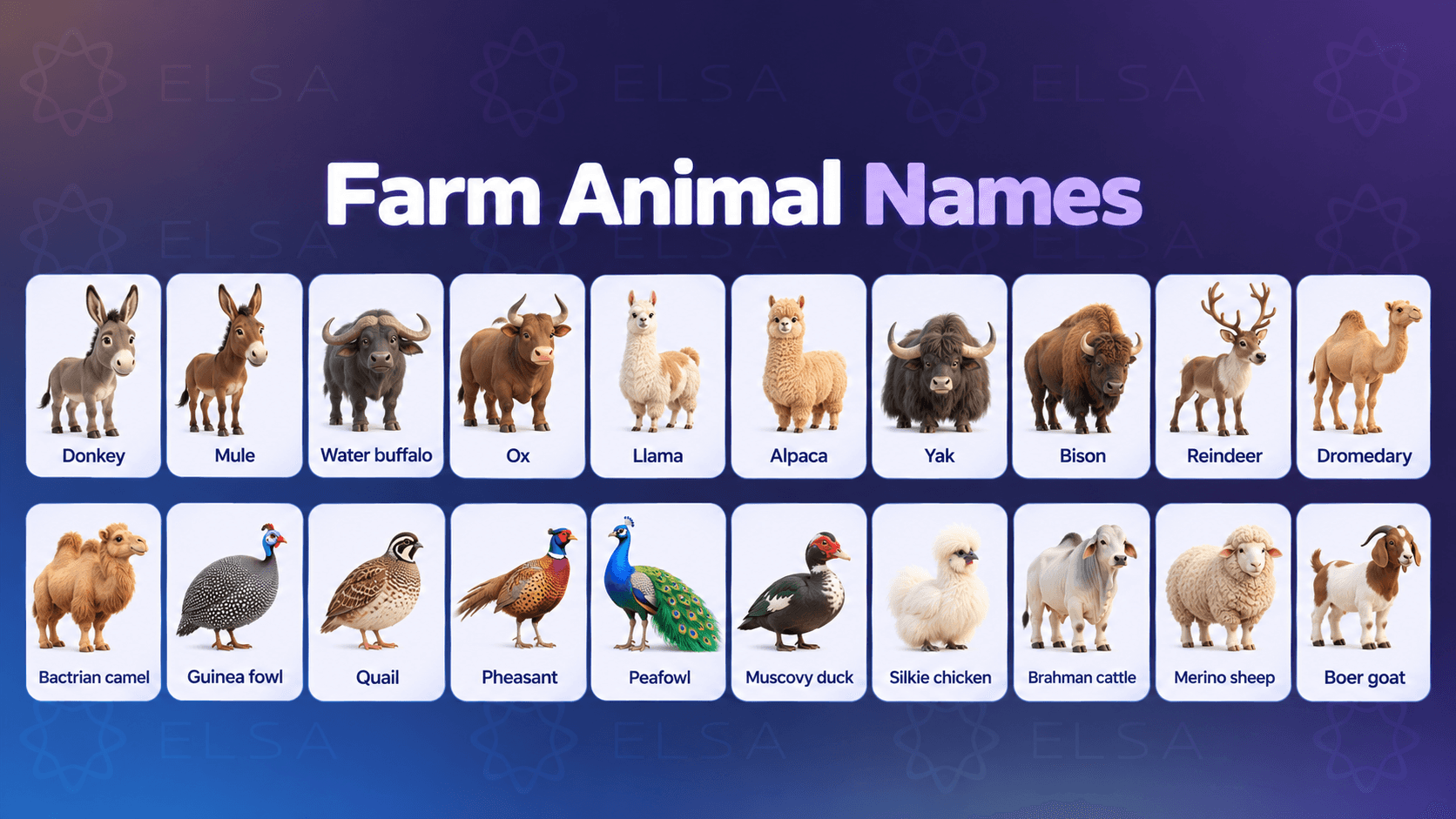
Farm animals are raised or managed for purposes such as producing food, transportation, and agricultural. Some of names of animals in this list are particularly associated with specific regions or farming traditions.
| Animal names | IPA pronunciation |
|---|---|
| Donkey | /ˈdɑːŋ.ki/ |
| Mule | /mjuːl/ |
| Water buffalo | /ˈwɑː.t̬ɚ ˌbʌf.ə.loʊ/ |
| Ox | /ɑːks/ |
| Llama | /ˈlɑː.mə/ |
| Alpaca | /ælˈpæk.ə/ |
| Yak | /jæk/ |
| Bison | /ˈbaɪ.sən/ |
| Reindeer | /ˈreɪn.dɪr/ |
| Dromedary | /ˈdrɑː.məˌder.i/ |
| Bactrian camel | /ˈbæk.tri.ən ˌkæm.əl/ |
| Guinea fowl | /ˈɡɪn.i faʊl/ |
| Quail | /kweɪl/ |
| Pheasant | /ˈfez.ənt/ |
| Peafowl | /ˈpiː.faʊl/ |
| Muscovy duck | /mʌˈskoʊ.vi dʌk/ |
| Silkie chicken | /ˈsɪl.ki ˈtʃɪk.ɪn/ |
| Brahman cattle | /ˈbrɑː.mən ˈkæt̬.əl/ |
| Merino sheep | /məˈriː.noʊ ʃiːp/ |
| Boer goat | /bʊr ɡoʊt/ |
Example sentences:
- The donkey carries supplies along the rural trail.
- Farmers raise Merino sheep for their wool.
Wild animal names
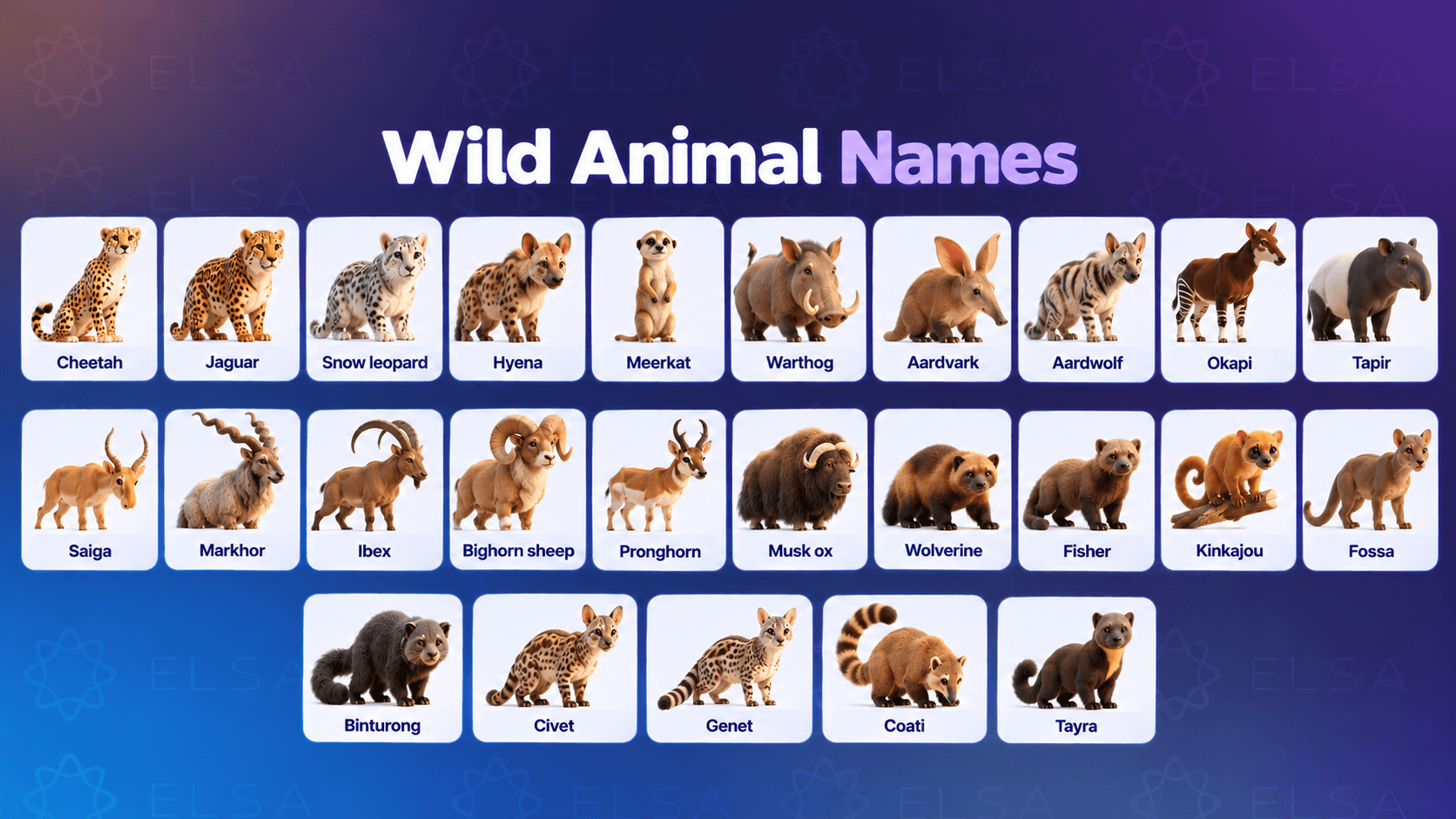
Wild animals usually live independently of humans in natural environments such as forests, deserts, grasslands, etc. They vary widely in size, diet, behavior, and adaptations. Some of the well known wild animals included: lions, tigers, cheetah, etc.
| Animal names | IPA pronunciation |
|---|---|
| Cheetah | /ˈtʃiː.t̬ə/ |
| Jaguar | /ˈdʒæɡ.wɑːr/ |
| Snow leopard | /ˈsnoʊ ˌlep.ɚd/ |
| Hyena | /haɪˈiː.nə/ |
| Meerkat | /ˈmɪr.kæt/ |
| Warthog | /ˈwɔːrt.hɑːɡ/ |
| Aardvark | /ˈɑːrd.vɑːrk/ |
| Aardwolf | /ˈɑːrd.wʊlf/ |
| Okapi | /oʊˈkɑː.pi/ |
| Tapir | /ˈteɪ.pɚ/ |
| Saiga | /ˈsaɪ.ɡə/ |
| Markhor | /ˈmɑːr.kɔːr/ |
| Ibex | /ˈaɪ.beks/ |
| Bighorn sheep | /ˈbaɪ.hɔːrn ʃiːp/ |
| Pronghorn | /ˈprɔːŋ.hɔːrn/ |
| Musk ox | /ˈmʌsk ˌɑːks/ |
| Wolverine | /ˈwʊl.və.riːn/ |
| Fisher | /ˈfɪʃ.ɚ/ |
| Kinkajou | /ˈkɪŋ.kə.dʒuː/ |
| Fossa | /ˈfɑː.sə/ |
| Binturong | /bɪnˈtʊr.ɑːŋ/ |
| Civet | /ˈsɪv.ɪt/ |
| Genet | /ˈʒen.ɪt/ |
| Coati | /koʊˈɑː.t̬i/ |
| Tayra | /ˈteɪ.rə/ |
Example sentences:
- The cheetah is known for its exceptional running speed.
- Meerkats often live in social groups.
Other Mammals
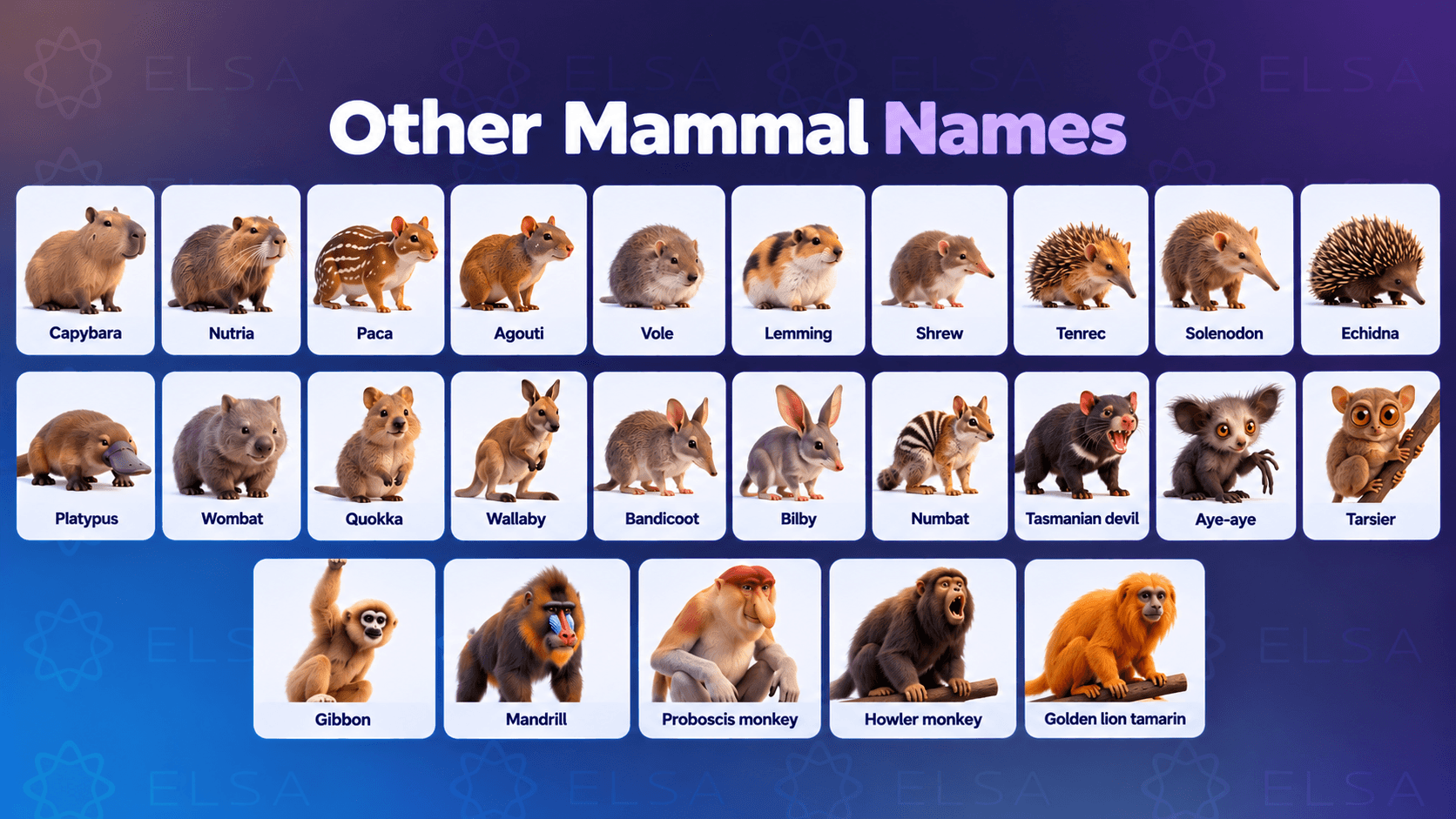
Mammals are vertebrates that generally have hair or fur and produce milk to feed their young. Although many familiar mammals are pets or large wild animals, the group also includes unusual rodents, marsupials, monotremes, and primates.
| Animal names | IPA pronunciation |
|---|---|
| Capybara | /ˌkæp.ɪˈbɑːr.ə/ |
| Nutria | /ˈnuː.tri.ə/ |
| Paca | /ˈpɑː.kə/ |
| Agouti | /əˈɡuː.t̬i/ |
| Vole | /voʊl/ |
| Lemming | /ˈlem.ɪŋ/ |
| Shrew | /ʃruː/ |
| Tenrec | /ˈten.rek/ |
| Solenodon | /səˈlen.ə.dɑːn/ |
| Echidna | /ɪˈkɪd.nə/ |
| Platypus | /ˈplæt̬.ɪ.pəs/ |
| Wombat | /ˈwɑːm.bæt/ |
| Quokka | /ˈkwɑː.kə/ |
| Wallaby | /ˈwɑː.lə.bi/ |
| Bandicoot | /ˈbæn.dɪ.kuːt/ |
| Bilby | /ˈbɪl.bi/ |
| Numbat | /ˈnʌm.bæt/ |
| Tasmanian devil | /tæzˈmeɪ.ni.ən ˈdev.əl/ |
| Aye-aye | /ˈaɪ.aɪ/ |
| Tarsier | /ˈtɑːr.si.ɚ/ |
| Gibbon | /ˈɡɪb.ən/ |
| Mandrill | /ˈmæn.drɪl/ |
| Proboscis monkey | /proʊˈbɑː.sɪs ˈmʌŋ.ki/ |
| Howler monkey | /ˈhaʊ.lɚ ˌmʌŋ.ki/ |
| Golden lion tamarin | /ˈɡoʊl.dən ˈlaɪ.ən ˈtæm.ə.rɪn/ |
Example sentences:
- The capybara is native to South America.
- A wombat digs burrows for shelter.
Bird animal names
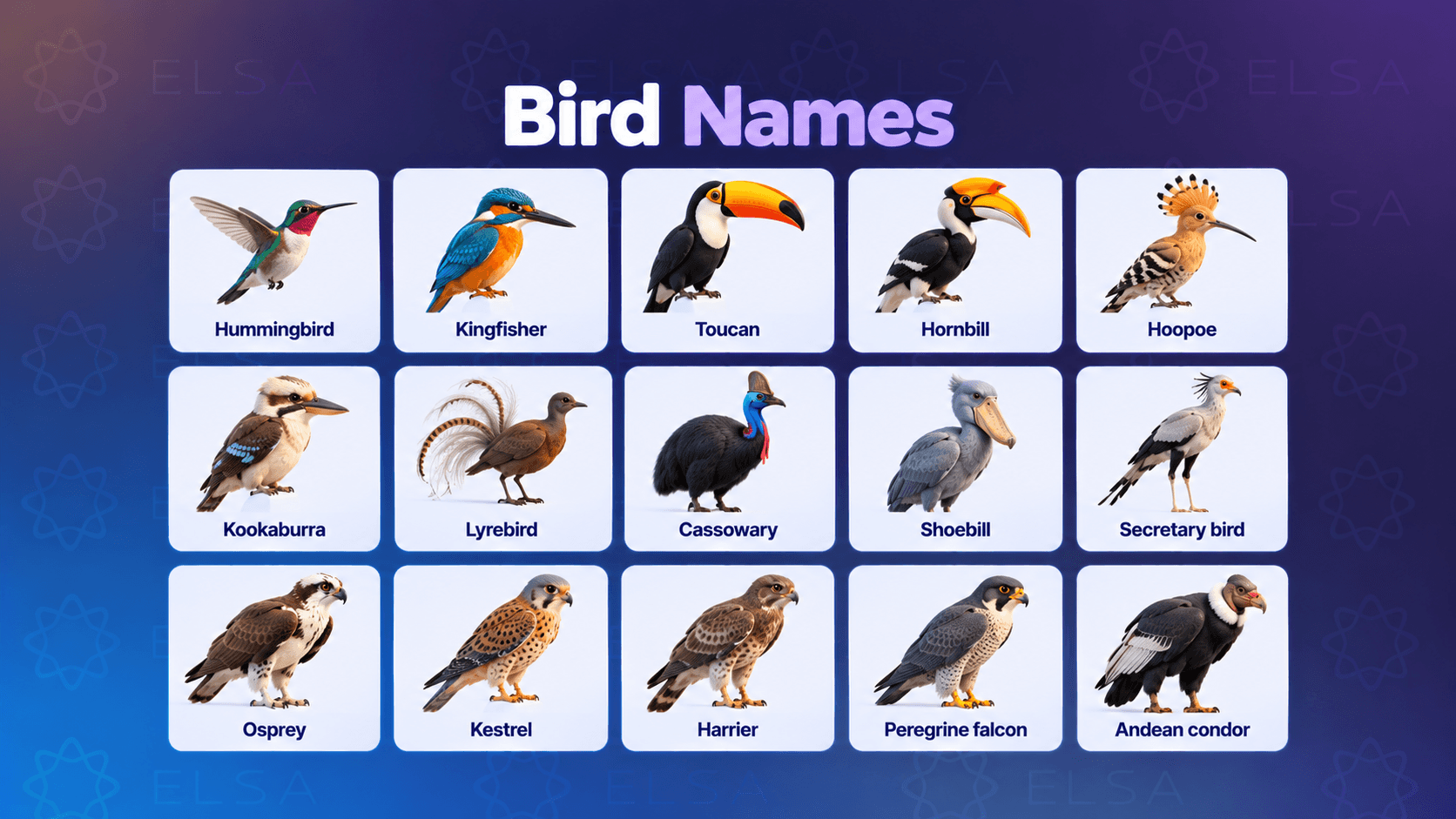
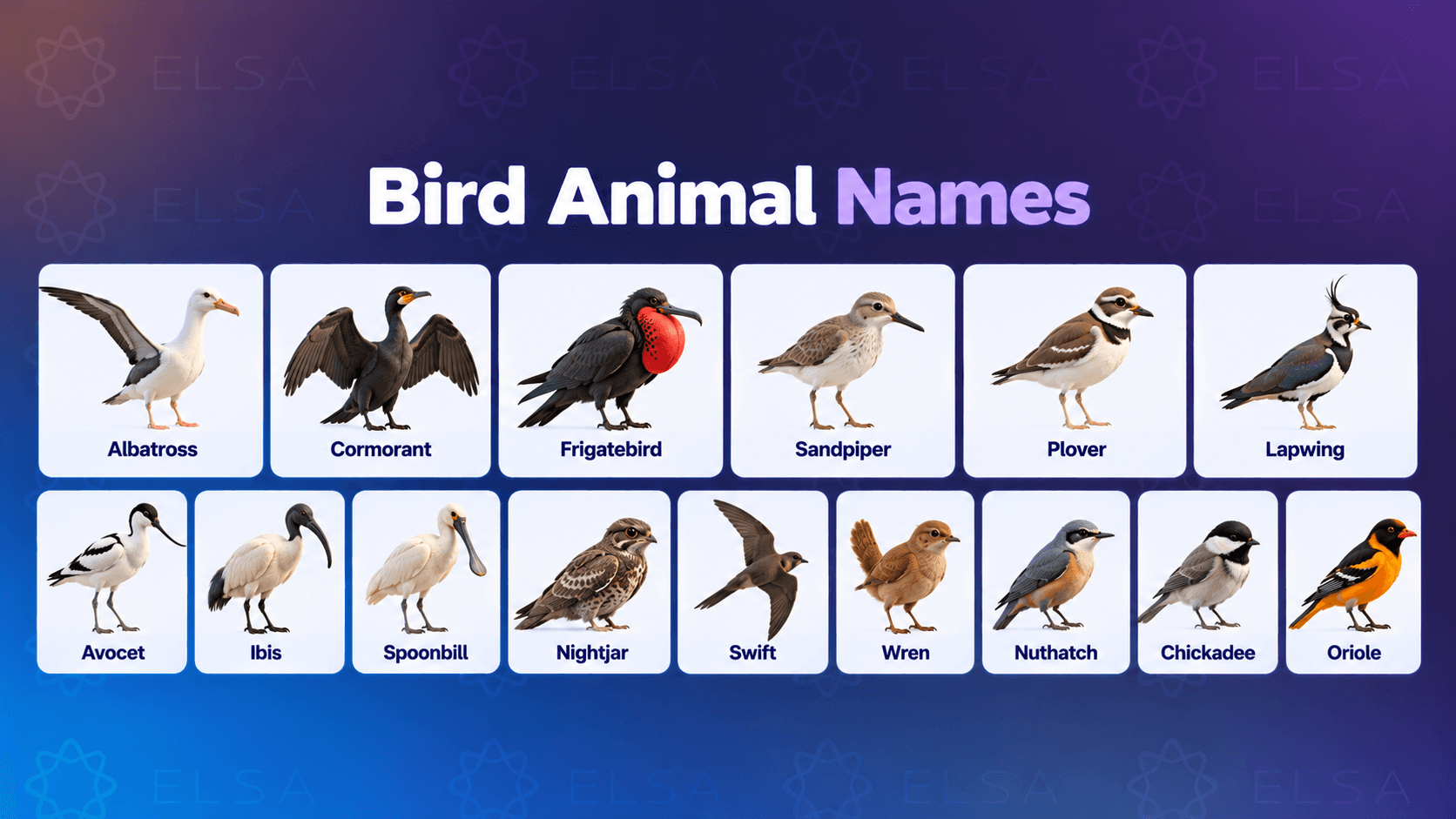
Birds are vertebrates characterized by feathers, beaks, and egg-laying reproduction. They inhabit a wide range of environments, from forests and wetlands to coastlines and open oceans. Although many birds can fly, some species, including cassowaries, cannot. The following list includes birds known for their appearance, calls, hunting techniques, or specialized feeding habits.
| Animal names | IPA pronunciation |
|---|---|
| Hummingbird | /ˈhʌm.ɪŋ.bɝːd/ |
| Kingfisher | /ˈkɪŋˌfɪʃ.ɚ/ |
| Toucan | /ˈtuː.kæn/ |
| Hornbill | /ˈhɔːrn.bɪl/ |
| Hoopoe | /ˈhuː.puː/ |
| Kookaburra | /ˈkʊk.əˌbɝː.ə/ |
| Lyrebird | /ˈlaɪr.bɝːd/ |
| Cassowary | /ˈkæs.əˌwer.i/ |
| Shoebill | /ˈʃuː.bɪl/ |
| Secretary bird | /ˈsek.rəˌter.i bɝːd/ |
| Osprey | /ˈɑː.spreɪ/ |
| Kestrel | /ˈkes.trəl/ |
| Harrier | /ˈher.i.ɚ/ |
| Peregrine falcon | /ˈper.ə.ɡrɪn ˌfæl.kən/ |
| Andean condor | /ˈæn.di.ən ˈkɑːn.dɔːr/ |
| Animal names | IPA pronunciation |
|---|---|
| Albatross | /ˈæl.bəˌtrɔːs/ |
| Cormorant | /ˈkɔːr.mə.rənt/ |
| Frigatebird | /ˈfrɪɡ.ətˌbɝːd/ |
| Sandpiper | /ˈsændˌpaɪ.pɚ/ |
| Plover | /ˈplʌv.ɚ/ |
| Lapwing | /ˈlæp.wɪŋ/ |
| Avocet | /ˈæv.ə.set/ |
| Ibis | /ˈaɪ.bɪs/ |
| Spoonbill | /ˈspuːn.bɪl/ |
| Nightjar | /ˈnaɪt.dʒɑːr/ |
| Swift | /swɪft/ |
| Wren | /ren/ |
| Nuthatch | /ˈnʌt.hætʃ/ |
| Chickadee | /ˈtʃɪk.əˌdiː/ |
| Oriole | /ˈɔːr.i.oʊl/ |
Example sentences:
- A hummingbird can hover while feeding on nectar.
- The kingfisher dives into the water to catch fish.
Sea animal names
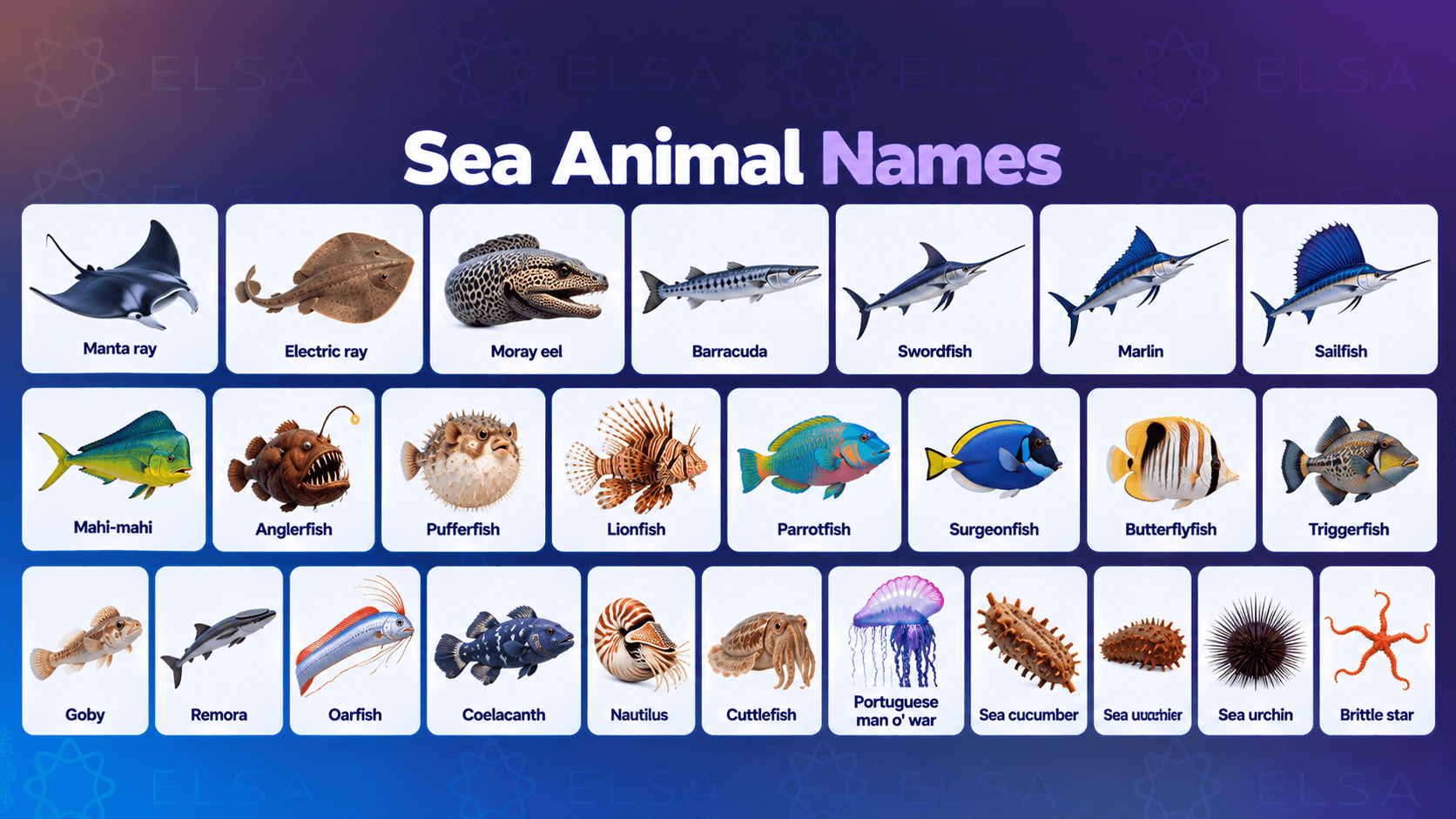
Sea animals live in saltwater environments, including coral reefs, coastal waters, open oceans, and the deep sea. This group includes fish, mollusks, and echinoderms, as well as other marine organisms with very different body structures.
| Animal names | IPA pronunciation |
|---|---|
| Manta ray | /ˈmæn.tə reɪ/ |
| Electric ray | /ɪˈlek.trɪk reɪ/ |
| Moray eel | /ˈmɔː.reɪ iːl/ |
| Barracuda | /ˌber.əˈkuː.də/ |
| Swordfish | /ˈsɔːrd.fɪʃ/ |
| Marlin | /ˈmɑːr.lɪn/ |
| Sailfish | /ˈseɪl.fɪʃ/ |
| Mahi-mahi | /ˈmɑː.hi ˌmɑː.hi/ |
| Anglerfish | /ˈæŋ.ɡlɚ.fɪʃ/ |
| Pufferfish | /ˈpʌf.ɚ.fɪʃ/ |
| Lionfish | /ˈlaɪ.ən.fɪʃ/ |
| Parrotfish | /ˈper.ət.fɪʃ/ |
| Surgeonfish | /ˈsɝː.dʒən.fɪʃ/ |
| Butterflyfish | /ˈbʌt̬.ɚ.flaɪ.fɪʃ/ |
| Triggerfish | /ˈtrɪɡ.ɚ.fɪʃ/ |
| Goby | /ˈɡoʊ.bi/ |
| Remora | /ˈrem.ɚ.ə/ |
| Oarfish | /ˈɔːr.fɪʃ/ |
| Coelacanth | /ˈsiː.lə.kænθ/ |
| Nautilus | /ˈnɔː.t̬ə.ləs/ |
| Cuttlefish | /ˈkʌt̬.əl.fɪʃ/ |
| Portuguese man o' war | /ˌpɔːr.tʃəˈɡiːz ˌmæn oʊ ˈwɔːr/ |
| Sea cucumber | /ˈsiː ˌkjuː.kʌm.bɚ/ |
| Sea urchin | /ˈsiː ˌɝː.tʃɪn/ |
| Brittle star | /ˈbrɪt̬.əl stɑːr/ |
Example sentences:
- The manta ray swims through the ocean while filtering food from the water.
- A pufferfish can inflate its body when threatened.
Freshwater Animals
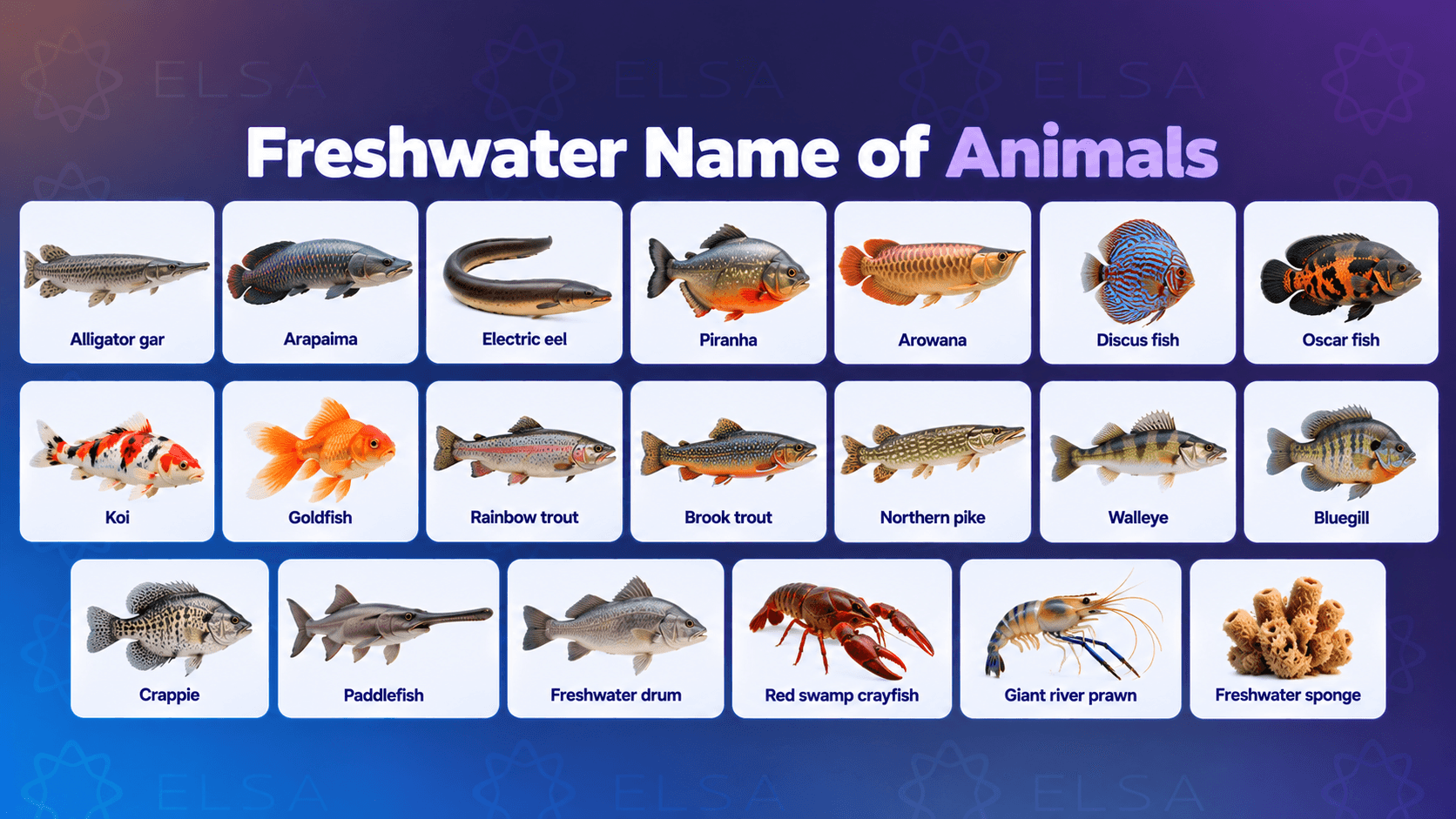
Freshwater animals inhabit rivers, streams, lakes, ponds, and other environments with relatively low salt concentrations.
| Animal names | IPA pronunciation |
|---|---|
| Alligator gar | /ˈæl.ɪˌɡeɪ.t̬ɚ ɡɑːr/ |
| Arapaima | /ˌer.əˈpaɪ.mə/ |
| Electric eel | /ɪˈlek.trɪk iːl/ |
| Piranha | /pɪˈrɑː.nə/ |
| Arowana | /ˌer.oʊˈwɑː.nə/ |
| Discus fish | /ˈdɪs.kəs fɪʃ/ |
| Oscar fish | /ˈɑːs.kɚ fɪʃ/ |
| Koi | /kɔɪ/ |
| Goldfish | /ˈɡoʊld.fɪʃ/ |
| Rainbow trout | /ˈreɪn.boʊ traʊt/ |
| Brook trout | /ˈbrʊk traʊt/ |
| Northern pike | /ˈnɔːr.ðɚn paɪk/ |
| Walleye | /ˈwɑːl.aɪ/ |
| Bluegill | /ˈbluː.ɡɪl/ |
| Crappie | /ˈkræp.i/ |
| Paddlefish | /ˈpæd.əl.fɪʃ/ |
| Freshwater drum | /ˈfreʃˌwɑː.t̬ɚ drʌm/ |
| Red swamp crayfish | /ˈred swɑːmp ˈkreɪ.fɪʃ/ |
| Giant river prawn | /ˈdʒaɪ.ənt ˈrɪv.ɚ prɔːn/ |
| Freshwater sponge | /ˈfreʃˌwɑː.t̬ɚ spʌndʒ/ |
Example sentences:
- Rainbow trout live in many cool, well-oxygenated freshwater habitats.
- Koi are often kept in ornamental ponds.
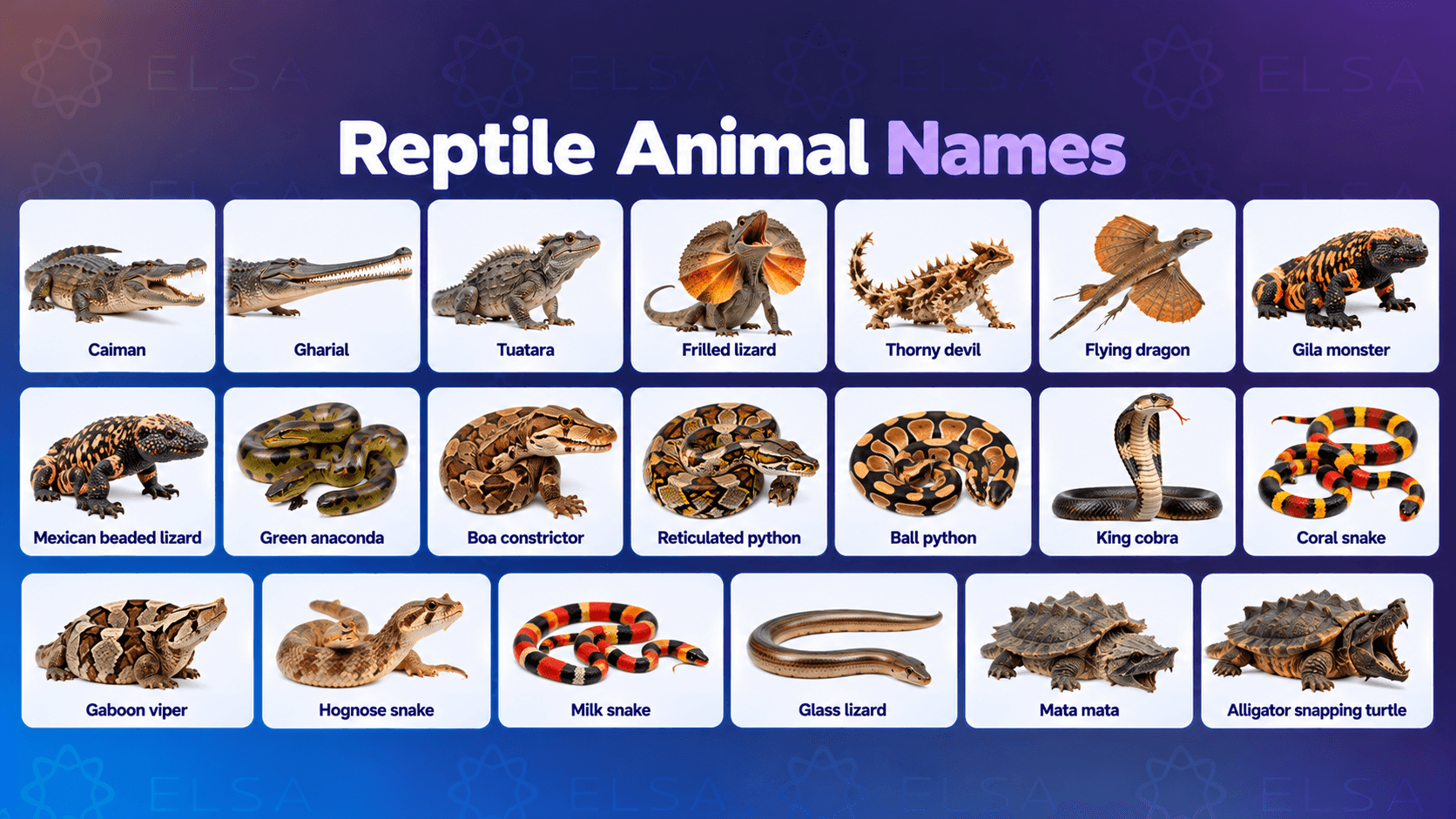
Reptiles
Reptiles are vertebrates that generally have dry, scaly skin. Snakes, lizards, turtles, and crocodilian relatives belong to this group.
| Animal names | IPA pronunciation |
|---|---|
| Caiman | /ˈkeɪ.mən/ |
| Gharial | /ˈɡer.i.əl/ |
| Tuatara | /ˌtuː.əˈtɑːr.ə/ |
| Frilled lizard | /ˈfrɪld ˌlɪz.ɚd/ |
| Thorny devil | /ˈθɔːr.ni ˈdev.əl/ |
| Flying dragon | /ˈflaɪ.ɪŋ ˈdræɡ.ən/ |
| Gila monster | /ˈhiː.lə ˌmɑːn.stɚ/ |
| Mexican beaded lizard | /ˈmek.sɪ.kən ˈbiː.dɪd ˌlɪz.ɚd/ |
| Green anaconda | /ˈɡriːn ˌæn.əˈkɑːn.də/ |
| Boa constrictor | /ˈboʊ.ə kənˈstrɪk.tɚ |
| Reticulated python | /rɪˈtɪk.jəˌleɪ.t̬ɪd ˈpaɪ.θɑːn/ |
| Ball python | /ˈbɔːl ˌpaɪ.θɑːn/ |
| King cobra | /ˈkɪŋ ˌkoʊ.brə/ |
| Coral snake | /ˈkɔːr.əl sneɪk/ |
| Gaboon viper | /ɡəˈbuːn ˈvaɪ.pɚ/ |
| Hognose snake | /ˈhɑːɡ.noʊz sneɪk/ |
| Milk snake | /ˈmɪlk sneɪk/ |
| Glass lizard | /ˈɡlæs ˌlɪz.ɚd/ |
| Mata mata | /ˈmɑː.tə ˈmɑː.tə/ |
| Alligator snapping turtle | /ˈæl.ɪˌɡeɪ.t̬ɚ ˈsnæp.ɪŋ ˌtɝː.t̬əl/ |
Example sentences:
- The green anaconda is a large snake native to South America.
- A frilled lizard can spread the skin around its neck when threatened.
Amphibian animal names
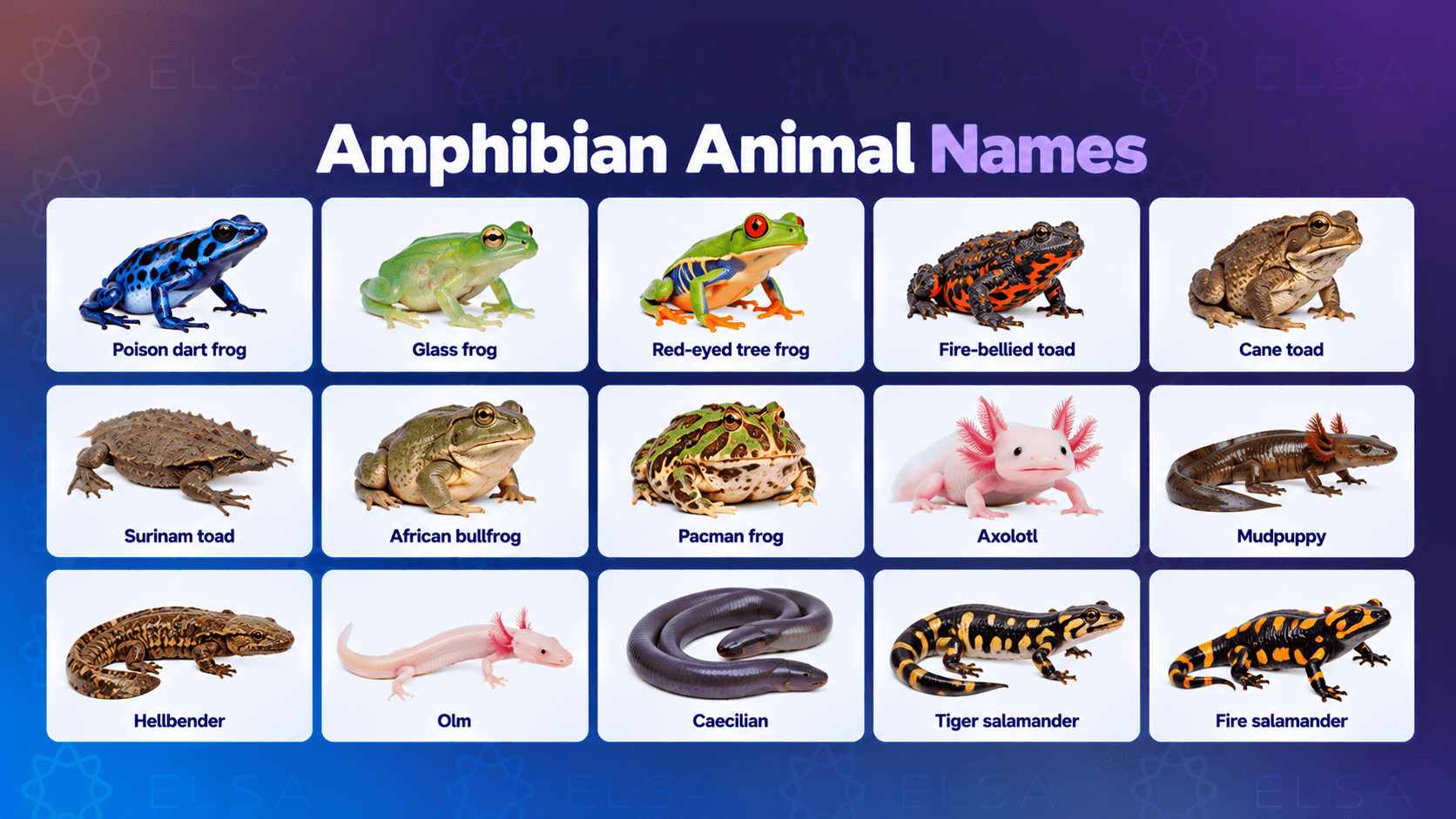
Amphibians are vertebrates that commonly have moist skin and life cycles involving aquatic or water-dependent stages. Frogs, toads, salamanders, and caecilians belong to this group.
| Animal names | IPA pronunciation |
|---|---|
| Poison dart frog | /ˈpɔɪ.zən ˈdɑːrt frɔːɡ/ |
| Glass frog | /ˈɡlæs frɔːɡ/ |
| Red-eyed tree frog | /ˌred aɪd ˈtriː frɔːɡ/ |
| Fire-bellied toad | /ˈfaɪr ˌbel.id toʊd/ |
| Cane toad | /ˈkeɪn toʊd/ |
| Surinam toad | /ˈsʊr.ɪ.nɑːm toʊd/ |
| African bullfrog | /ˈæf.rɪ.kən ˈbʊl.frɔːɡ/ |
| Pacman frog | /ˈpæk.mæn frɔːɡ/ |
| Axolotl | /ˈæk.səˌlɑː.t̬əl/ |
| Mudpuppy | /ˈmʌdˌpʌp.i/ |
| Hellbender | /ˈhelˌben.dɚ/ |
| Olm | /oʊlm/ |
| Caecilian | /sɪˈsɪl.i.ən/ |
| Tiger salamander | /ˈtaɪ.ɡɚ ˈsæl.əˌmæn.dɚ/ |
| Fire salamander | /ˈfaɪr ˈsæl.əˌmæn.dɚ/ |
Insect animal names
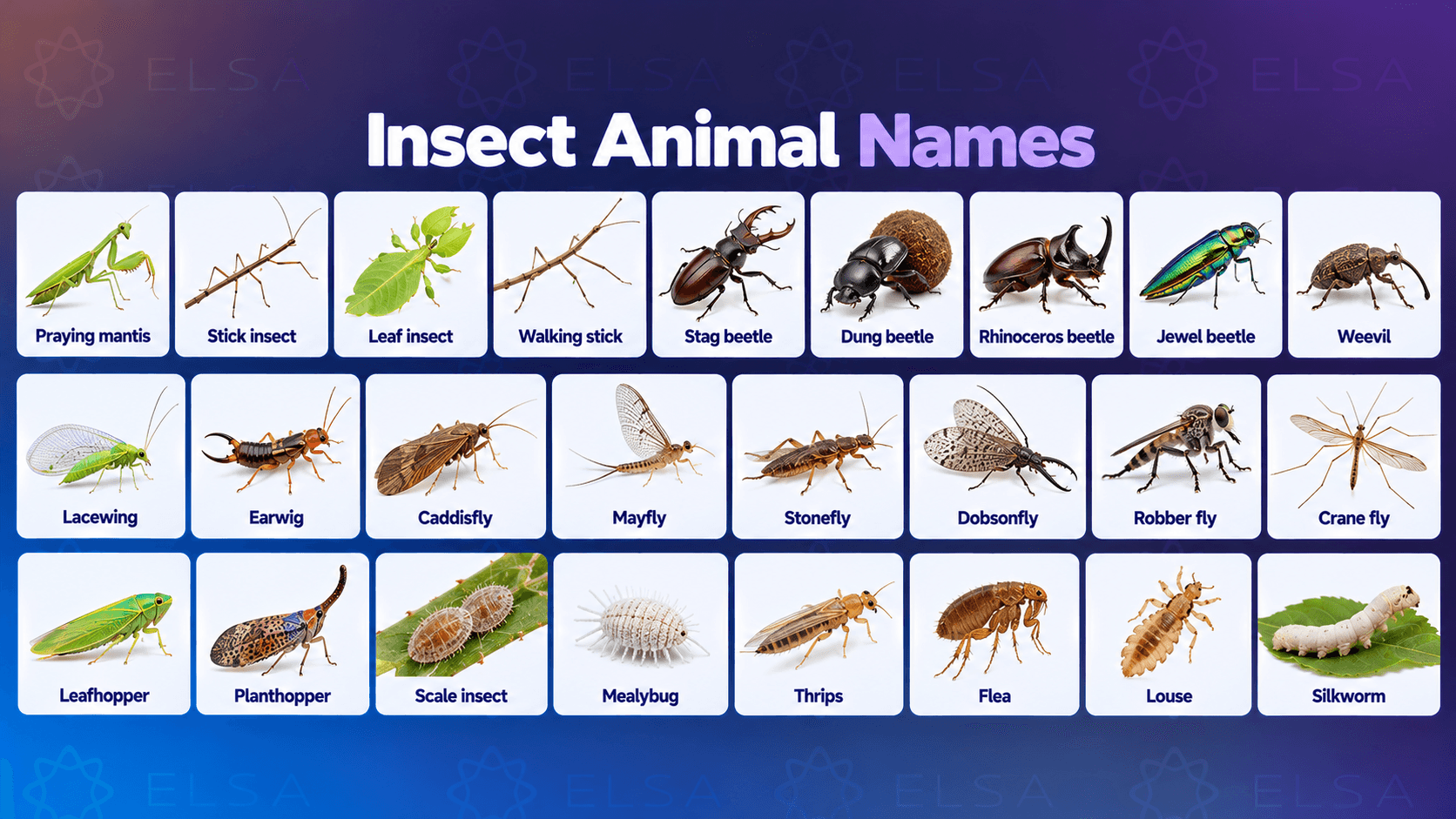
Insects are invertebrates with three main body segments, six legs, and, in many species, wings. They are among the most diverse animal groups and play important roles in pollination, decomposition, and food webs.
| Animal names | IPA pronunciation |
|---|---|
| Praying mantis | /ˈpreɪ.ɪŋ ˈmæn.tɪs/ |
| Stick insect | /ˈstɪk ˌɪn.sekt/ |
| Leaf insect | /ˈliːf ˌɪn.sekt/ |
| Walking stick | /ˈwɔː.kɪŋ stɪk/ |
| Stag beetle | /ˈstæɡ ˌbiː.t̬əl/ |
| Dung beetle | /ˈdʌŋ ˌbiː.t̬əl/ |
| Rhinoceros beetle | /raɪˈnɑː.sə.rəs ˌbiː.t̬əl/ |
| Jewel beetle | /ˈdʒuː.əl ˌbiː.t̬əl/ |
| Weevil | /ˈwiː.vəl/ |
| Lacewing | /ˈleɪs.wɪŋ/ |
| Earwig | /ˈɪr.wɪɡ/ |
| Caddisfly | /ˈkæd.ɪsˌflaɪ/ |
| Mayfly | /ˈmeɪˌflaɪ/ |
| Stonefly | /ˈstoʊnˌflaɪ/ |
| Dobsonfly | /ˈdɑːb.sənˌflaɪ/ |
| Robber fly | /ˈrɑː.bɚ flaɪ/ |
| Crane fly | /ˈkreɪn flaɪ/ |
| Leafhopper | /ˈliːfˌhɑː.pɚ/ |
| Planthopper | /ˈplæntˌhɑː.pɚ/ |
| Scale insect | /ˈskeɪl ˌɪn.sekt/ |
| Mealybug | /ˈmiː.liˌbʌɡ/ |
| Thrips | /θrɪps/ |
| Flea | /fliː/ |
| Louse | /laʊs/ |
| Silkworm | /ˈsɪlkˌwɝːm/ |
Other arthropod name of animals
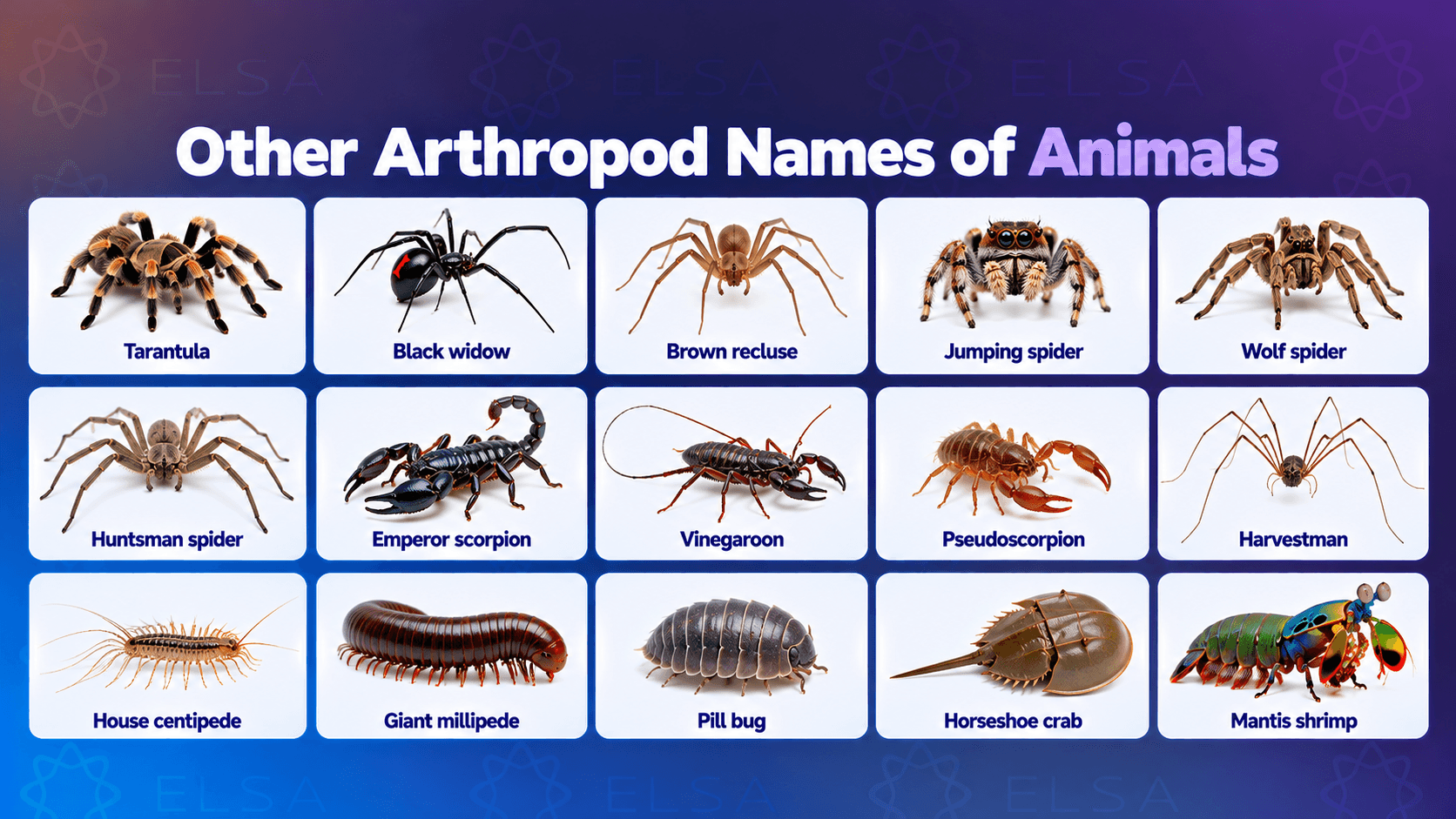
Arthropods are invertebrates with jointed appendages, segmented bodies, and external skeletons. This broad group includes arachnids, crustaceans, centipedes, and millipedes. Spiders and scorpions are arthropods, but they are not insects because they have different body structures.
| Animal names | IPA pronunciation |
|---|---|
| Tarantula | /təˈræn.tʃə.lə/ |
| Black widow | /ˌblæk ˈwɪd.oʊ/ |
| Brown recluse | /ˌbraʊn rɪˈkluːs/ |
| Jumping spider | /ˈdʒʌm.pɪŋ ˌspaɪ.dɚ |
| Wolf spider | /ˈwʊlf ˌspaɪ.dɚ/ |
| Huntsman spider | /ˈhʌnts.mən ˌspaɪ.dɚ/ |
| Emperor scorpion | /ˈem.pɚ.ɚ ˈskɔːr.pi.ən/ |
| Vinegaroon | /ˌvɪn.ɪ.ɡəˈruːn/ |
| Pseudoscorpion | /ˌsuː.doʊˈskɔːr.pi.ən/ |
| Harvestman | /ˈhɑːr.vɪst.mən/ |
| House centipede | /ˈhaʊs ˈsen.t̬əˌpiːd/ |
| Giant millipede | /ˈdʒaɪ.ənt ˈmɪl.əˌpiːd/ |
| Pill bug | /ˈpɪl bʌɡ/ |
| Horseshoe crab | /ˈhɔːrs.ʃuː kræb/ |
| Mantis shrimp | /ˈmæn.tɪs ʃrɪmp/ |
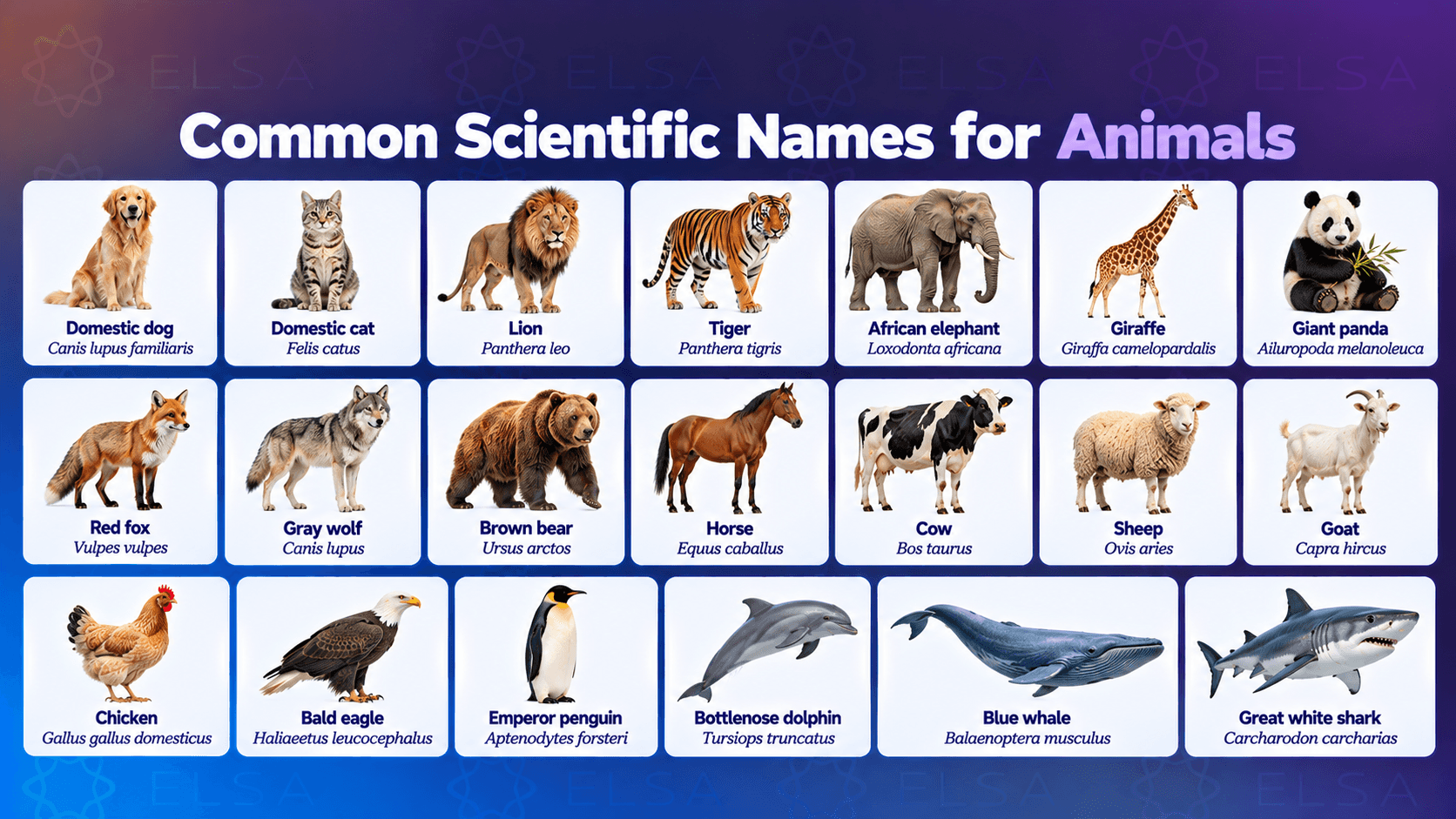
Common scientific names for animals
Scientific names for animals are standardized names used to identify organisms in biology. They help distinguish species that may have similar common names or different names in different languages.
| Animal names | Scientific names |
|---|---|
| Domestic dog | Canis lupus familiaris |
| Domestic cat | Felis catus |
| Lion | Panthera leo |
| Tiger | Panthera tigris |
| African elephant | Loxodonta africana |
| Giraffe | Giraffa camelopardalis |
| Giant panda | Ailuropoda melanoleuca |
| Red fox | Vulpes vulpes |
| Gray wolf | Canis lupus |
| Brown bear | Ursus arctos |
| Horse | Equus caballus |
| Cow | Bos taurus |
| Sheep | Ovis aries |
| Goat | Capra hircus |
| Chicken | Gallus gallus domesticus |
| Bald eagle | Haliaeetus leucocephalus |
| Emperor penguin | Aptenodytes forsteri |
| Bottlenose dolphin | Tursiops truncatus |
| Blue whale | Balaenoptera musculus |
| Great white shark | Carcharodon carcharias |
However, scientific classifications may change as researchers discover new evidence about evolutionary relationships. Therefore, they are best checked against current taxonomic references when precision is important.
FAQs about animal names
What are the most common animal names in English?
Some of the most common animal names in English are dog, cat, bird, fish, horse, cow, sheep, chicken, rabbit, lion, tiger, elephant, monkey, bear, and dolphin.
What are the different types of animals?
Animals can be categorized according to biological classification, habitat, or their relationship with humans.
Common biological groups include:
- Mammals: Dogs, cats, elephants, bats, and whales.
- Birds: Eagles, parrots, penguins, and hummingbirds.
- Fish: Salmon, tuna, goldfish, and many sharks.
- Reptiles: Snakes, lizards, turtles, and crocodilians.
- Amphibians: Frogs, toads, and salamanders.
- Insects: Butterflies, ants, beetles, and grasshoppers.
- Other invertebrates: Spiders, scorpions, octopuses, and crabs.
Animals can also be grouped by habitat, such as freshwater animals and sea animals, or by their relationship with people, such as pets and farm animals. These practical categories make English vocabulary easier to organize.
What animals with the letter u in their name?
Several animal names contain the letter U, including the following:
- Uakari: A monkey native to the Amazon Basin.
- Urial: A wild sheep found in parts of Central and South Asia.
- Umbrellabird: A tropical bird with a distinctive crest.
- Unicornfish: A group of marine fish, some of which have a horn-like projection on the head.
- Uromastyx: A genus of spiny-tailed lizards.
- Sea urchin: A marine invertebrate with a rounded body covered in spines.
You can use this type of word search to expand your vocabulary, improve spelling, and practice recognizing animal names by their initial or internal letters.
What is the scientific name of an animal?
A scientific name is a standardized name used to identify an organism in biological classification. Many animal species are named using binomial nomenclature, which combines a genus name with a species epithet.
How many animal species are there?
Scientists have formally described more than one million animal species, but the total number of animal species on Earth is considerably higher because many species remain undiscovered or have not yet been formally classified.
The exact number depends on the taxonomic group, scientific methods, and updates to classification. Therefore, estimates of total animal diversity should be understood as changing scientific assessments rather than fixed figures.
How can I learn animal names in English?
You can learn animal names more effectively by combining categorized vocabulary lists, pictures, pronunciation practice, and regular review. Try these practical strategies:
- Learn by category: Start with pets and farm animals before moving on to wildlife, marine animals, and less familiar species.
- Use pictures: Associate each animal name with an image to strengthen visual memory.
- Practice pronunciation: Read the IPA transcription and listen to American English audio when available.
- Write example sentences: Use new words in sentences such as “The otter swims in the river” or “The falcon flies above the field.”
- Review regularly: Test yourself on previously learned words before adding new vocabulary.
- Practice speaking: Describe an animal's appearance, habitat, diet, and behavior aloud.
You can also use English-learning tools such as ELSA Speak to practice pronunciation and improve your confidence when speaking English.
>> See more:
Learning 300+ animal names in English helps you describe the natural world and communicate about a wide variety of species. To remember new words, study them in small groups, use pictures to connect names with animals, and practice the vocabulary in complete sentences. Remember to visit the Vocabulary category on ELSA Speak blog to build your vocabulary, improve your pronunciation, and communicate more confidently in English.