

Back to School Vocabulary: Essential words for students
elsaspeakadmin
September 21, 2026
Common vocabulary
The new school year is just around the corner, and it’s normal to feel a little overwhelmed as you prepare to get back to school. There’s so much to think about, from new classes and teachers to new routines and maybe even a new school. One way to feel more prepared is to build your English vocabulary around everyday school life. In this guide, you’ll learn essential back-to-school vocabulary to help you feel more confident in the classroom and throughout the school year.
100+ back-to-school vocabulary words
School supplies and classroom objects
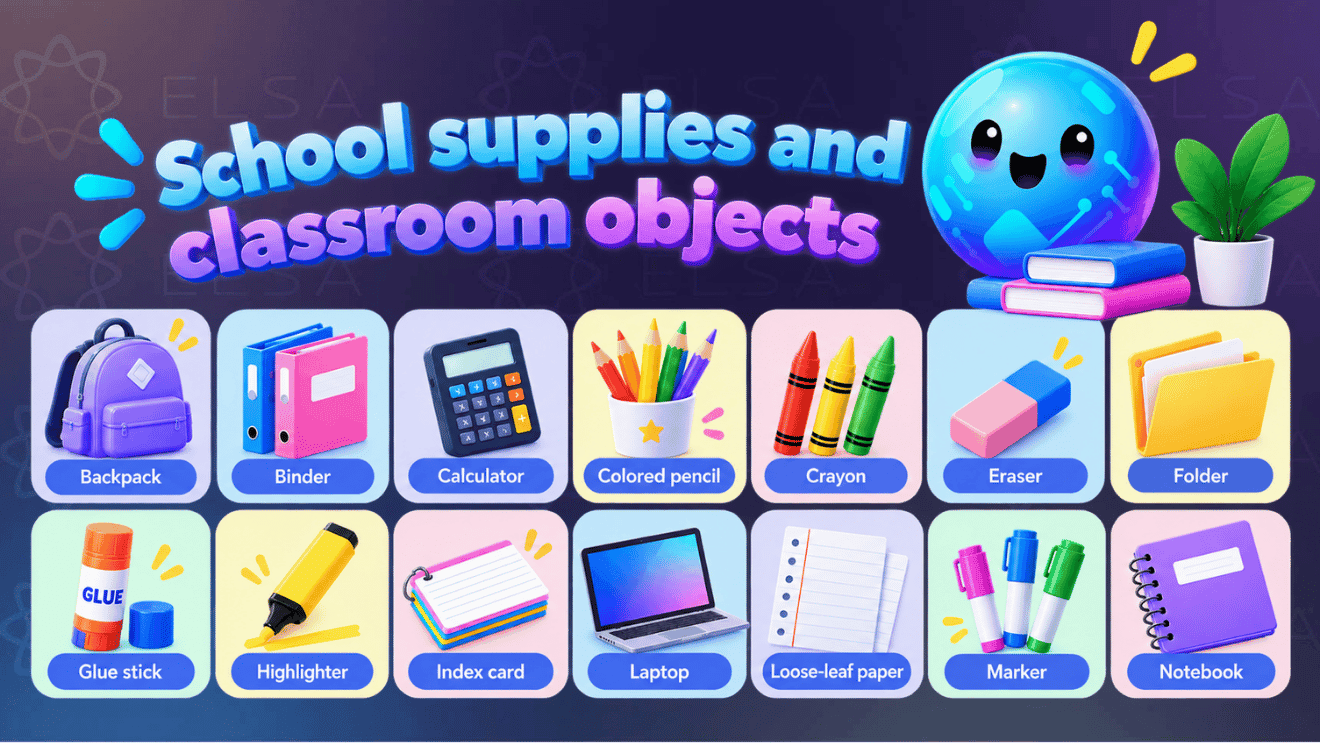
Get familiar with the school supplies and classroom objects you’ll use every day with this back-to-school vocabulary word list.
| Words | Pronunciation | Meaning |
| Backpack | /ˈbækˌpæk/ | A bag worn on the back, used to carry books, school supplies, and other personal items. |
| Binder | /ˈbaɪndər/ | A folder with rings used to hold and organize loose papers, notes, and other documents. |
| Calculator | /ˈkælkjəˌleɪtər/ | A small electronic device used to perform mathematical calculations. |
| Colored pencil | /ˈkʌlərd ˌpɛnsəl/ | A pencil with a colored core, used for drawing, coloring, or adding color to notes and assignments. |
| Crayon | /ˈkreɪɑːn/ | A stick of colored wax used for drawing and coloring, especially by children. |
| Eraser | /ɪˈreɪsər/ | A small tool, usually made of rubber, used to remove marks made by a pencil. |
| Folder | /ˈfoʊldər/ | A paper or plastic cover used to store and organize loose sheets of paper. |
| Glue stick | /ˈɡluː stɪk/ | A solid adhesive in a tube that is used to stick paper and other lightweight materials together. |
| Highlighter | /ˈhaɪˌlaɪtər/ | A brightly colored pen used to mark important words or information in a text. |
| Index card | /ˈɪndeks kɑːrd/ | A small card used for writing notes, study points, vocabulary, or other information. |
| Laptop | /ˈlæpˌtɑːp/ | A portable computer that can be used for studying, writing, researching, and other tasks. |
| Loose-leaf paper | /ˌluːs ˈliːf ˌpeɪpər/ | Individual sheets of paper that are not permanently bound together, often used in binders. |
| Marker | /ˈmɑːrkər/ | A pen with a thick, usually colored tip used for writing, drawing, or marking surfaces. |
| Notebook | /ˈnoʊtˌbʊk/ | A book of blank or lined pages used for taking notes, writing assignments, or recording information. |
| Pen | /pɛn/ | A writing tool that uses ink to make marks on paper or other surfaces. |
| Pencil | /ˈpɛnsəl/ | A writing or drawing tool with a thin graphite core, usually inside a wooden or plastic casing. |
| Pencil sharpener | /ˈpɛnsəl ˌʃɑːrpənər/ | A tool used to sharpen the tip of a pencil so it can be used for writing or drawing |
| Ruler | /ˈruːlər/ | A straight tool with marked measurements, used for measuring distances or drawing straight lines. |
| Scissors | /ˈsɪzərz/ | A tool with two sharp blades used for cutting paper, fabric, and other materials. |
| Textbook | /ˈtɛkstˌbʊk/ | A book that provides information and lessons about a particular subject for students to study. |
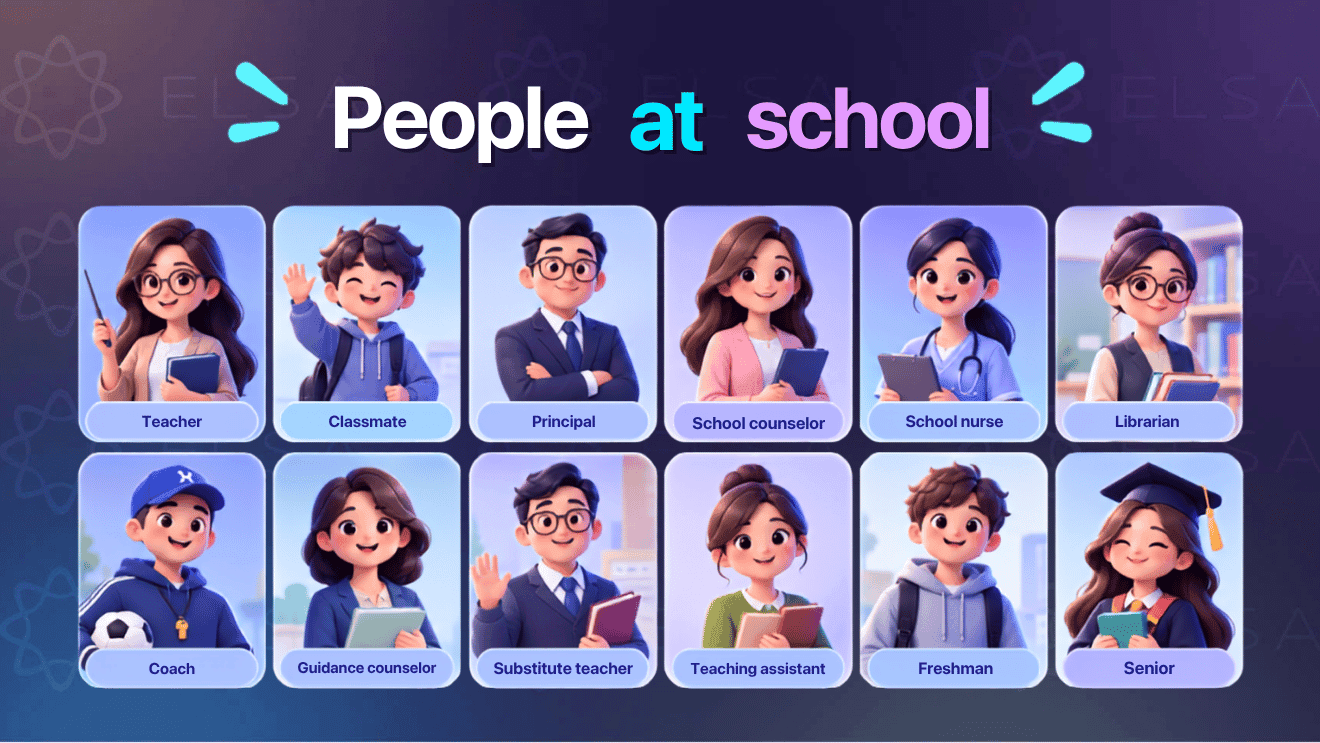
People at school
From teachers and classmates to counselors and school staff, here are some of the people you may interact with at school.
| Words | Pronunciation | Meaning |
| Classmate | /ˈklæsˌmeɪt/ | A student who is in the same class or school as you. |
| Coach | /koʊtʃ/ | A person who trains and teaches students how to play a sport or improve their athletic skills. |
| Freshman | /ˈfrɛʃmən/ | A student in the first year of high school or college in the US. |
| Guidance counselor | /ˈɡaɪdəns ˌkaʊnsələr/ | A school professional who helps students with academic planning, career choices, and personal or educational goals. |
| Junior | /ˈdʒuːnjər/ | A student in the third year of high school or college in the US. |
| Librarian | /laɪˈbrɛriən/ | A person who manages a library and helps students find and use books, resources, and other materials. |
| Principal | /ˈprɪnsəpəl/ | The person who leads and manages a school and oversees its students, teachers, and daily operations. |
| School counselor | /ˈskuːl ˌkaʊnsələr/ | A school professional who supports students with academic, career, social, and personal concerns. |
| School nurse | /ˈskuːl nɜːrs/ | A healthcare professional who provides basic health care and support to students and staff at a school. |
| Senior | /ˈsiːnjər/ | A student in the final year of high school or college in the US. |
| Sophomore | /ˈsɑːfmɔːr/ | A student in the second year of high school or college in the US. |
| Student | /ˈstuːdənt/ | A person who is studying at a school, college, university, or other educational institution. |
| Substitute teacher | /ˈsʌbstəˌtuːt ˈtiːtʃər/ | A teacher who temporarily takes the place of another teacher who is absent. |
| Teacher | /ˈtiːtʃər/ | A person whose job is to teach students and help them learn about a particular subject or skill. |
| Teaching assistant | /ˈtiːtʃɪŋ əˌsɪstənt/ | A person who helps a teacher with classroom activities, student support, and other teaching tasks. |
| Vice principal | /ˌvaɪs ˈprɪnsəpəl/ | A school administrator who assists the principal with managing the school and supporting students and staff. |
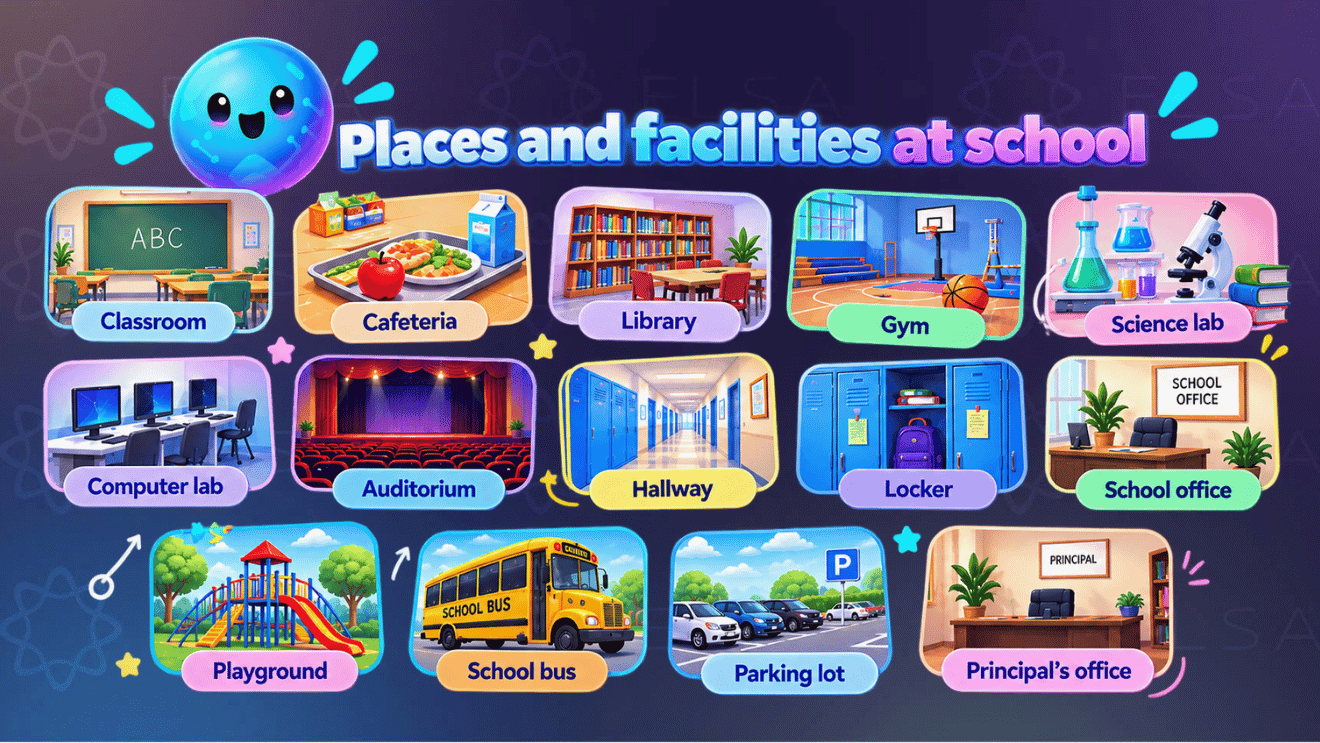
Places and facilities at school
From the classroom where you learn to the cafeteria where you grab lunch, here are some common places and facilities you’ll find around a school.
| Words | Pronunciation | Meaning |
| Auditorium | /ˌɔːdəˈtɔːriəm/ | A large room or building where students gather for events, performances, speeches, and presentations. |
| Cafeteria | /ˌkæfəˈtɪriə/ | A place in a school where students and staff can buy and eat meals. |
| Classroom | /ˈklæsˌruːm/ | A room in a school where students are taught by a teacher. |
| Computer lab | /kəmˈpjuːtər læb/ | A room equipped with computers where students can study, practice, or complete computer-based assignments. |
| Gym | /dʒɪm/ | A large room or building where students play sports, exercise, and take physical education classes. |
| Hallway | /ˈhɔːlˌweɪ/ | A passage inside a school that connects classrooms, offices, and other areas. |
| Library | /ˈlaɪˌbrɛri/ | A place where students can read, borrow books, study, and access educational resources. |
| Locker | /ˈlɑːkər/ | A small, usually locked storage space where students keep books, school supplies, clothes, and personal belongings. |
| Locker room | /ˈlɑːkər ruːm/ | A room where students can change clothes and store their belongings in lockers, especially before or after sports activities. |
| Parking lot | /ˈpɑːrkɪŋ lɑːt/ | An area where cars and other vehicles can be parked at a school. |
| Playground | /ˈpleɪˌɡraʊnd/ | An outdoor area where children can play, usually with equipment such as swings, slides, and climbing structures. |
| Principal’s office | /ˈprɪnsəpəlz ˌɔːfɪs/ | The office where the principal works and meets with students, teachers, parents, and other members of the school community. |
| Science lab | /ˈsaɪəns læb/ | A room equipped for students to conduct experiments and learn about science through practical activities. |
| School bus | /ˈskuːl bʌs/ | A bus used to transport students to and from school and school-related activities. |
| School office | /ˈskuːl ˌɔːfɪs/ | The main administrative office where school staff handle student records, information, and other administrative tasks. |
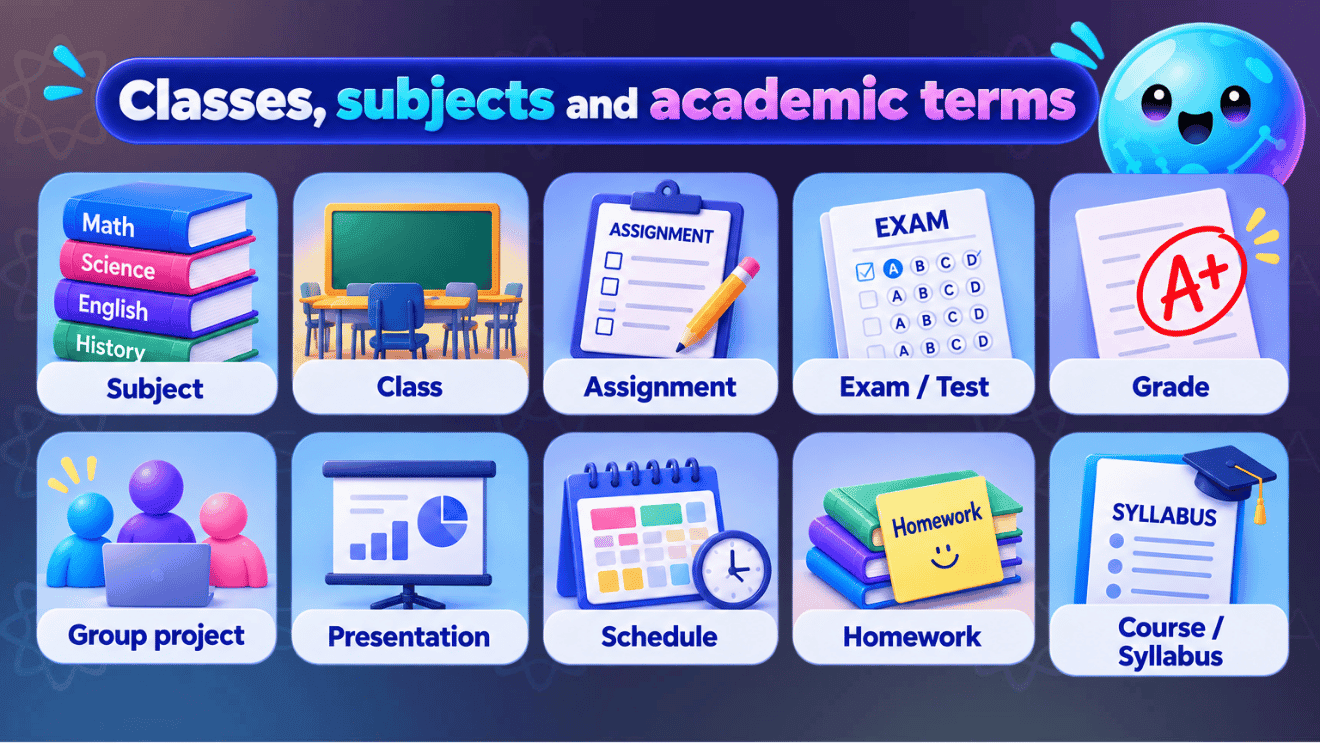
Classes, subjects and academic terms
From classes and subjects to assignments, exams, and grades, here are some common back to school vocabulary you’ll hear throughout the school year.
| Words | Pronunciation | Meaning |
| Assignment | /əˈsaɪnmənt/ | A piece of work given to students to complete as part of their studies. |
| Class | /klæs/ | A group of students who are taught together, or a period of time when students receive instruction. |
| Class period | /ˈklæs ˌpɪriəd/ | A scheduled period of time during which a class takes place. |
| Course | /kɔːrs/ | A series of lessons or classes about a particular subject, usually taken over a period of time. |
| Curriculum | /kəˈrɪkjələm/ | The subjects, courses, and learning activities included in a school or educational program. |
| Elective | /ɪˈlɛktɪv/ | A course or subject that students can choose to take rather than one that is required. |
| Exam | /ɪɡˈzæm/ | A formal test used to assess what students know or how well they understand a subject. |
| Grade | /ɡreɪd/ | A score or letter that shows how well a student performed on an assignment, test, or course. |
| Group project | /ˈɡruːp ˌprɑːdʒɛkt/ | An assignment or task that a group of students works on together. |
| Homework | /ˈhoʊmˌwɜːrk/ | Schoolwork that students are expected to complete outside of class. |
| Presentation | /ˌprɛzənˈteɪʃən/ | A talk in which a student or group explains or presents information to an audience. |
| Project | /ˈprɑːdʒɛkt/ | A planned piece of work that students complete to explore a topic or demonstrate what they have learned. |
| Quiz | /kwɪz/ | A short test that checks students’ knowledge or understanding of a subject. |
| Report card | /ˈrɪpɔːrt kɑːrd/ | A school document that shows a student’s grades and academic progress over a specific period. |
| Schedule | /ˈskɛdʒuːl/ | A plan that shows when and where classes, activities, or other school events take place. |
| Semester | /səˈmɛstər/ | One of the two main periods into which an academic year is often divided. |
| Subject | /ˈsʌbdʒɪkt/ | An area of knowledge that students study, such as math, science, or history. |
| Study session | /ˈstʌdi ˌsɛʃən/ | A period of time set aside for studying, reviewing lessons, or preparing for an assessment. |
| Syllabus | /ˈsɪləbəs/ | A document that outlines the topics, assignments, schedule, and expectations for a course. |
| Test | /tɛst/ | An assessment used to measure a student’s knowledge, skills, or understanding of a subject. |
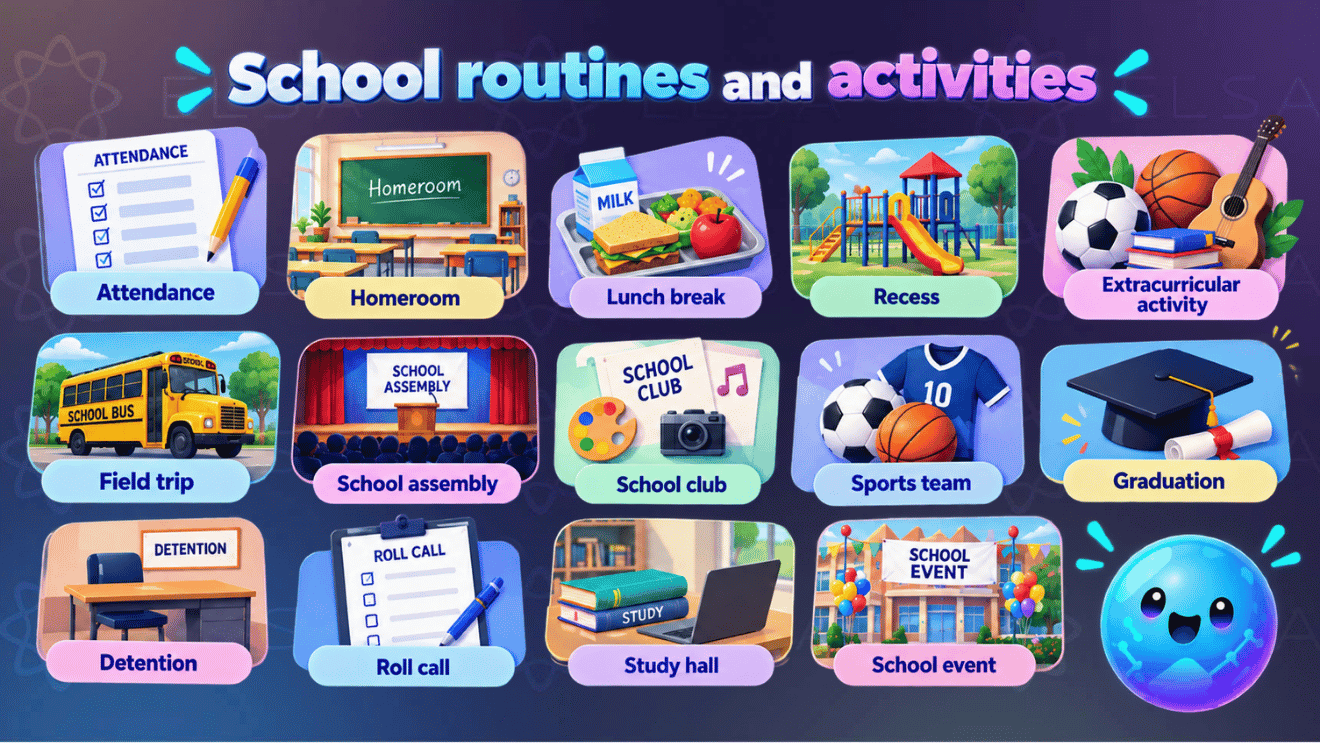
School routines and activities
From daily routines to school events and extracurricular activities, here are some common terms you’ll hear and use throughout the school year.
| Words | Pronunciation | Meaning |
| After-school activity | /ˌæftər ˈskuːl ækˌtɪvəti/ | An activity that students take part in after the regular school day ends. |
| Attendance | /əˈtɛndəns/ | The act of being present at school or in a class. |
| Detention | /dɪˈtɛnʃən/ | A punishment in which a student must stay at school for a period of time, usually after classes. |
| Extracurricular activity | /ˌɛkstrəkəˈrɪkjələr ækˌtɪvəti/ | An activity that students do outside their regular classes, such as sports, music, or clubs. |
| Field trip | /ˈfiːld trɪp/ | A trip that students take as part of their education to visit a place related to what they are learning |
| Graduation | /ˌɡrædʒuˈeɪʃən/ | The completion of a school, college, or university program, often marked by a special ceremony. |
| Homeroom | /ˈhoʊmˌruːm/ | A classroom where students meet with a teacher at the beginning of the school day, especially in US schools. |
| Lunch break | /ˈlʌntʃ breɪk/ | A period during the school day when students can eat lunch and take a break from classes. |
| Recess | /ˈriːsɛs/ | A short break during the school day when students can play, relax, or have a snack, especially in elementary schools. |
| Roll call | /ˈroʊl kɔːl/ | The process of checking which students are present by calling their names. |
| School assembly | /ˈskuːl əˌsɛmbli/ | A meeting where students and staff gather at school for announcements, presentations, performances, or special events. |
| School club | /ˈskuːl klʌb/ | A group of students who meet regularly to take part in a shared interest or activity. |
| School event | /ˈskuːl ɪˌvɛnt/ | An organized activity or occasion held by a school for students, staff, or the wider school community. |
| Sports team | /ˈspɔːrts tiːm/ | A group of students who play a sport together and represent their school in games or competitions. |
| Study hall | /ˈstʌdi hɔːl/ | A scheduled period when students can study, do homework, or work quietly at school. |
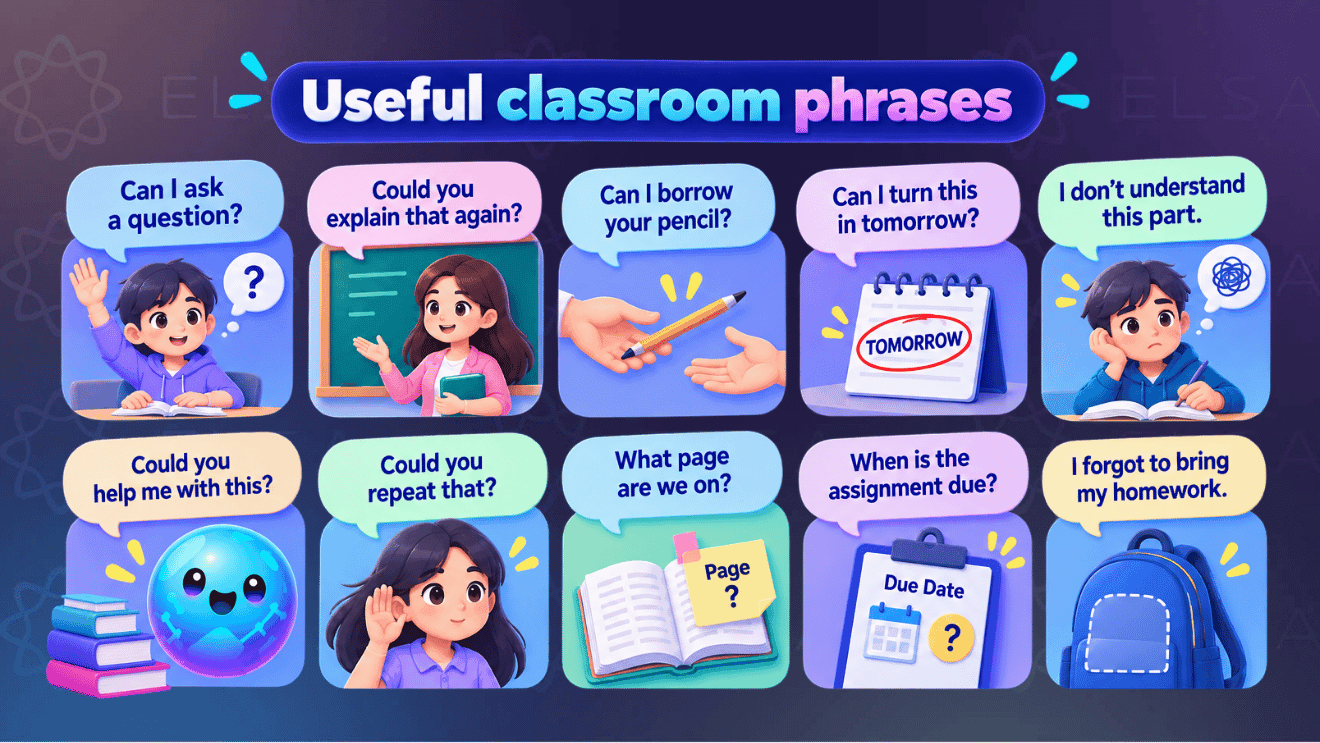
Useful classroom phrases
Whether you need help, want to ask a question, or need more time to complete an assignment, these common English phrases can help you express yourself clearly and confidently in class.
| Classroom phrase | When to use it |
| Can I ask a question? | Use this when you want to ask your teacher something during class. |
| Can I borrow your pencil? | Use this when you need to borrow a pencil from a classmate. |
| Can I turn this in tomorrow? | Use this when you want to ask if you can submit an assignment the next day. |
| Could you explain that again? | Use this when you need your teacher to explain something one more time. |
| Could you help me with this? | Use this when you need help with an assignment, exercise, or class activity. |
| Could you repeat that? | Use this when you do not hear or understand what someone says. |
| I don’t understand this part. | Use this when you are having trouble understanding part of a lesson or assignment. |
| I forgot to bring my homework. | Use this when you need to tell your teacher that you did not bring your homework. |
| What page are we on? | Use this when you need to know which page the class is working on. |
| When is the assignment due? | Use this when you want to ask when an assignment must be submitted. |
Example classroom conversation
Student: Excuse me, could I ask a question? Teacher: Of course. What do you need help with? Student: I don’t understand this part. Could you explain that again? Teacher: Sure. Look at the example on page 25. Student: Oh, I see. What page are we on now? Teacher: We’re on page 26. Please complete the exercise at the end of the page. Student: When is the assignment due? Teacher: It’s due tomorrow. Student: Okay, thank you! |
Ready to ace the school year?
Now that you have this essential back to school vocabulary list, you’re ready to tackle the new school year with confidence. These terms will help you understand classroom instructions, participate in discussions, and stay organized.
Ready to keep building your English skills? Explore the Vocabulary category on the ELSA Speak blog to discover more useful words, everyday phrases, and practical tips you can use in real conversations.