

500+ negative adjectives: Words list by category, traits, prefixes
elsaspeakadmin
November 5, 2026
Common vocabulary
Negative adjectives are words that usually have a negative meaning. They’re usually used to describe undesirable qualities, poor performances, difficult situations, environment, or personality more precisely. This guide explores common negative adjectives along with prefixes, along with a PDF of 500+ negative words to show how to use them appropriately without having to repeatedly use vague words.
What are negative adjectives?
Negative adjectives are words that describe undesirable, unpleasant, harmful, or unfavorable qualities in people, places, objects, and situations. They help speakers and writers communicate criticism or describe problems with greater precision without having to repeatedly use vague words.
For example, bad is a broad adjective that can describe many undesirable things. More specific adjectives explain exactly what the problem is:
- Dishonest: Someone who does not tell the truth.
- Arrogant: Someone who believes they are more important or capable than others.
- Callous: Someone who shows little concern for other people's feelings or suffering.
→ These negative adjective examples demonstrate how a precise word can communicate more information than a general description
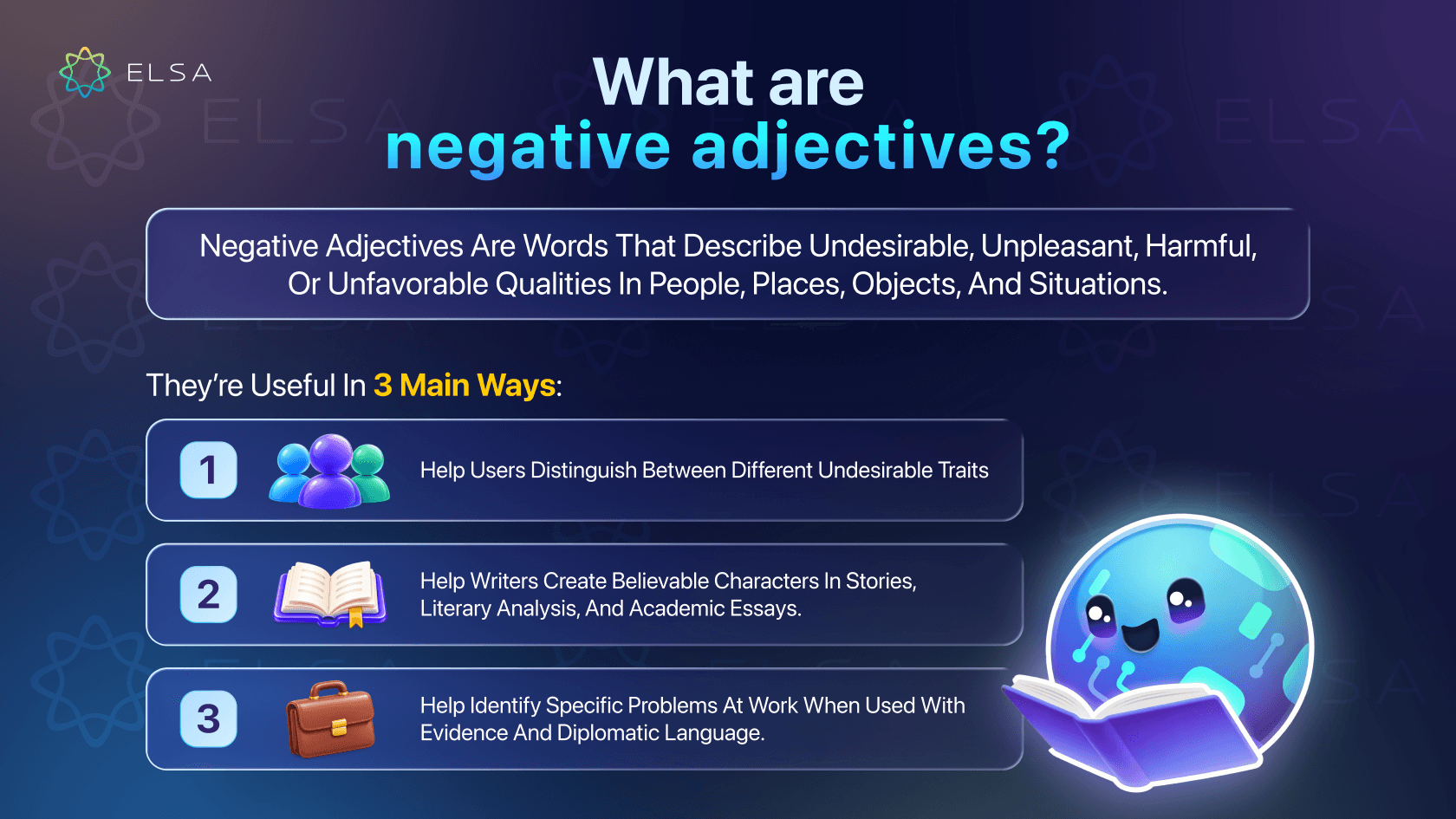
Negative adjectives are useful in three main ways:
- Nuance and precision: They distinguish between different undesirable traits, such as dishonesty, hostility, and carelessness.
- Character development: They help writers create believable characters in stories, literary analysis, and academic essays.
- Constructive feedback: They can identify specific problems at work when used with evidence and diplomatic language.
Negative personality adjectives to describe people
Negative personality adjectives describe undesirable behaviors, attitudes, or character traits. The following list of negative adjectives is organized into four groups to make the vocabulary easier to understand and remember.
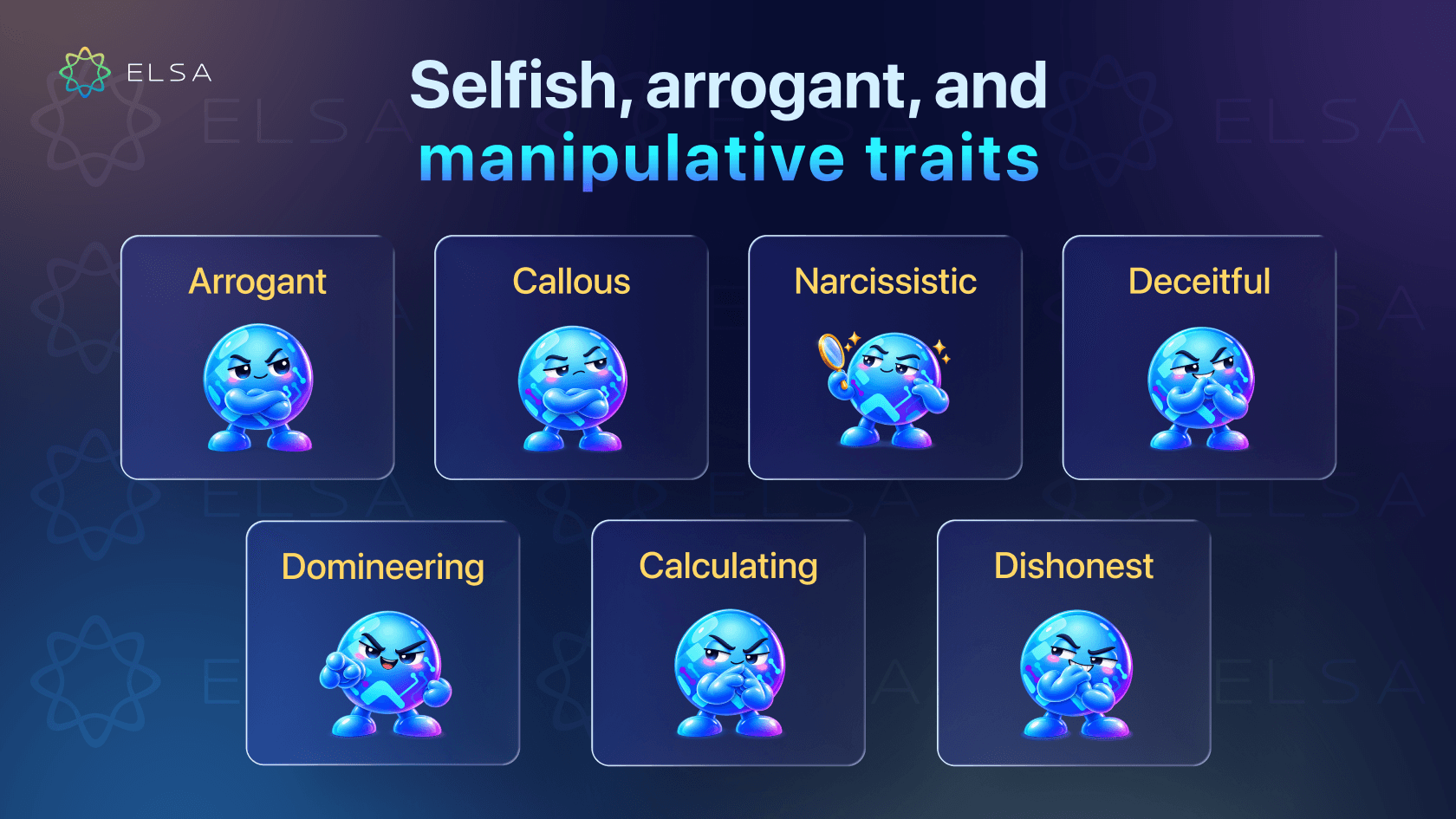
Selfish, arrogant, and manipulative traits
These adjectives describe people who prioritize themselves, disregard others' needs, or attempt to control situations for personal gain.
| Negative adjective | US IPA | Meaning | Example |
|---|---|---|---|
| Arrogant | /ˈær.ə.ɡənt/ | Having an exaggerated sense of one's importance or abilities | His arrogant attitude made collaboration difficult. |
| Callous | /ˈkæl.əs/ | Showing little concern for other people's feelings or suffering | Her callous response upset the entire team. |
| Narcissistic | /ˌnɑːr.səˈsɪs.tɪk/ | Excessively focused on oneself and one's own importance | His narcissistic behavior often overshadowed other people's achievements. |
| Deceitful | /dɪˈsiːt.fəl/ | Intentionally dishonest or misleading | The deceitful salesperson concealed important details. |
| Domineering | /ˌdɑː.məˈnɪr.ɪŋ/ | Trying to control other people in an overbearing way | Her domineering management style discouraged employees from sharing ideas. |
| Calculating | /ˈkæl.kjə.leɪ.t̬ɪŋ/ | Deliberately planning actions to gain an advantage, often without regard for others | His calculating behavior made his intentions difficult to trust. |
| Dishonest | /dɪˈsɑː.nɪst/ | Not truthful or trustworthy | The dishonest employee altered the report. |
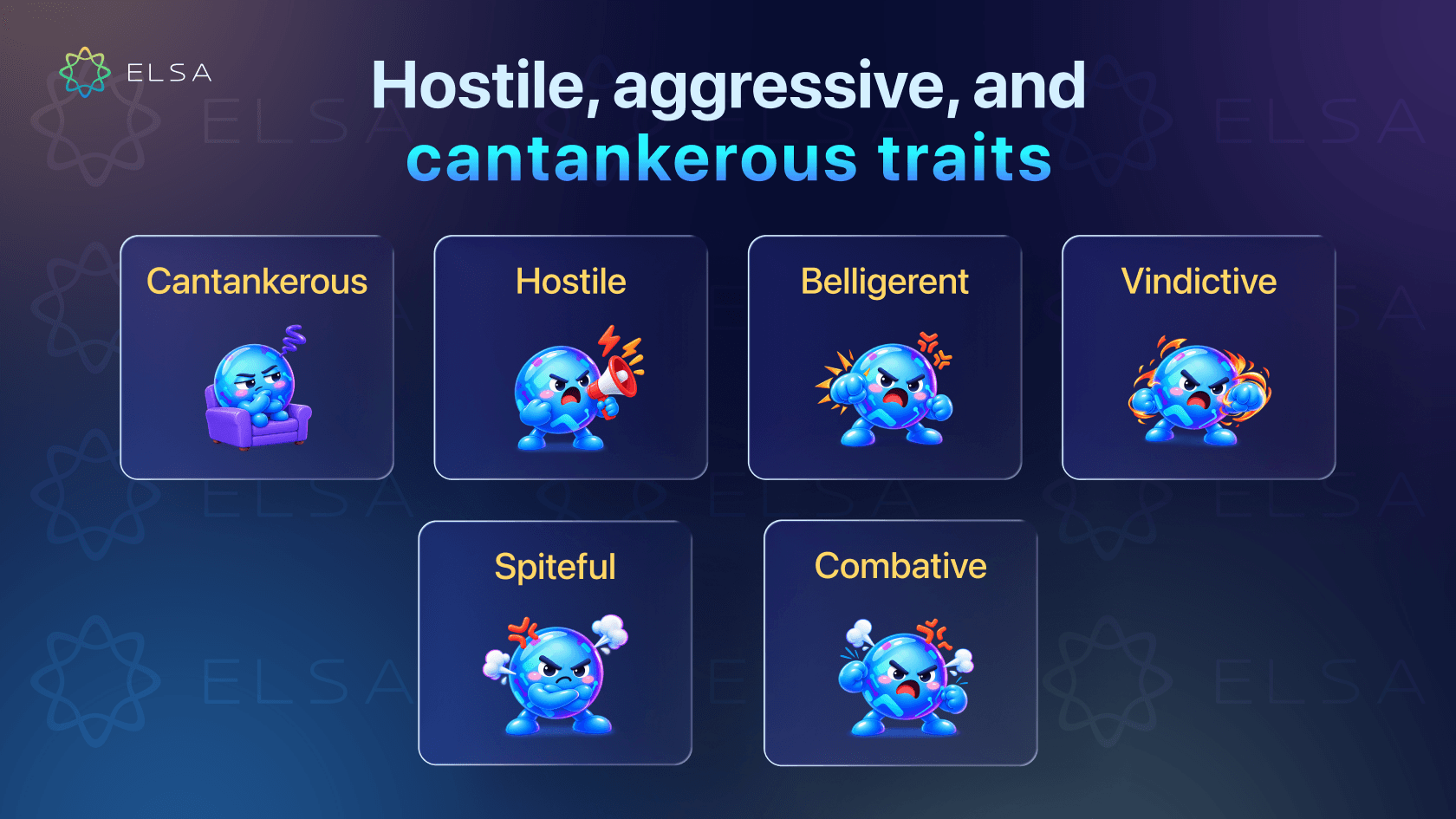
Hostile, aggressive, and cantankerous traits
These adjectives describe people who are unfriendly, argumentative, resentful, or inclined to confront others.
| Negative adjective | US IPA | Meaning | Example |
|---|---|---|---|
| Cantankerous | /kænˈtæŋ.kɚ.əs/ | Frequently bad-tempered, argumentative, or difficult to please | The cantankerous customer complained about every detail. |
| Hostile | /ˈhɑː.stəl/ | Unfriendly or showing opposition or anger | His hostile response ended the conversation. |
| Belligerent | /bəˈlɪdʒ.ɚ.ənt/ | Aggressive and eager to argue or fight | The belligerent guest argued with the staff. |
| Vindictive | /vɪnˈdɪk.tɪv/ | Intending to hurt someone in return for a perceived wrong | Her vindictive comments damaged their relationship. |
| Spiteful | /ˈspaɪt.fəl/ | Intentionally hurtful or mean | He made a spiteful remark about his colleague's mistake. |
| Combative | /kəmˈbæt̬.ɪv/ | Inclined to argue, disagree, or confront others | His combative tone made the meeting tense. |
| Quarrelsome | /ˈkwɔːr.əl.səm/ | Frequently arguing or disagreeing with others | The quarrelsome neighbors often argued over minor issues. |
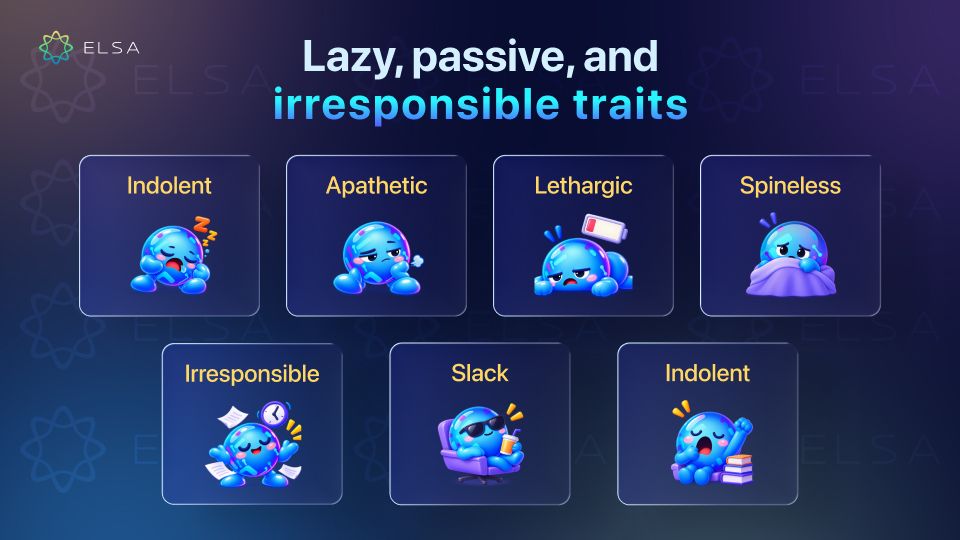
Lazy, passive, and irresponsible Traits
These negative adjectives describe a lack of effort, energy, initiative, or responsibility.
| Negative adjective | US IPA | Meaning | Example |
|---|---|---|---|
| Indolent | /ˈɪn.dəl.ənt/ | Avoiding activity or effort; habitually lazy | His indolent habits prevented him from meeting his goals. |
| Apathetic | /ˌæp.əˈθet̬.ɪk/ | Showing little interest, enthusiasm, or concern | The apathetic employee rarely contributed to discussions. |
| Lethargic | /ləˈθɑːr.dʒɪk/ | Lacking energy or enthusiasm | She felt lethargic after a long, stressful week. |
| Spineless | /ˈspaɪn.ləs/ | Lacking the courage to stand up for oneself or one's beliefs | He was criticized for being spineless during the dispute. |
| Irresponsible | /ˌɪr.əˈspɑːn.sə.bəl/ | Failing to act with appropriate care or accountability | It was irresponsible to ignore the safety instructions. |
| Slack | /slæk/ | Not putting enough effort into a task or responsibility | The supervisor warned him about his slack work habits. |
| Procrastinating | /proʊˈkræs.təˌneɪ.tɪŋ/ | Delaying tasks that should be completed | Her procrastinating behavior caused several missed deadlines. |
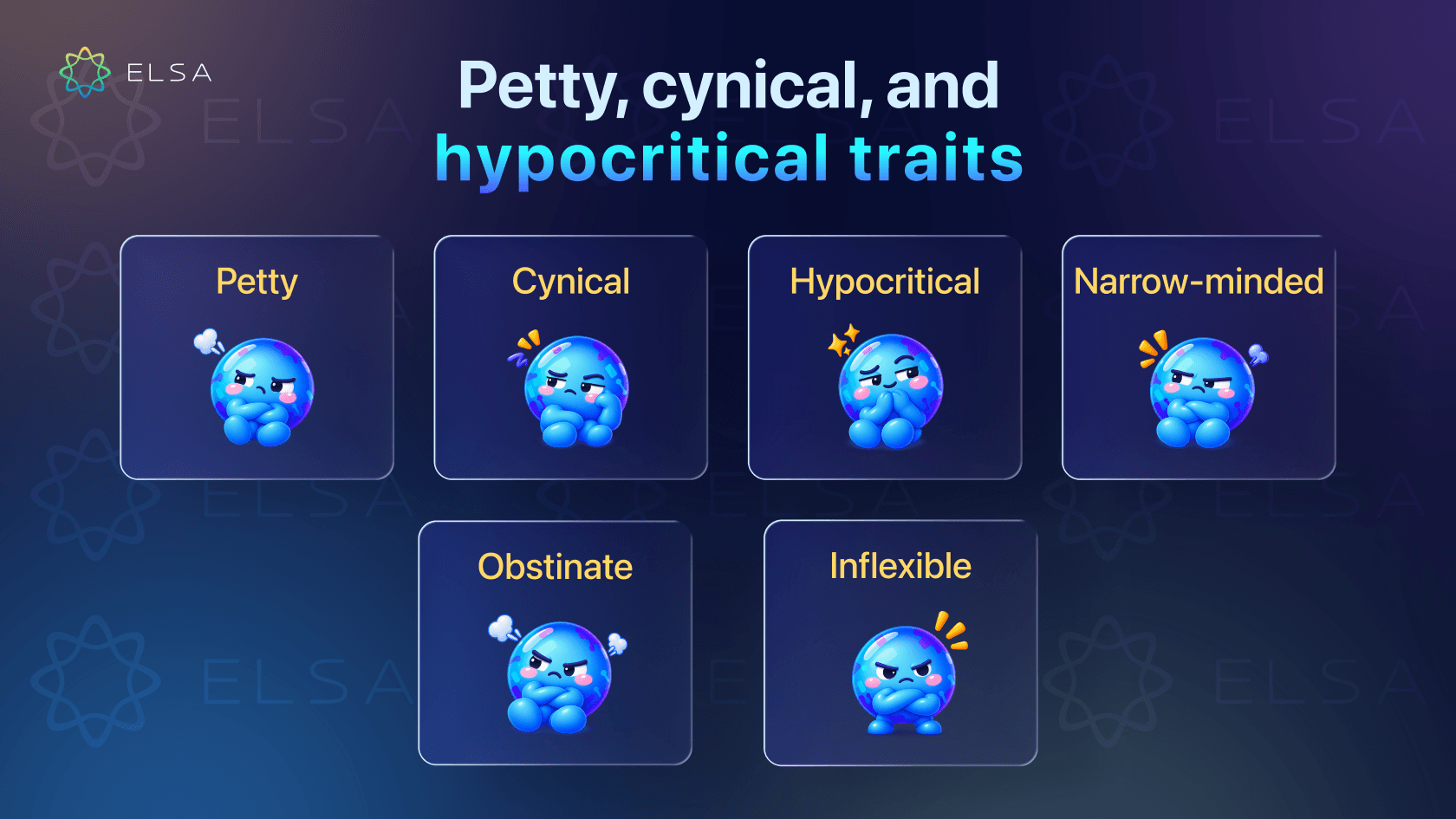
Petty, Cynical, and Hypocritical Traits
These adjectives describe people who focus on minor grievances, distrust others' motives, or behave inconsistently with their stated beliefs.
| Negative adjective | US IPA | Meaning | Example |
|---|---|---|---|
| Petty | /ˈpet̬.i/ | Overly concerned with minor issues or small grievances | He made a petty complaint about a minor scheduling change. |
| Cynical | /ˈsɪn.ɪ.kəl/ | Distrusting people's motives or assuming they are mainly self-interested | She was cynical about the company's promises. |
| Hypocritical | /ˌhɪp.əˈkrɪt̬.ɪ.kəl/ | Claiming to hold beliefs or standards that one's actions contradict | His hypocritical behavior damaged his credibility. |
| Narrow-minded | /ˌnær.oʊˈmaɪn.dɪd/ | Unwilling to consider different ideas or perspectives | A narrow-minded attitude can limit meaningful discussion. |
| Obstinate | /ˈɑːb.stə.nət/ | Stubbornly refusing to change one's opinion or behavior | The obstinate manager rejected every alternative proposal. |
| Inflexible | /ɪnˈflɛk.sə.bəl/ | Unwilling or unable to adapt to changing circumstances | His inflexible approach made the project harder to manage. |
| Prejudiced | /ˈprɛdʒ.ə.dɪst/ | Holding an unfair opinion about a person or group without sufficient knowledge | The prejudiced comment was inappropriate in the workplace. |
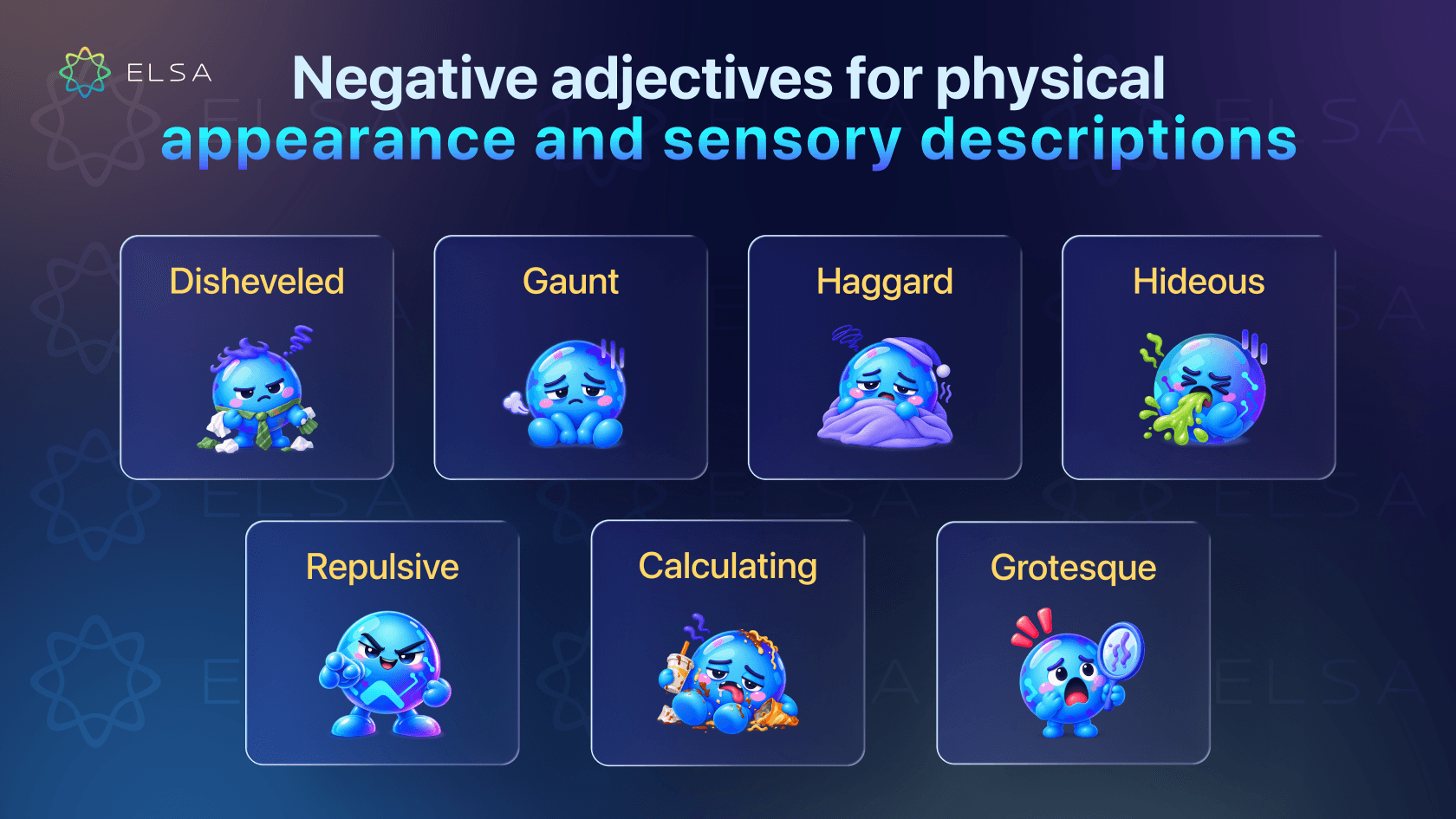
Negative adjectives for physical appearance and sensory descriptions
Negative adjectives can describe untidy appearances, unpleasant smells or textures, and objects that look disturbing or poorly maintained. In writing about people, use appearance-related terms thoughtfully because they can sound judgmental or hurtful.
| Negative adjective | US IPA | Meaning | Example |
|---|---|---|---|
| Disheveled | /dɪˈʃev.əld/ | Untidy in appearance, especially with messy hair or clothing | He arrived at the interview looking disheveled. |
| Gaunt | /ɡɑːnt/ | Extremely thin, often with a hollow or tired-looking face | The character looked gaunt after weeks of hardship. |
| Haggard | /ˈhæɡ.ɚd/ | Looking exhausted, worried, or unwell | She looked haggard after several sleepless nights. |
| Hideous | /ˈhɪd.i.əs/ | Extremely unpleasant or unattractive in appearance | The abandoned building had a hideous exterior. |
| Repulsive | /rɪˈpʌl.sɪv/ | Extremely unpleasant or disgusting | The spoiled food had a repulsive smell. |
| Sloppy | /ˈslɑː.pi/ | Untidy, careless, or poorly done | His sloppy handwriting made the notes difficult to read. |
| Grotesque | /ɡroʊˈtesk/ | Distorted or unnatural in a disturbing way | The sculpture featured grotesque shapes and exaggerated features. |
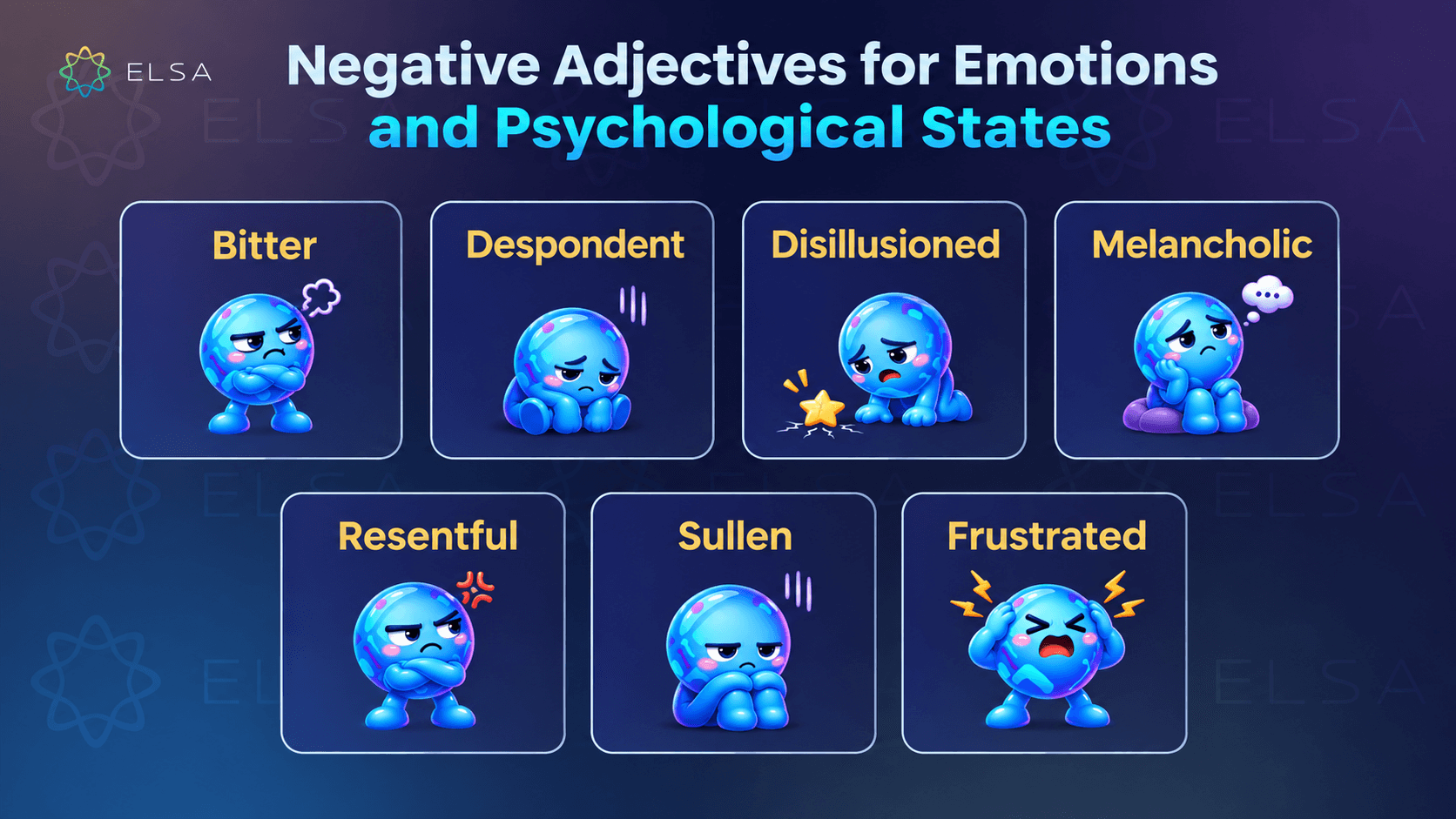
Negative adjectives for emotions and psychological states
These adjectives describe difficult emotional states, such as sadness, resentment, disappointment, and anxiety. Remember that a temporary emotional state does not necessarily describe someone's overall personality.
| Negative adjective | US IPA | Meaning | Example |
|---|---|---|---|
| Bitter | /ˈbɪt̬.ɚ/ | Feeling angry or resentful because of past experiences | He became bitter after being passed over for promotion. |
| Despondent | /dɪˈspɑːn.dənt/ | Feeling deeply discouraged or hopeless | She felt despondent after receiving another rejection. |
| Disillusioned | /ˌdɪs.ɪˈluː.ʒənd/ | Disappointed after discovering that something is not as good as expected | Employees became disillusioned with the leadership's promises. |
| Melancholic | /ˌmel.ənˈkɑː.lɪk/ | Feeling or expressing a deep, lingering sadness | The film has a melancholic atmosphere. |
| Resentful | /rɪˈzent.fəl/ | Feeling anger or bitterness about unfair treatment | He grew resentful when his contributions went unrecognized. |
| Sullen | /ˈsʌl.ən/ | Silent, gloomy, and bad-tempered | She gave a sullen response and left the room. |
| Frustrated | /ˈfrʌs.treɪ.t̬ɪd/ | Feeling upset because progress or success is being blocked | The frustrated team struggled with repeated technical problems. |
Negative adjectives for places, environments, and atmosphere
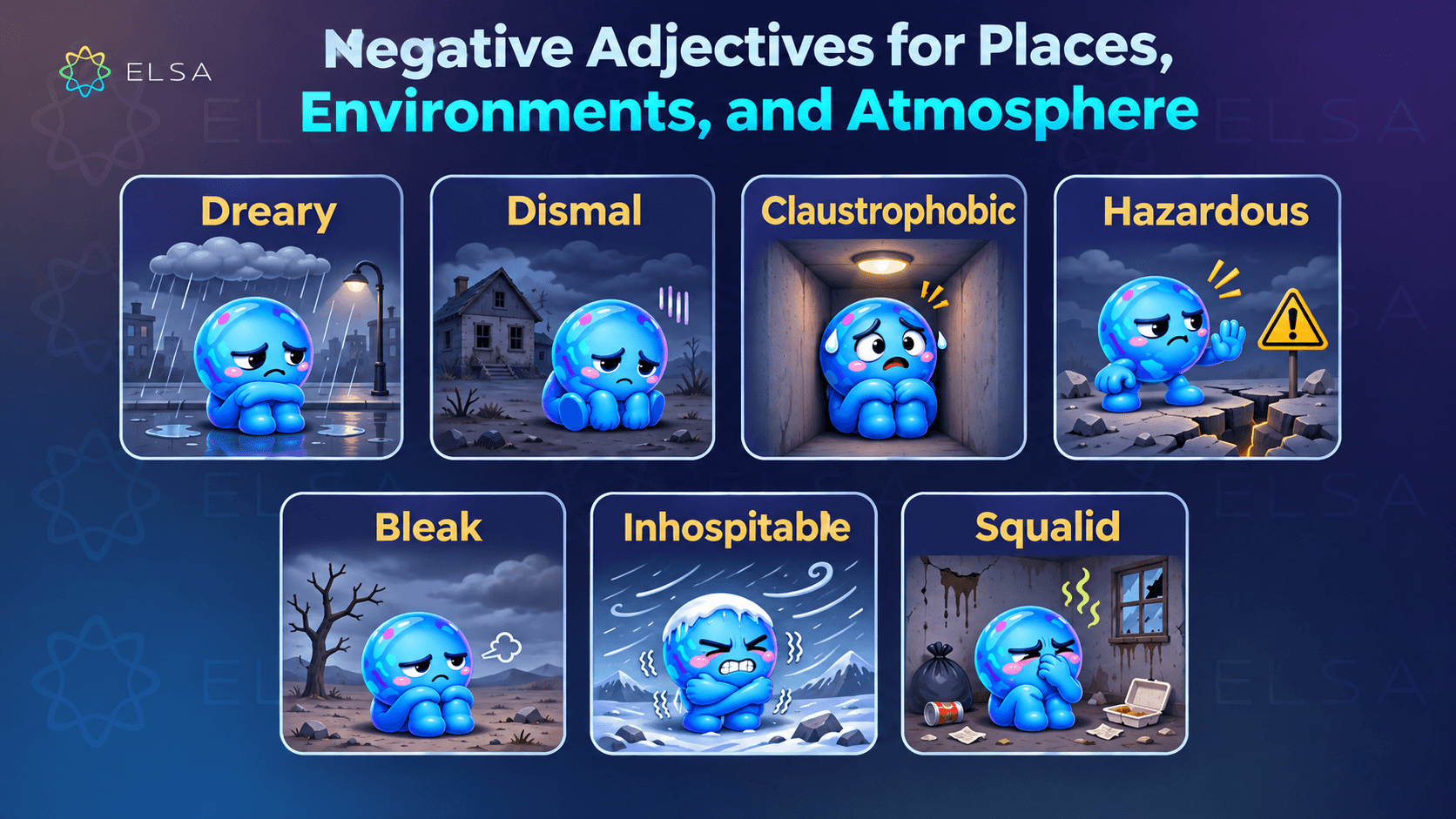
These adjectives help describe places that feel gloomy, dangerous, neglected, uncomfortable, or unwelcoming.
| Negative adjective | US IPA | Meaning | Example |
|---|---|---|---|
| Dreary | /ˈdrɪr.i/ | Dull, gloomy, and lacking liveliness | The office felt dreary on a gray winter morning. |
| Dismal | /ˈdɪz.məl/ | Depressing, gloomy, or very poor in quality | The abandoned building presented a dismal sight. |
| Claustrophobic | /ˌklɔː.strəˈfoʊ.bɪk/ | Uncomfortably small or enclosed | The windowless room felt claustrophobic. |
| Hazardous | /ˈhæz.ɚ.dəs/ | Dangerous or likely to cause harm | Workers were warned about hazardous conditions. |
| Bleak | /bliːk/ | Cold, empty, or lacking signs of hope | The landscape looked bleak in the middle of winter. |
| Inhospitable | /ˌɪn.hɑːˈspɪt̬.ə.bəl/ | Unwelcoming or unsuitable for living or staying | The harsh climate makes the region inhospitable. |
| Squalid | /ˈskwɑː.lɪd/ | Extremely dirty and unpleasant, often because of neglect | The report described squalid living conditions. |
Negative adjectives for work, quality, and performance
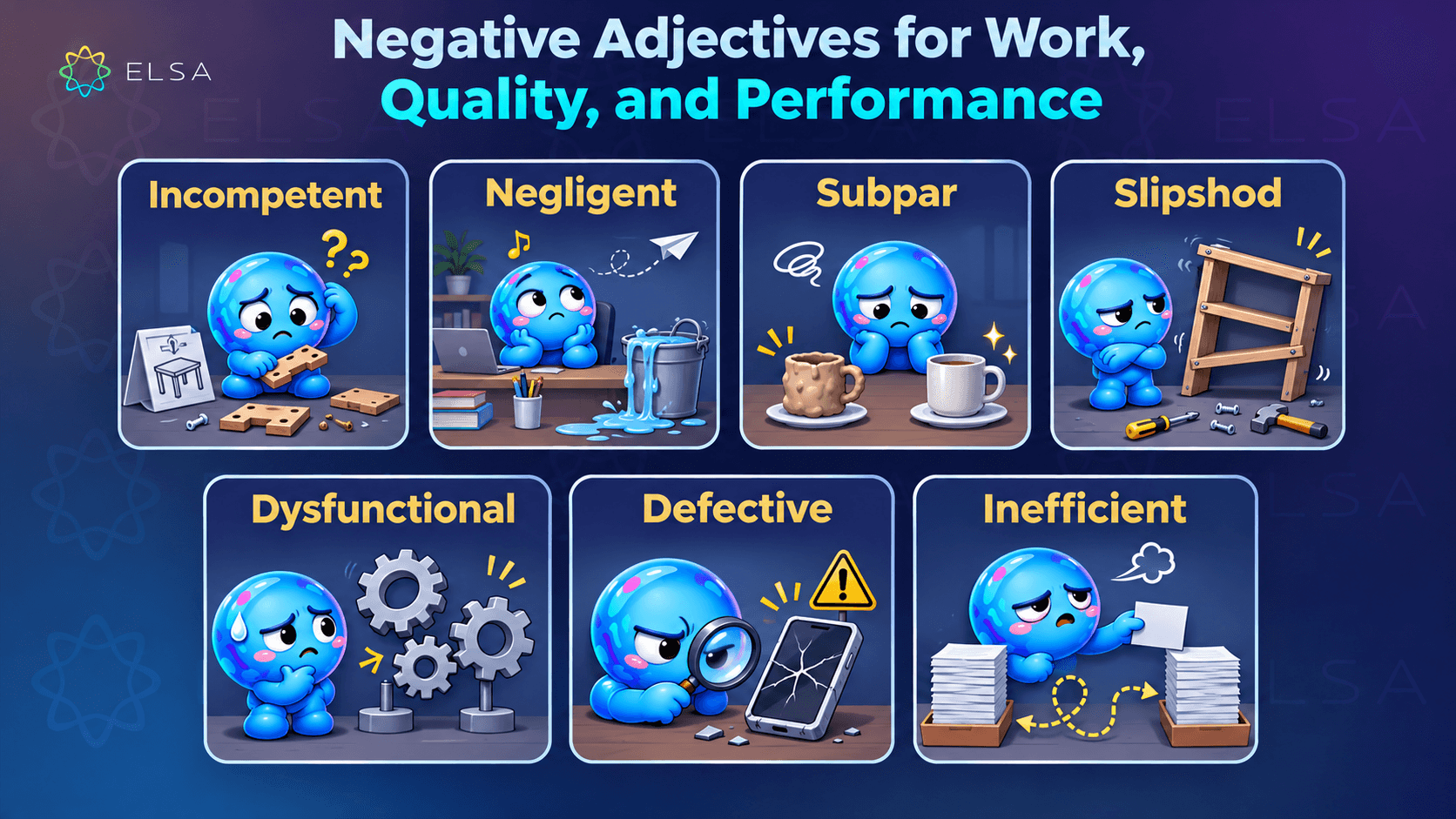
In professional settings, negative adjectives can identify problems with work quality, processes, products, or performance. The most useful descriptions are specific and supported by observable evidence.
| Negative adjective | US IPA | Meaning | Example |
|---|---|---|---|
| Incompetent | /ɪnˈkɑːm.pə.t̬ənt/ | Lacking the skills or ability needed to do something properly | The report identified gaps in the team's incompetent handling of the project. |
| Negligent | /ˈneɡ.lə.dʒənt/ | Failing to exercise the care required for a responsibility | Negligent recordkeeping led to inaccurate reports. |
| Subpar | /ˌsʌbˈpɑːr/ | Below the expected standard of quality or performance | The final draft was subpar and needed substantial revision. |
| Slipshod | /ˈslɪpˌʃɑːd/ | Done carelessly and without proper attention to detail | The client rejected the slipshod proposal. |
| Dysfunctional | /dɪsˈfʌŋk.ʃə.nəl/ | Not working or operating properly | The dysfunctional process delayed the entire project. |
| Defective | /dɪˈfek.tɪv/ | Having a fault that prevents something from working correctly | The manufacturer recalled the defective product. |
| Inefficient | /ˌɪn.ɪˈfɪʃ.ənt/ | Wasting time, effort, or resources | The inefficient workflow created unnecessary delays. |
Forming negative adjectives with common prefixes
Many negative adjectives are formed by adding a negative prefix to an adjective with a positive or neutral meaning. These prefixes often reverse or weaken the original meaning, but the correct form depends on the individual word.
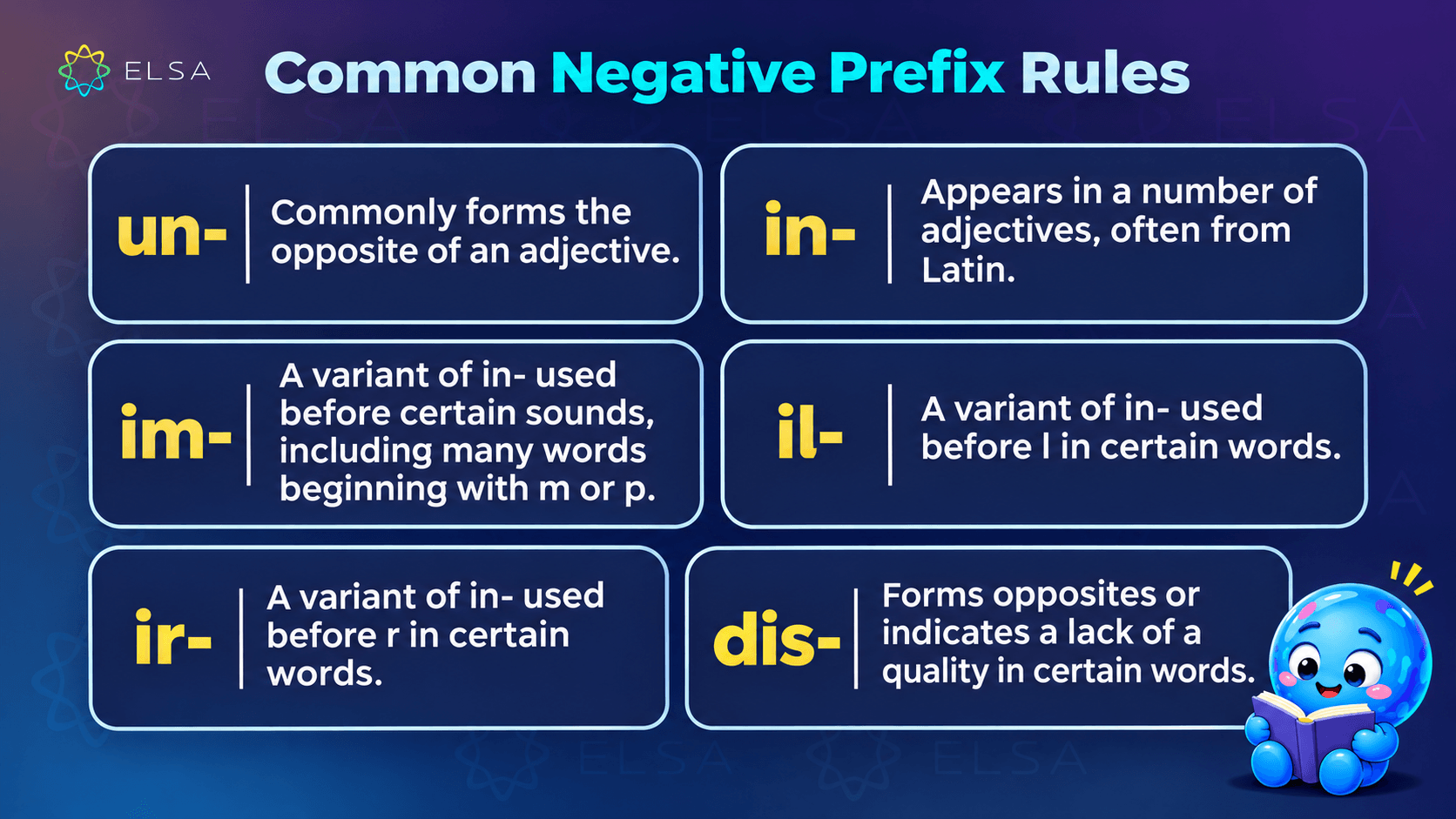
Common negative prefix rules
Here are the common negative prefixes that you should know.
- - un- (Not or the opposite of)
- - General pattern: Commonly forms the opposite of an adjective.
- - Examples: fair → unfair; friendly → unfriendly; happy → unhappy.
- - in- (Not)
- - General pattern: Appears in a number of adjectives, often from Latin.
- - Examples: accurate → inaccurate; competent → incompetent.
- - im- (Not)
- - General pattern: A variant of in- used before certain sounds, including many words beginning with m or p.
- - Examples: patient → impatient; polite → impolite; possible → impossible.
- - il- (Not)
- - General pattern: A variant of in- used before l in certain words.
- - Examples: logical → illogical; legal → illegal.
- - ir- (Not)
- - General pattern: A variant of in- used before r in certain words.
- - Examples: responsible → irresponsible; rational → irrational.
- - dis- (Not or lacking)
- - General pattern: Forms opposites or indicates a lack of a quality in certain words.
- - Examples: honest → dishonest; respectful → disrespectful.
More negative adjective examples with prefixes
Want to find out more negative adjectives? Check out our PDF file below, it contains lists of most commonly used adjectives with US IPA and meanings for you to use them more precisely:
How to soften negative adjectives for professional communication
In American workplaces, direct negative adjectives such as lazy, incompetent, or rude can sound personal or unnecessarily harsh. During performance reviews, feedback conversations, or work emails, it is often more effective to describe a specific behavior and explain its impact.
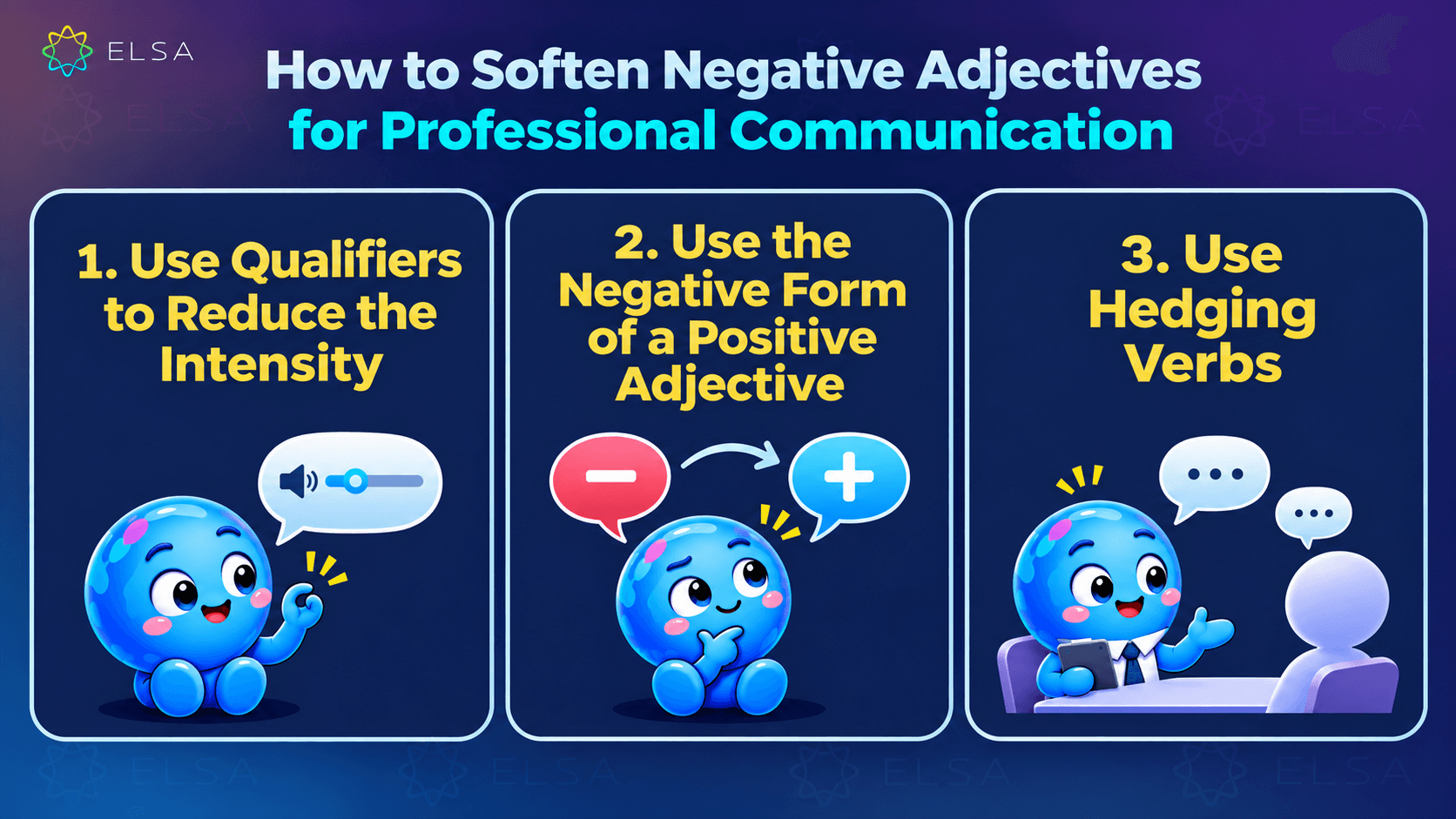
1. Use qualifiers to reduce the intensity
Qualifiers such as a bit, slightly, somewhat, and a little can make criticism sound less absolute.
For example:
- Direct wording: He was impatient during the client meeting.
- Softer wording: He was a bit impatient during the client meeting.
Use qualifiers only when they accurately reflect the situation. Serious issues should still be communicated clearly.
2. Use the negative form of a positive adjective
Instead of labeling someone with a harsh adjective, you can sometimes express the same concern through a more diplomatic construction.
For example
- Direct wording: She is dishonest.
- More diplomatic wording: She is not entirely honest about the project's progress.
This approach can make feedback sound more measured while still communicating the concern.
3. Use hedging verbs
Hedging phrases such as seem to be, tend to be, and appear to be signal that an observation may not describe someone's behavior in every situation.
For example:
- Direct wording: He is domineering in group discussions.
- More measured wording: He tends to be domineering in group discussions.
For professional communication, focus on observable behavior rather than making assumptions about a person's character.
FAQ about negative adjectives
What is the difference between a negative adjective and a pejorative word?
- A negative adjective describes an undesirable quality or behavior, such as careless, noisy, or impatient.
- A pejorative word is used to express contempt, ridicule, or insult. In professional and academic writing, choose precise, behavior-focused language and avoid personal attacks.
Can negative adjectives ever be used in a positive or flattering way?
Yes. Some adjectives with traditionally negative meanings can express praise in informal American English, depending on context. For example:
- Wicked can mean “excellent” in certain informal contexts.
- Badass can describe someone impressive, bold, or tough.
- Sick and insane can also express admiration in slang.
These meanings are informal and may not be appropriate in academic or professional writing.
How do I know whether to use un-, in-, or dis- to make a word negative?
The correct prefix depends on the word.
- Un- appears in words such as unhappy and unfair.
- The prefix in- and its variants im-, il-, and ir- appear in words such as inaccurate, impatient, illogical, and irresponsible.
- Dis- appears in words such as dishonest and disrespectful.
These patterns are useful guidelines, but they do not predict every word, so check a dictionary when in doubt.
Learning negative adjectives alongside positive adjectives can also help you understand tone, context, and the difference between direct criticism and constructive feedback. For more English vocabulary guides, explore the Vocabulary category on the ELSA Speak blog to continue developing your English skills.