

Demonstrative pronouns: How to use this, that, these
elsaspeakadmin
October 26, 2026
English clauses
Demonstrative pronouns are common words that help learners identify specific people, objects, and ideas in English. In this guide, you’ll explore the demonstrative pronouns definition, examples, difference between demonstrative adjectives and pronouns, along with exercises and a demonstrative pronouns worksheets pdf to help you reinforce what you’ve learned.
What are demonstrative pronouns?
Demonstrative pronouns definition
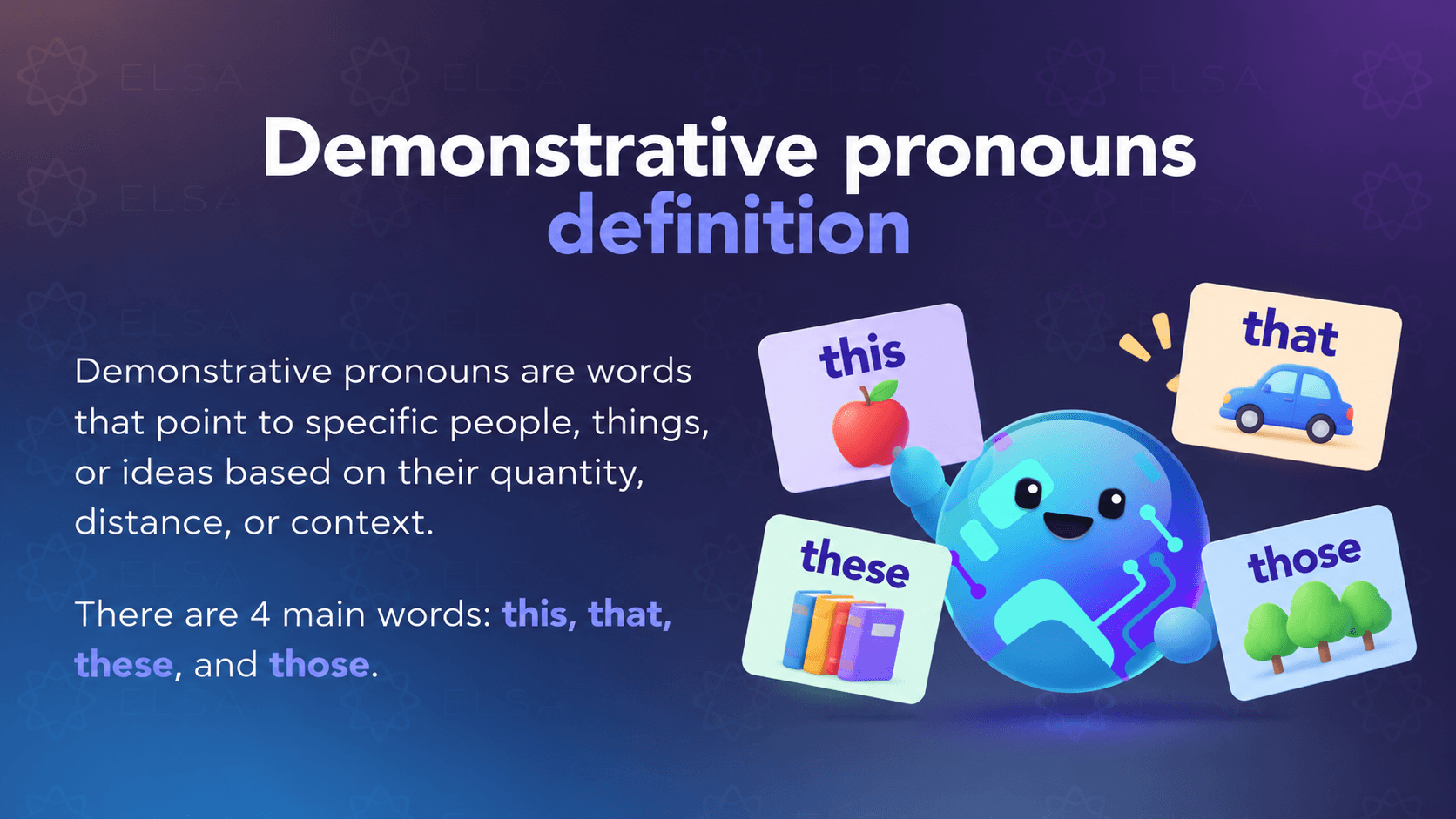
Demonstrative pronouns are words that point to specific people, things, or ideas based on their quantity, distance, or context. There are 4 main words: this, that, these, and those. These words can replace nouns or noun phrases, helping speakers refer to something, or someone without repeating their names.
Here are some demonstrative pronouns examples:
- This is my favorite.
- That belongs to my sister.
- These are delicious.
- Those look expensive.
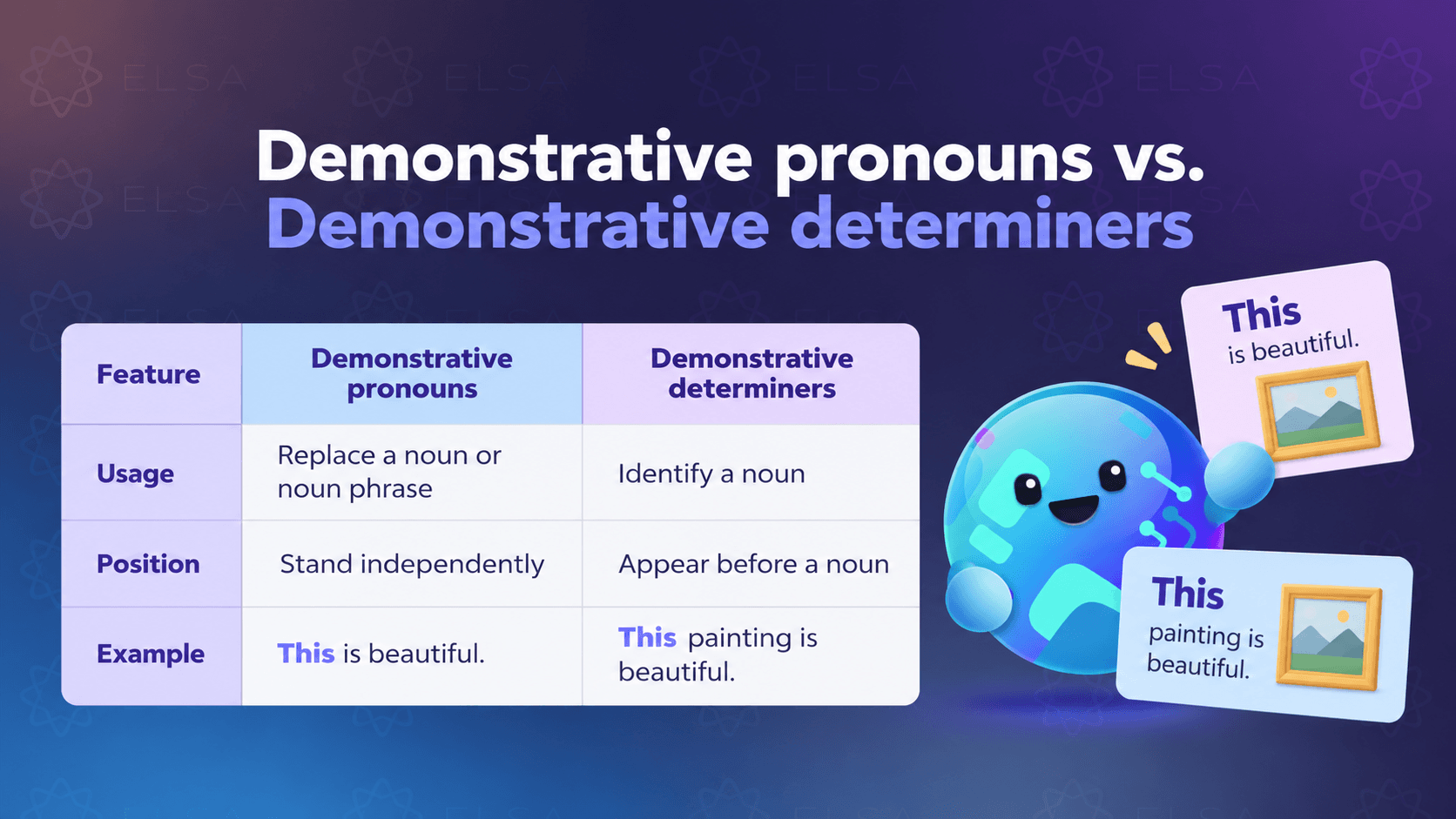
Demonstrative pronouns vs. Demonstrative determiners
The words this, that, these, and those can function as either demonstrative pronouns or demonstrative determiners (or also known as demonstrative adjectives). Their grammatical roles depend on how they are used in a sentence.
| Feature | Demonstrative pronouns | Demonstrative determiners |
|---|---|---|
| Usage | Replace a noun or noun phrase | Identify a noun |
| Position | Stand independently | Appear before a noun |
| Example | This is beautiful. | This painting is beautiful. |
How to use demonstrative pronouns
To use demonstrative pronouns correctly, consider two main factors: number (singular or plural) and distance (near or far). Distance can be physical, temporal, or related to the context of a conversation
Demonstrative pronouns chart: This, that, these, and those
Use this reference table to compare the four demonstrative pronouns: this, that, these, and those:
| Pronoun | Number | Distance | Example |
|---|---|---|---|
| This | Singular | Near | This is my bag. |
| That | Singular | Far | That is my bag. |
| These | Plural | Near | These are my bags. |
| Those | Plural | Far | Those are my bags. |
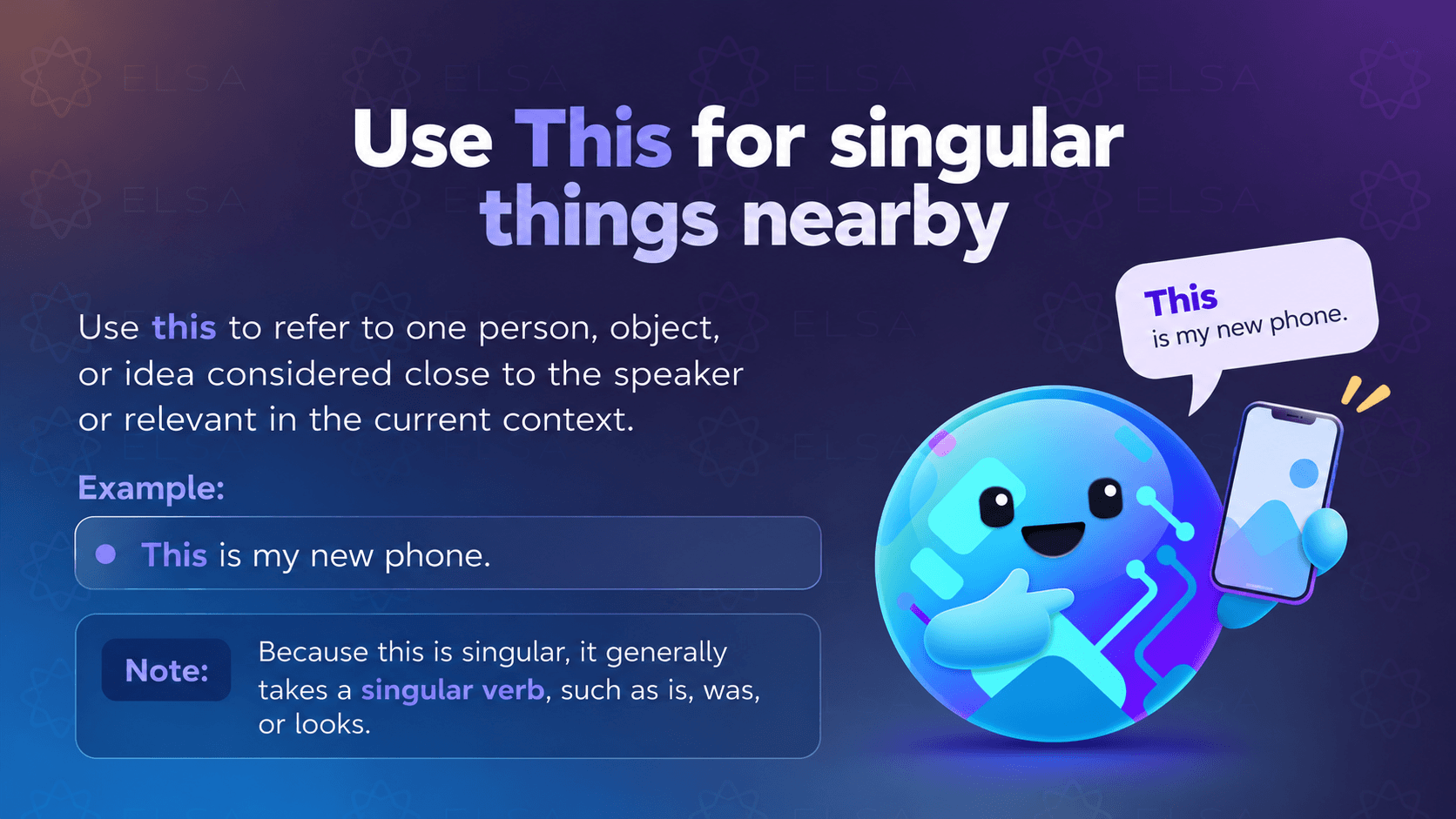
Use “This” for singular things nearby
Use this to refer to one person, object, or idea considered close to the speaker or relevant in the current context.
Examples:
- This is my new phone.
- This tastes amazing.
- This is what I wanted to explain.
⇒ In the first example, this refers to one phone nearby. In the second, it refers to food being tasted. In the third, it introduces an idea the speaker wants to communicate.
Use “That” for singular things farther away
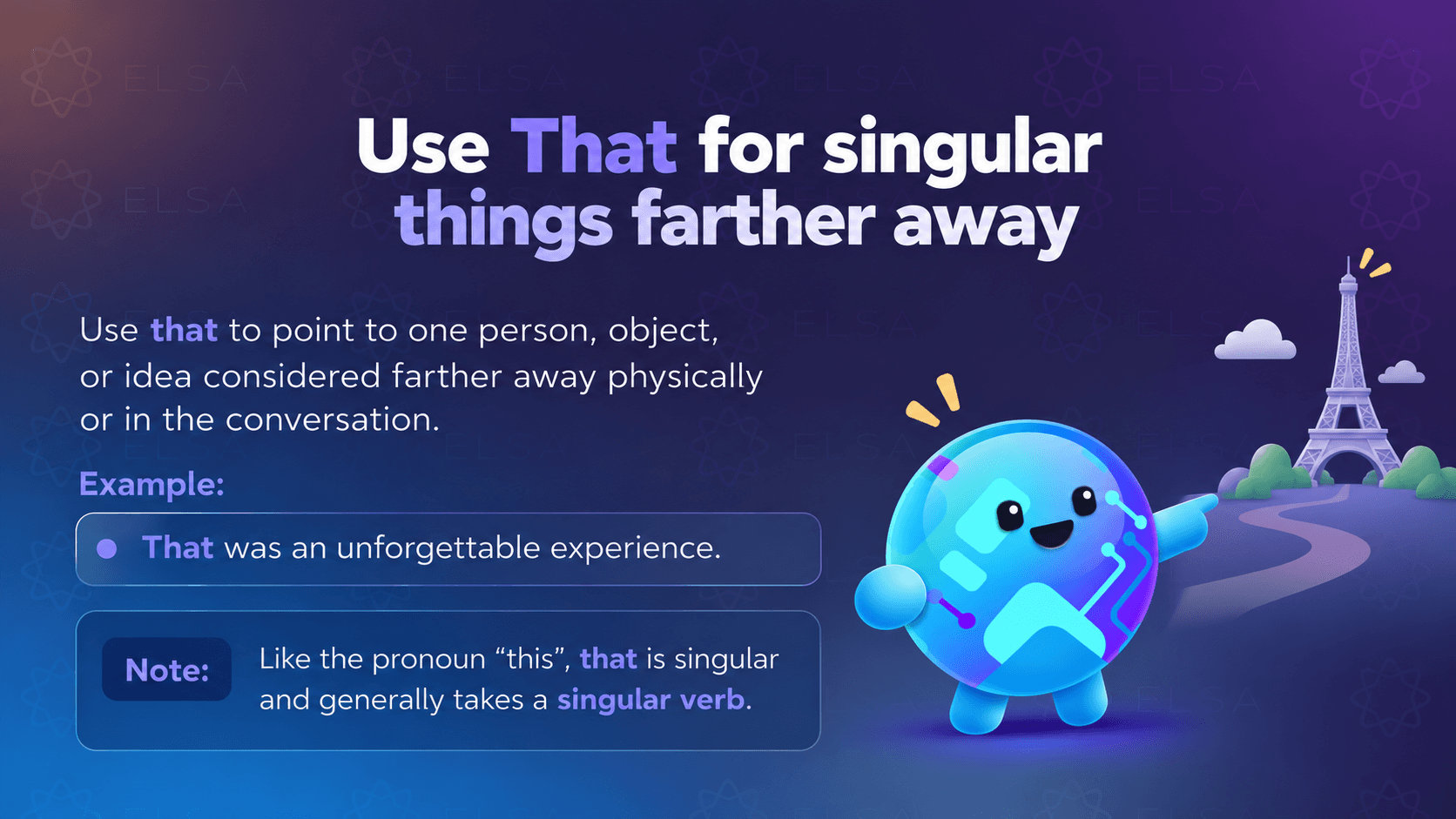
Use that to point to one person, object, or idea considered farther away physically or in the conversation.
Examples:
- That is my brother across the street.
- That looks like a great opportunity.
- That was an unforgettable experience.
In these examples, that identifies a person at a distance, refers to an opportunity being discussed, or points to an experience in the past.
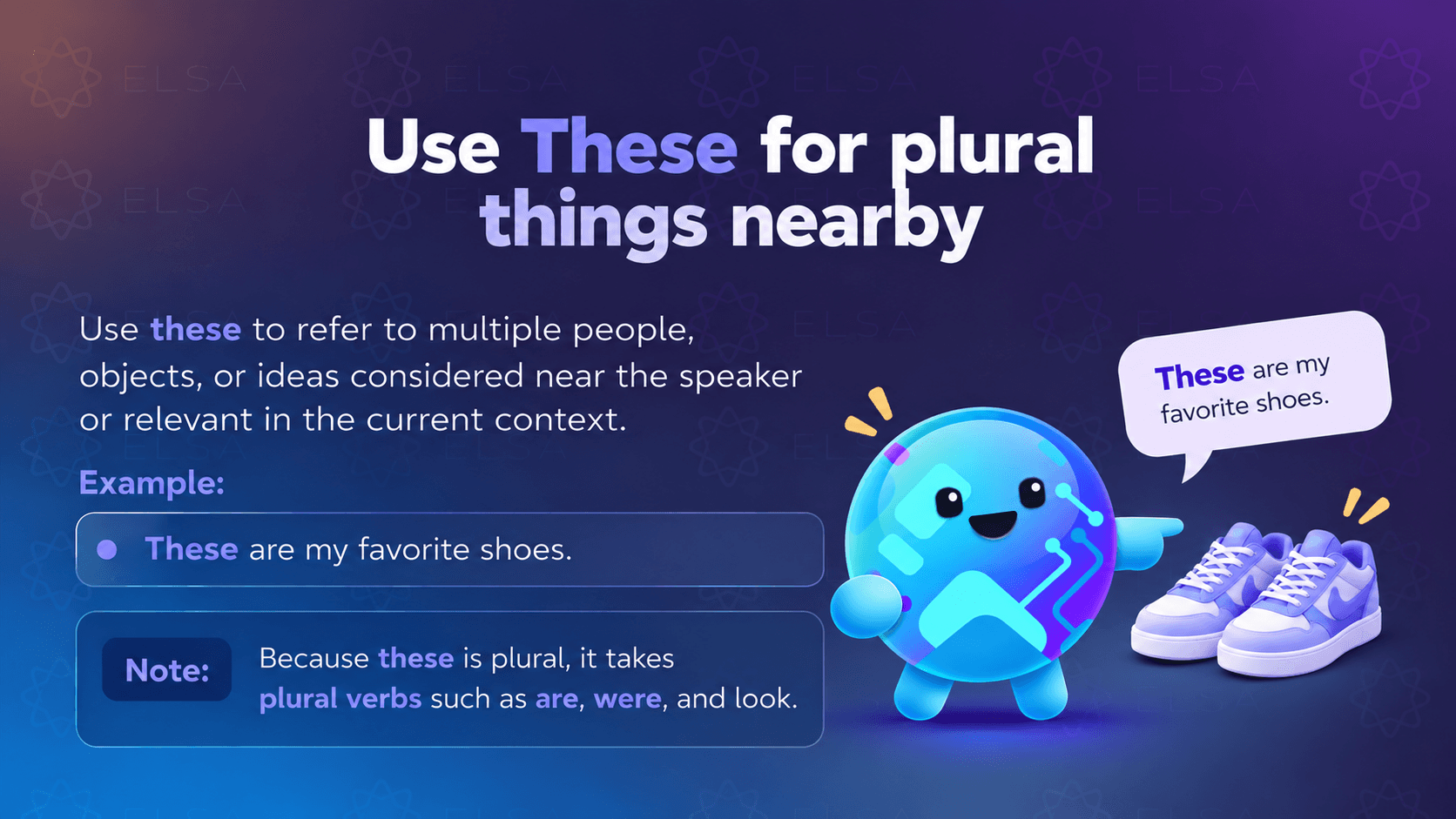
Use “These” for plural things nearby
Use these to refer to multiple people, objects, or ideas considered near the speaker or relevant in the current context.
Examples:
- These are my favorite shoes.
- These taste better than the others.
- These are the points I want to discuss.
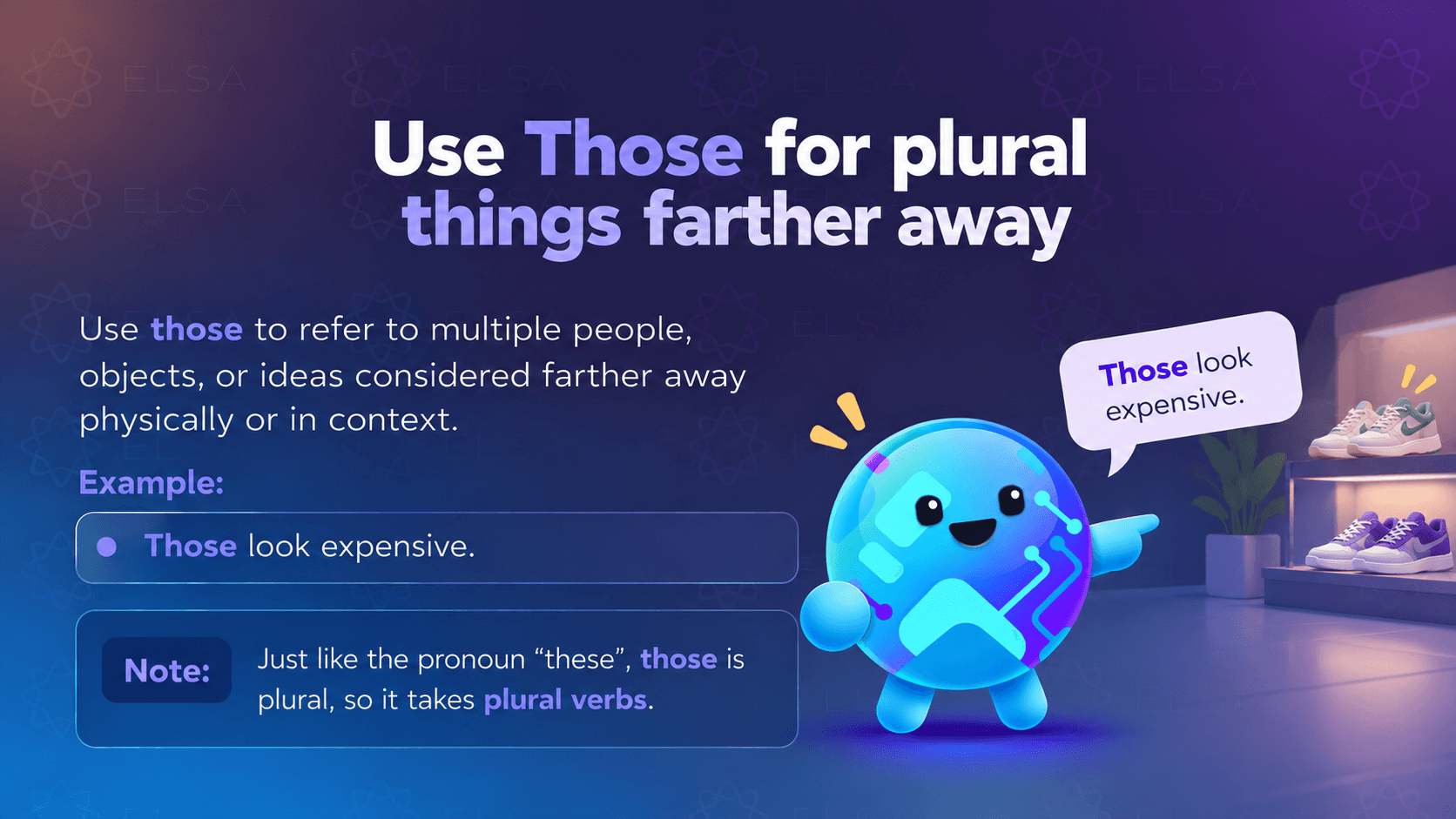
Use “Those” for plural things farther away
Use those to refer to multiple people, objects, or ideas considered farther away physically or in context.
Examples:
- Those are my friends near the entrance.
- Those look expensive.
- Those were the best years of my life.
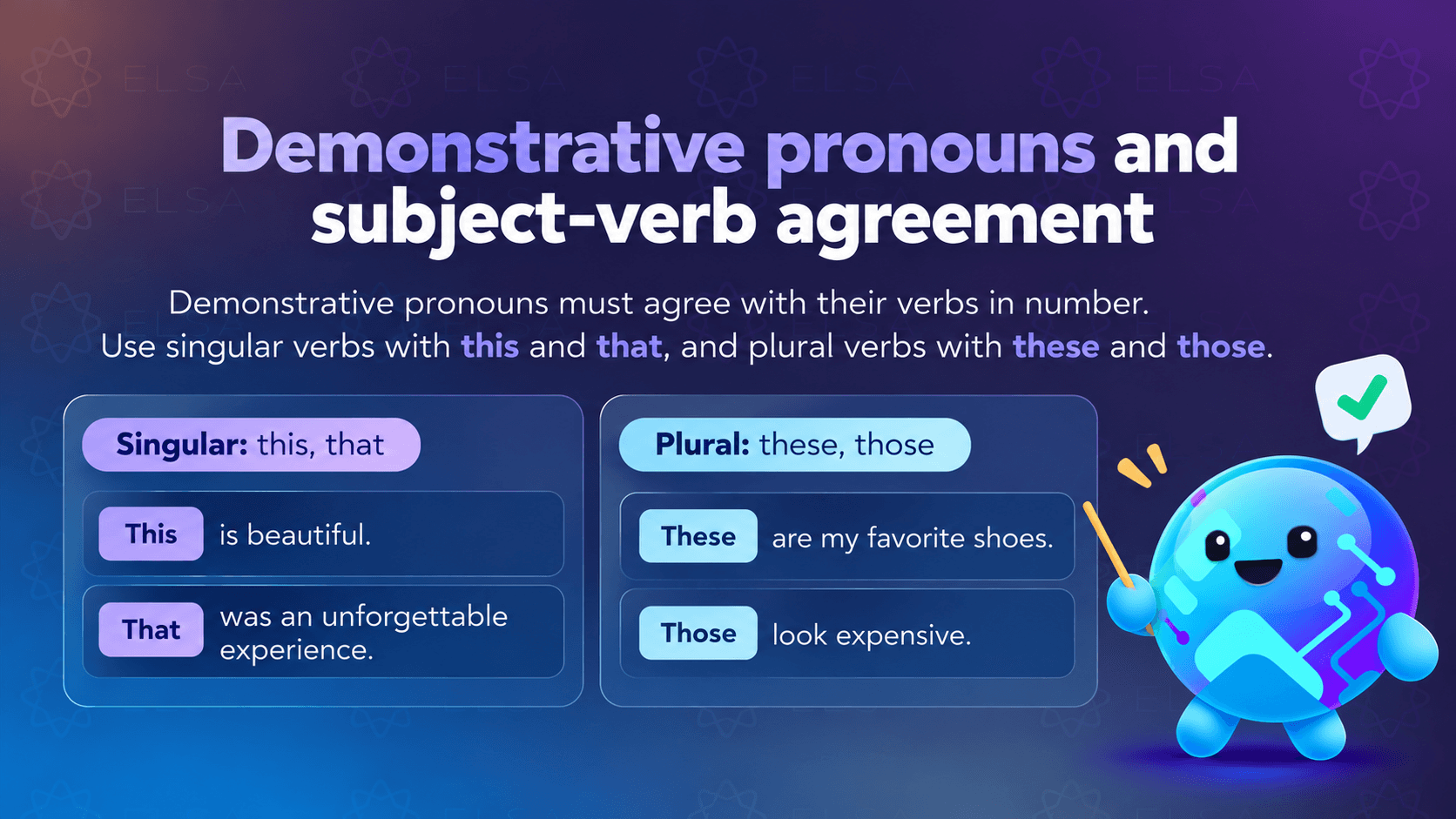
Demonstrative pronouns and subject-verb agreement
Demonstrative pronouns must agree with their verbs in number. Use singular verbs with this and that, and plural verbs with these and those.
| Demonstrative pronoun | Correct verb forms | Example |
|---|---|---|
| This | is, was, V+s/es | This was delicious. |
| That | is, was, V+s/es | That was delicious. |
| These | are, were, V | These were delicious. |
| Those | are, were, V | Those were delicious. |
Remember that the verb agrees with the demonstrative pronoun, not with a noun mentioned elsewhere in the sentence.
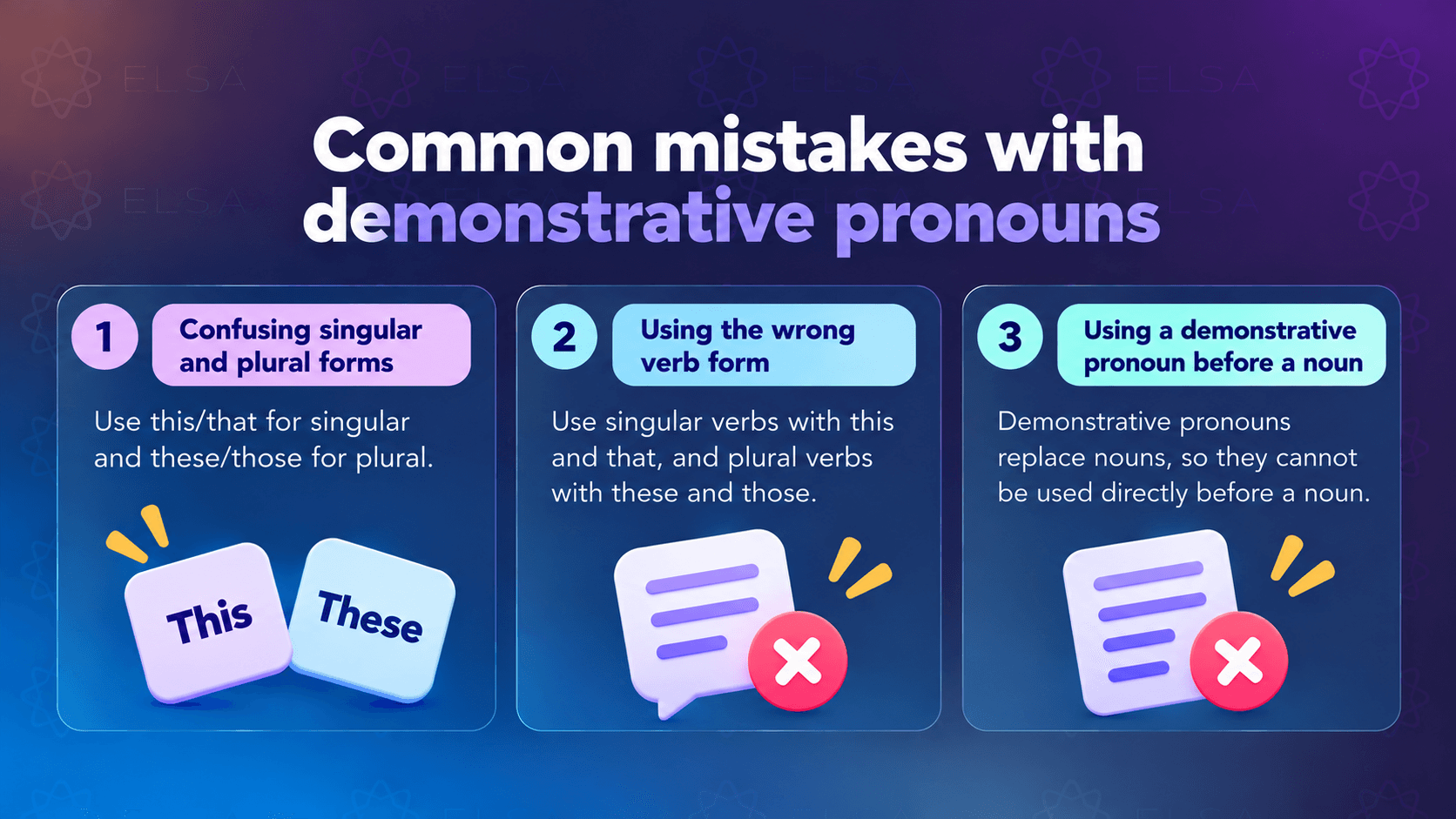
Common mistakes with demonstrative pronouns
Confusing singular and plural forms
A common mistake is using a plural demonstrative pronoun to refer to one item or a singular form to refer to multiple items.
- Incorrect: These is my book.
- Correct: This is my book.
⇒ Use "this" because book refers to one item. If you are referring to multiple books, say "These are my books."
Using the wrong verb form
Demonstrative pronouns must agree with the verb that follows them.
- Incorrect: Those is mine.
- Correct: Those are mine.
Remember: Those refers to multiple things, so the plural verb "are" is required.
Using a demonstrative pronoun before a noun
A demonstrative pronoun stands alone, while a demonstrative determiner appears before a noun.
Compare:
- This is my phone. → This replaces a noun phrase and functions as the subject.
- This phone is mine. → This identifies the noun phone.
⇒ Both sentences are grammatically correct, but this serves a different grammatical function in each one. Check whether the demonstrative is followed directly by a noun to help identify its role.
Demonstrative pronouns exercises
Practice choosing the correct demonstrative pronoun, identifying number and distance, and correcting common mistakes. These activities can also be used as a demonstrative pronouns worksheet for classroom review or independent study.
Exercise 1: Choose the correct demonstrative pronoun
Choose the correct option to complete each sentence.
- ___ is my favorite book. (This / These)
- ___ are the shoes I bought yesterday. (That / Those)
- Look at ___ flowers near me! (this / these)
- ___ building across the street is a library. (That / Those)
- ___ are the keys you were looking for. (This / These)
- Who is ___ person over there? (that / those)
- ___ cookies taste delicious. (These / This)
- ___ was a great idea. (That / Those)
- Can you pass me ___ notebook at the far end of the table? (that / those)
- ___ is exactly what I meant. (This / These)
Exercise 2: Fill in the blanks
Complete each sentence with this, that, these, or those.
- ___ is my seat here beside me.
- ___ mountains in the distance look amazing.
- ___ are the notes I made for today's class.
- What is ___ over there by the door?
- ___ apple in my hand is crisp and sweet.
- ___ were the best days of my childhood.
- Could you look at ___ pictures on my phone?
- I don't recognize ___ man standing across the street.
- ___ is the answer I was trying to explain.
- ___ shoes here are more comfortable than the ones over there
Exercise 3: Find and correct the mistakes
Each sentence contains a demonstrative error. Rewrite it correctly.
- These is my notebook.
- Those is my cousins over there.
- This are the documents you requested.
- That are a beautiful painting.
- These book belongs to my sister.
- Those is the restaurants we visited last summer.
- This are the best seats in the theater.
- That shoes near the window are on sale.
- These is what I wanted to show you.
- Those idea sounds interesting.
For printable practice, download the demonstrative pronouns worksheets PDF. It includes six exercises, and an answer key with explanations.
FAQs about demonstrative pronouns
What are the four demonstrative pronouns?
The four demonstrative pronouns are this, that, these, and those. This and that are singular, while these and those are plural.
What is the difference between this and that?
This usually refers to one person or thing considered near the speaker, while that usually refers to one considered farther away.
What is the difference between these and those?
These refers to multiple people or things considered near the speaker, while those refers to multiple people or things considered farther away.
Can demonstrative pronouns refer to ideas?
Yes. Demonstrative pronouns can refer to abstract ideas, events, situations, and statements. For example, That was an excellent suggestion uses that to refer to an idea rather than a physical object.
In summary, demonstrative pronouns in English can help learners identify specific people, things, and ideas based on their quantity, distance, and context. To improve your English skills, explore the Grammar category on ELSA Speak blog for more lessons, vocabulary guides, and English communication tips.