

Object pronouns: What they are and how to use them correctly
elsaspeakadmin
August 21, 2026
English clauses
Object pronouns are a basic but essential part of English grammar. Whether you're a beginner, a student, or a professional using English at work, knowing when to use these pronouns can help you communicate more accurately. In this guide, you'll learn what object pronouns are, where to use them, and how to avoid the most common mistakes.
What are object pronouns?
Object pronouns are pronouns that refer to a person, animal, or thing that receives the action of a verb or follows a preposition. They replace nouns to avoid repetition and make sentences more natural.
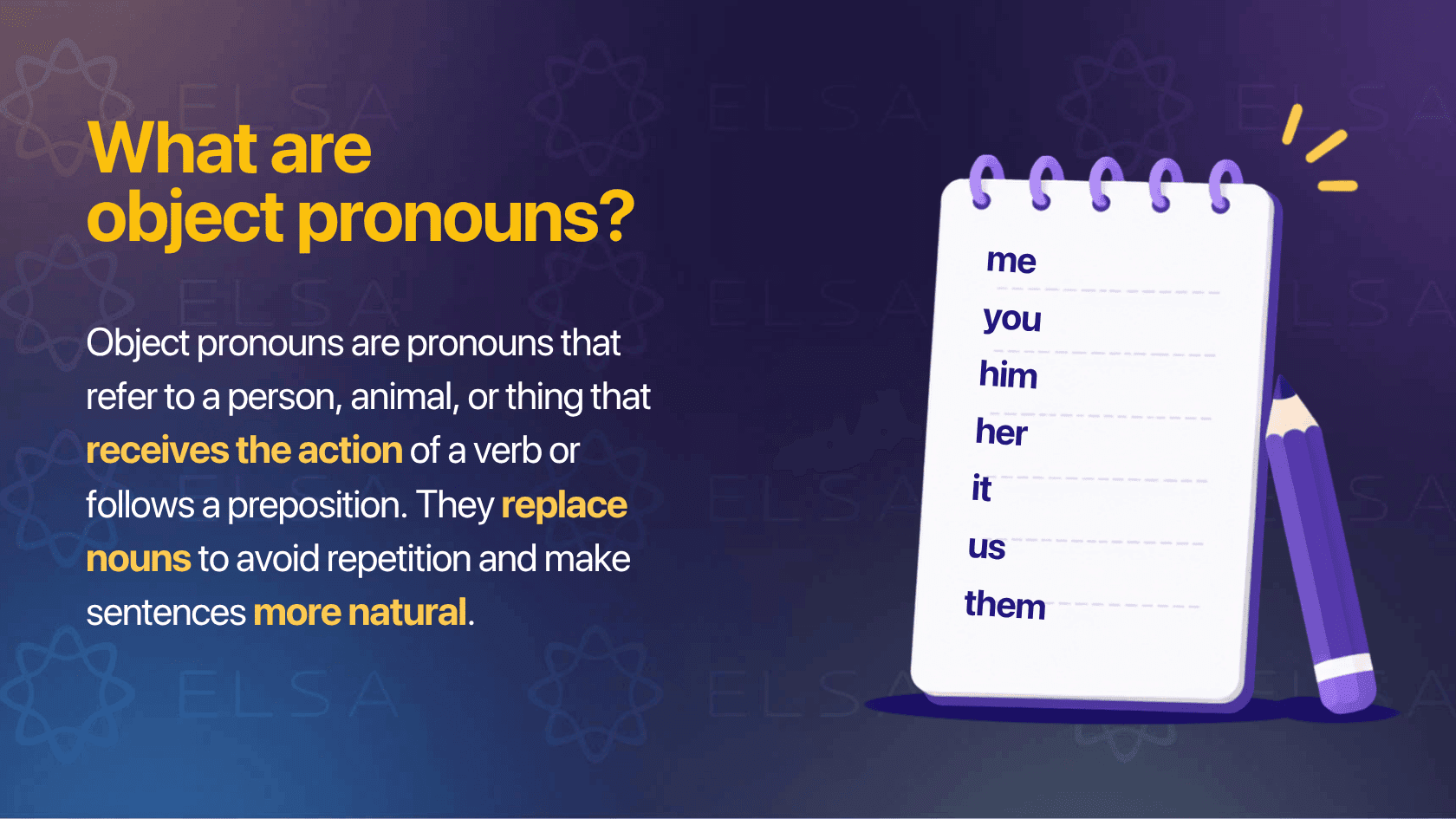
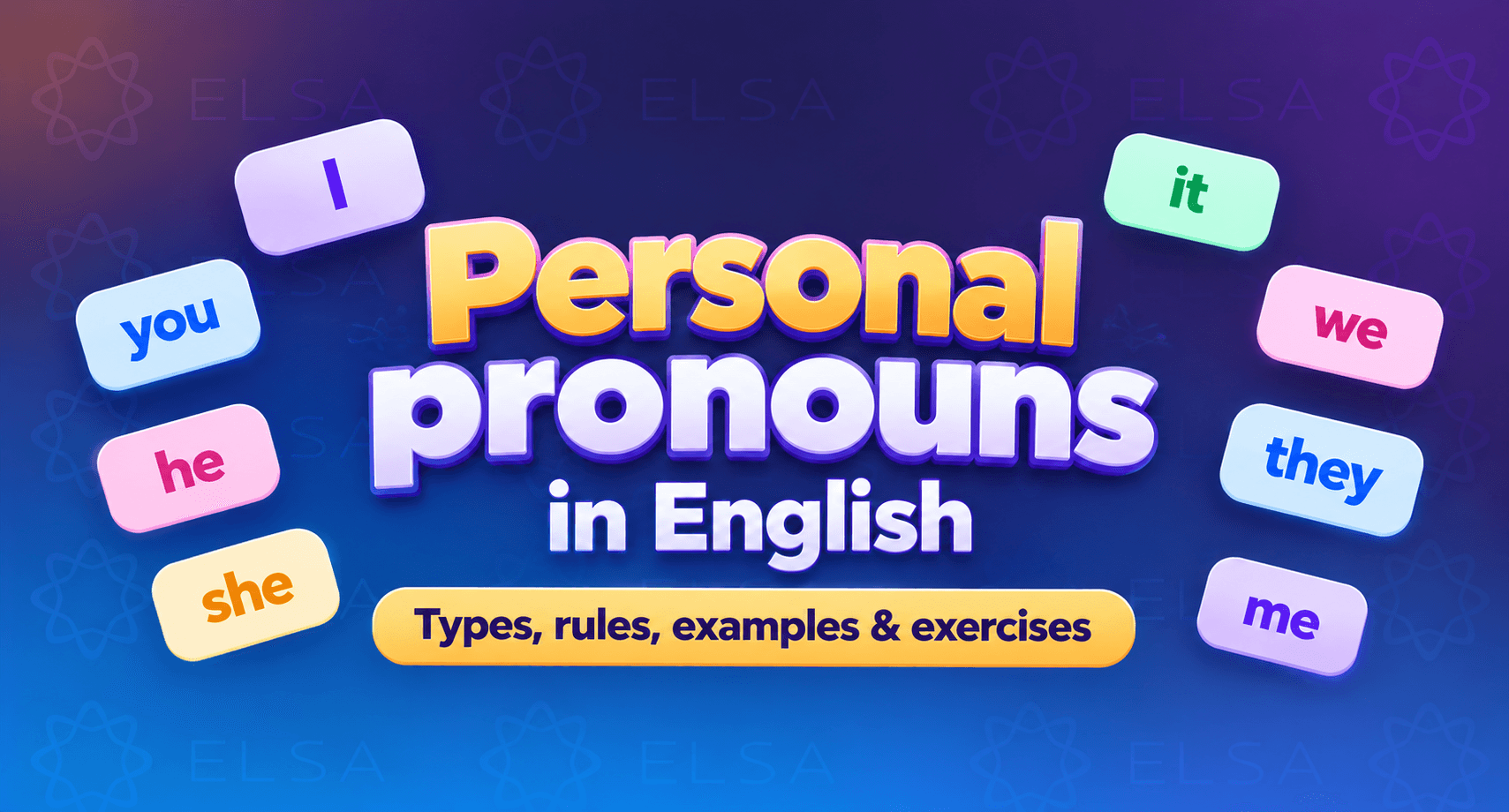
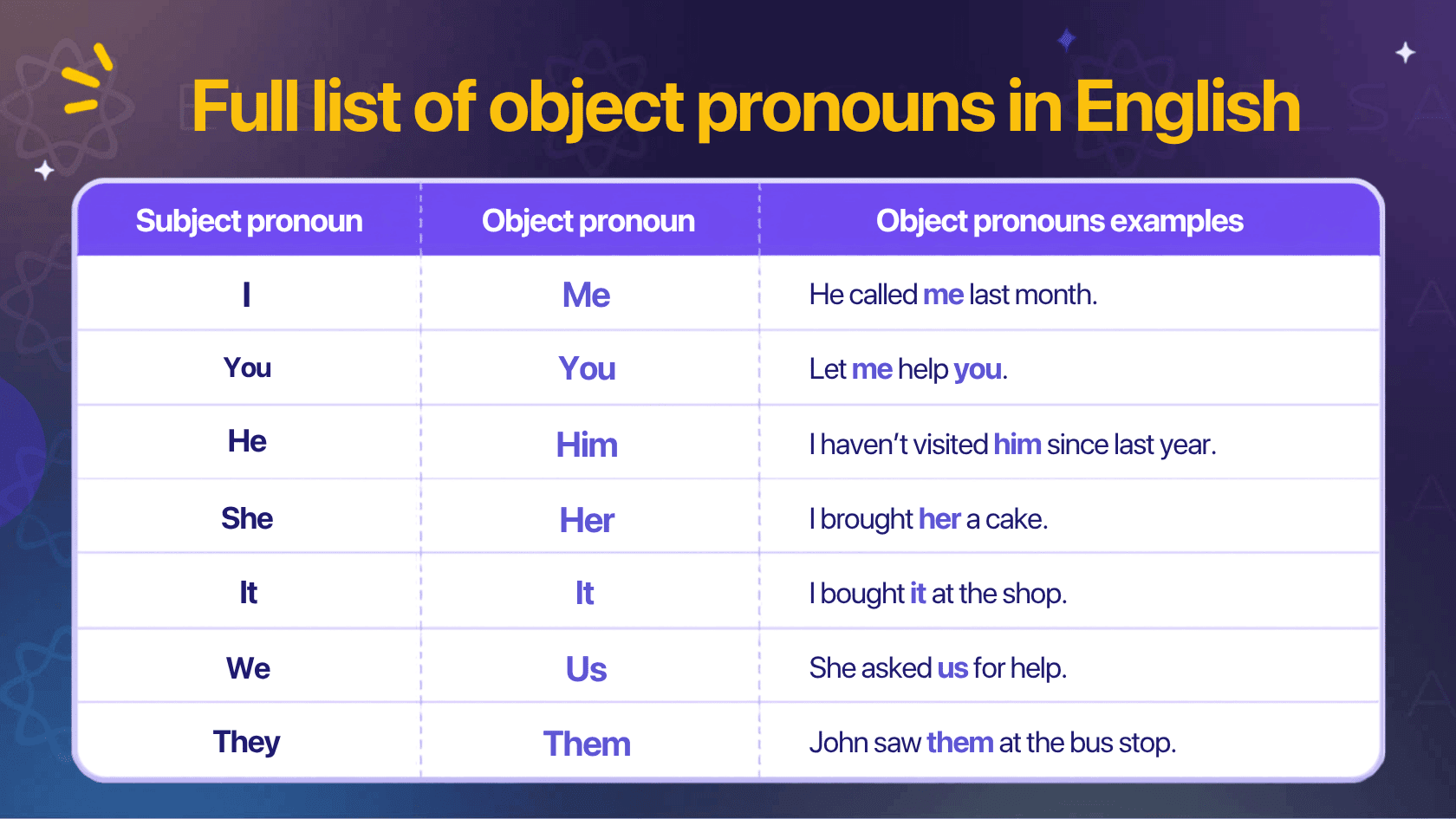
Full list of object pronouns in English
| Subject pronoun | Object pronoun | Object pronouns example |
| I | Me | He called me last month. |
| You | You | Let me help you. |
| He | Him | I haven’t visited him since last year. |
| She | Her | I brought her a cake. |
| It | It | I bought it at the shop. |
| We | Us | She asked us for help. |
| They | Them | John saw them at the bus stop. |
4 ways to use object pronouns
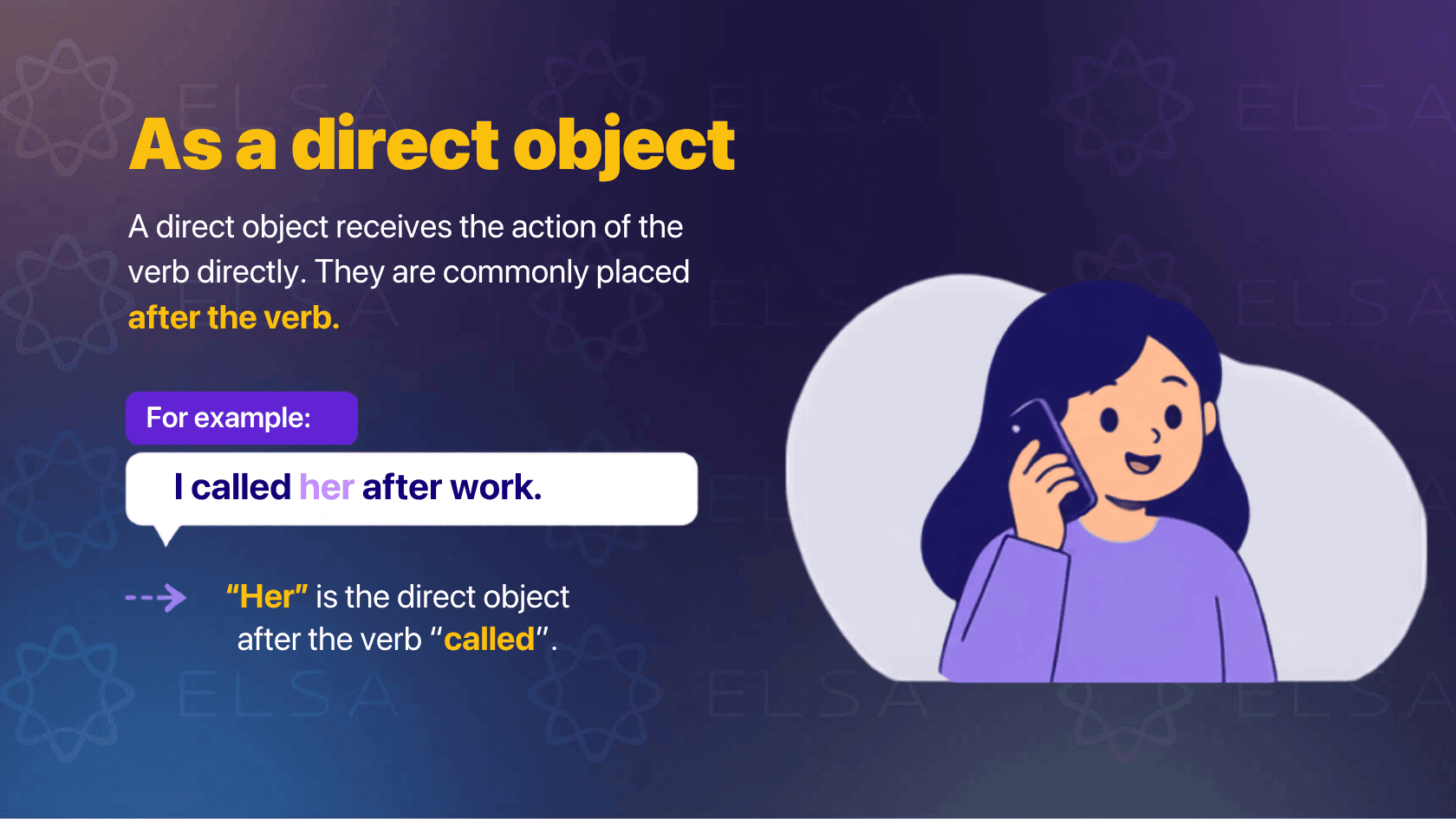
As a direct object
A direct object receives the action of the verb directly. They are commonly placed after the verb.
For example: I called her after work.
→ “Her” is the direct object after the verb “called”.
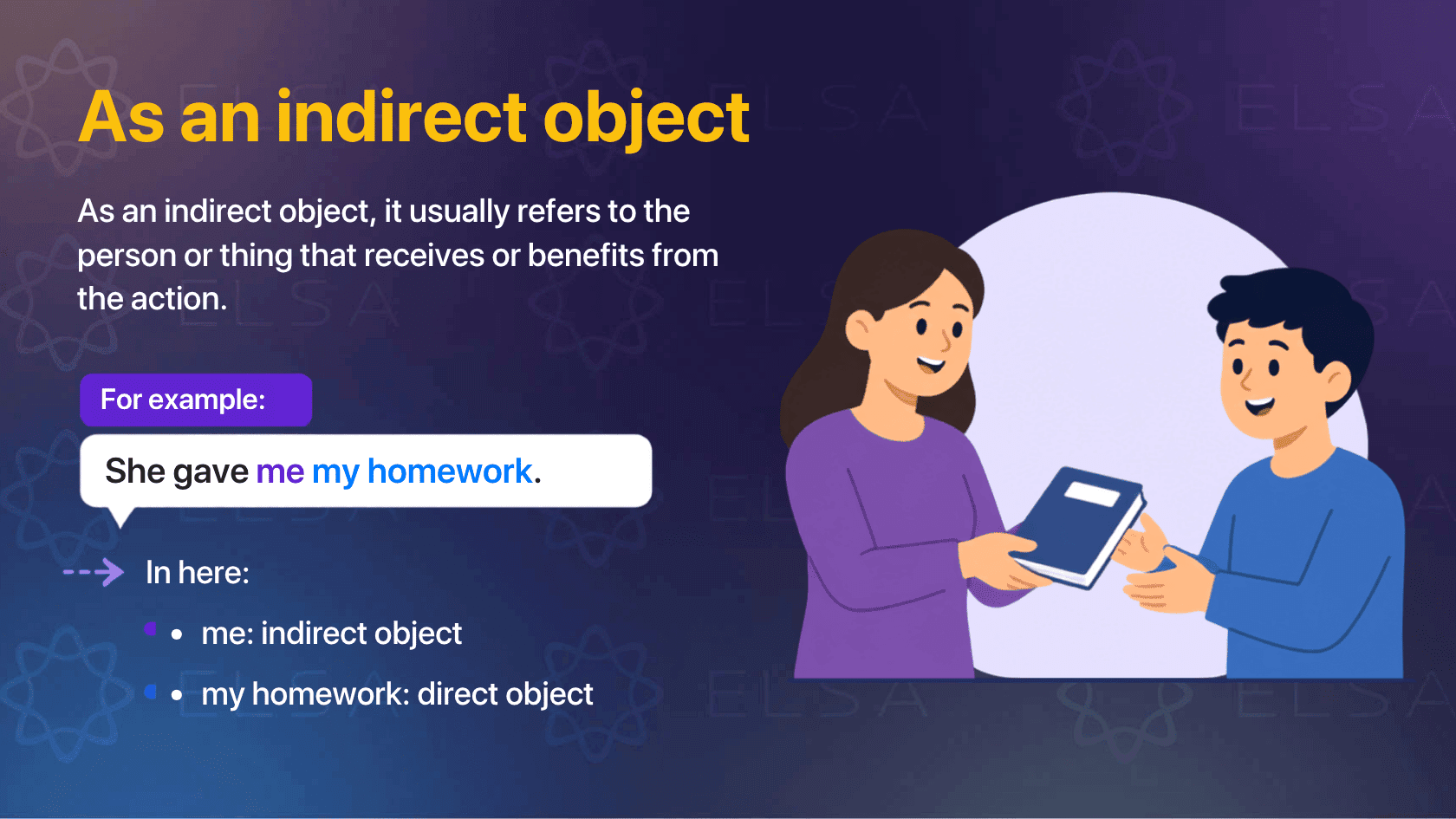
As an indirect object
As an indirect object, it usually refers to the person or thing that receives or benefits from the action.
For example: She gave me my homework.
→ In here:
- me: indirect object
- my homework: direct object
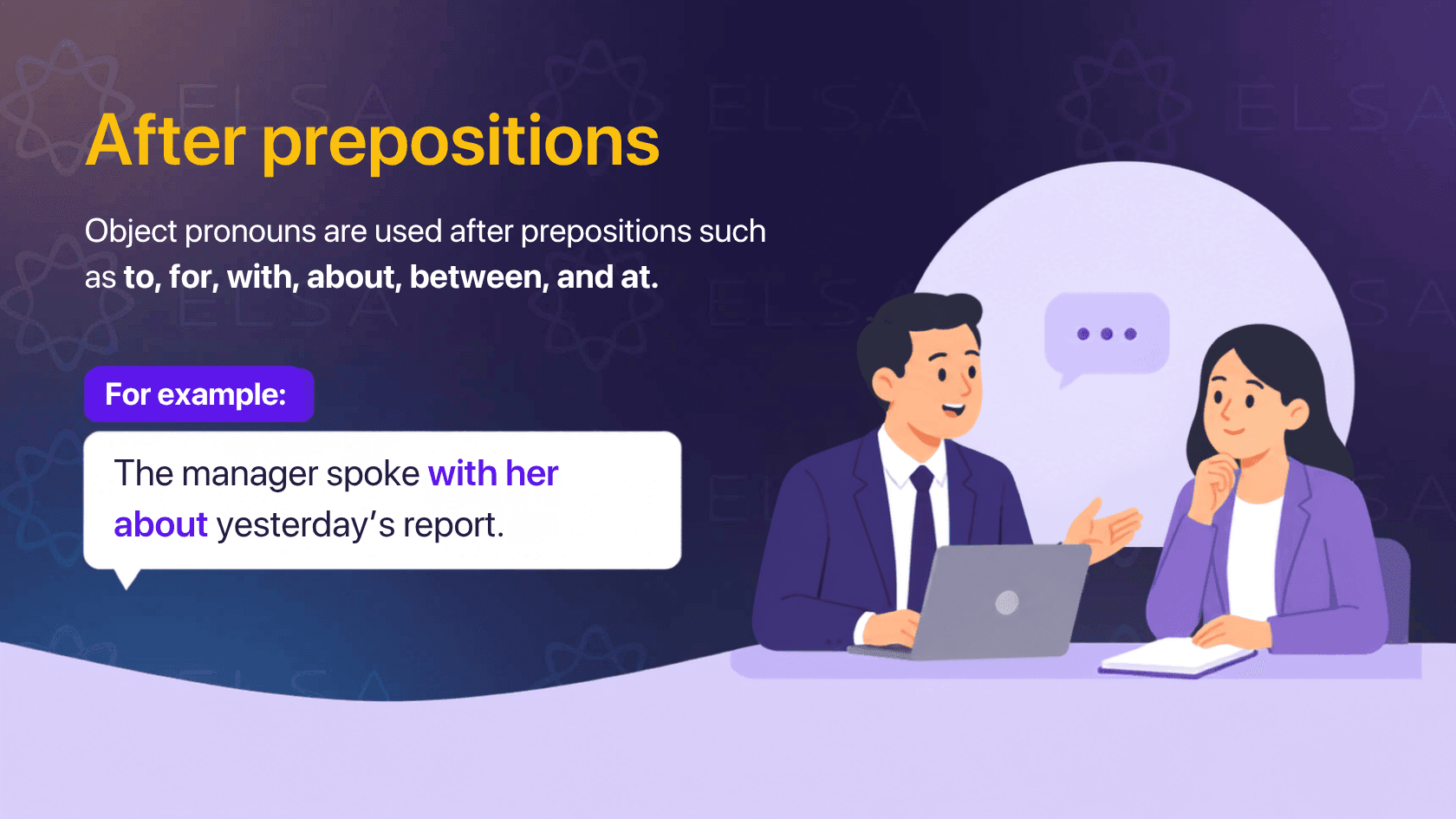
After prepositions
Object pronouns are used after prepositions such as to, for, with, about, between, and at.
For example: The manager spoke with her about yesterday’s report.
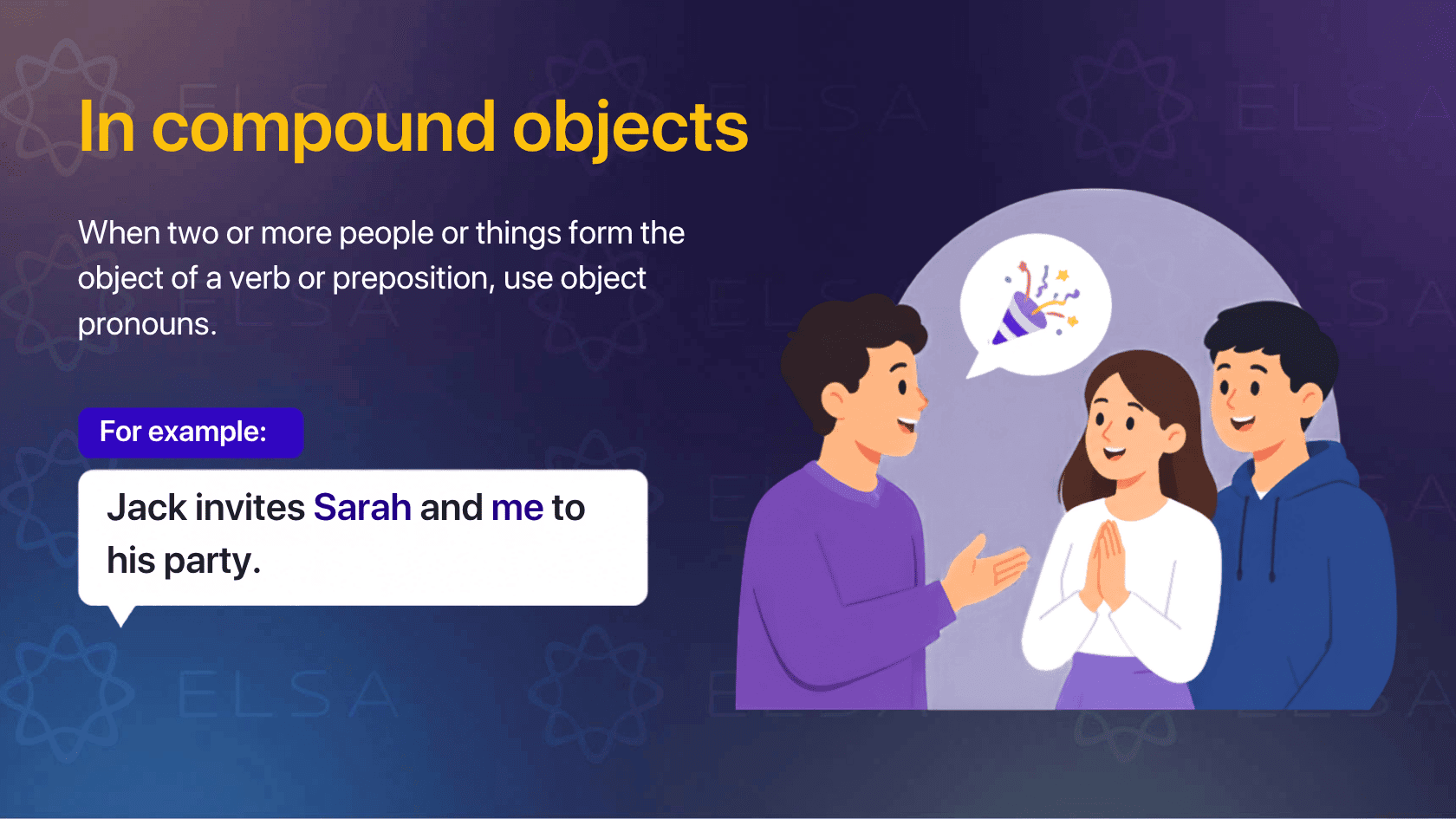
In compound objects
When two or more people or things form the object of a verb or preposition, use object pronouns.
For example: Jack invites Sarah and me to his party.
Object pronouns vs. subject pronouns
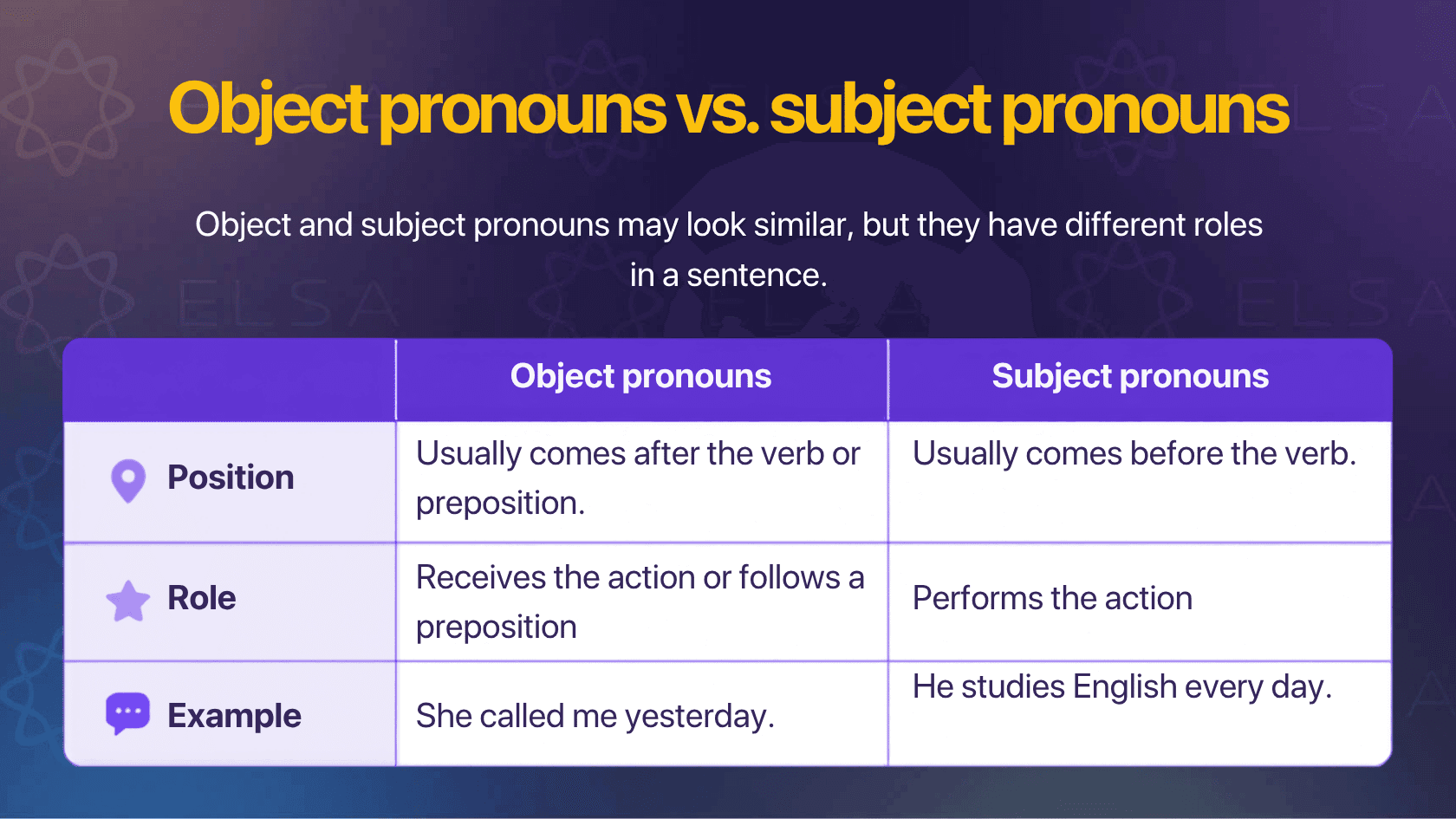
Object and subject pronouns may look similar, but they have different roles in a sentence. Understanding where each type belongs can help you avoid common grammar mistakes and build more accurate English sentences.
| Subject pronoun | Object pronoun | |
| Position | Usually comes before the verb. | Usually comes after the verb or preposition. |
| Role | Performs the action | Receives the action or follows a preposition |
| Example | He studies English every day. | She called me yesterday. |
Direct object vs. indirect object pronouns
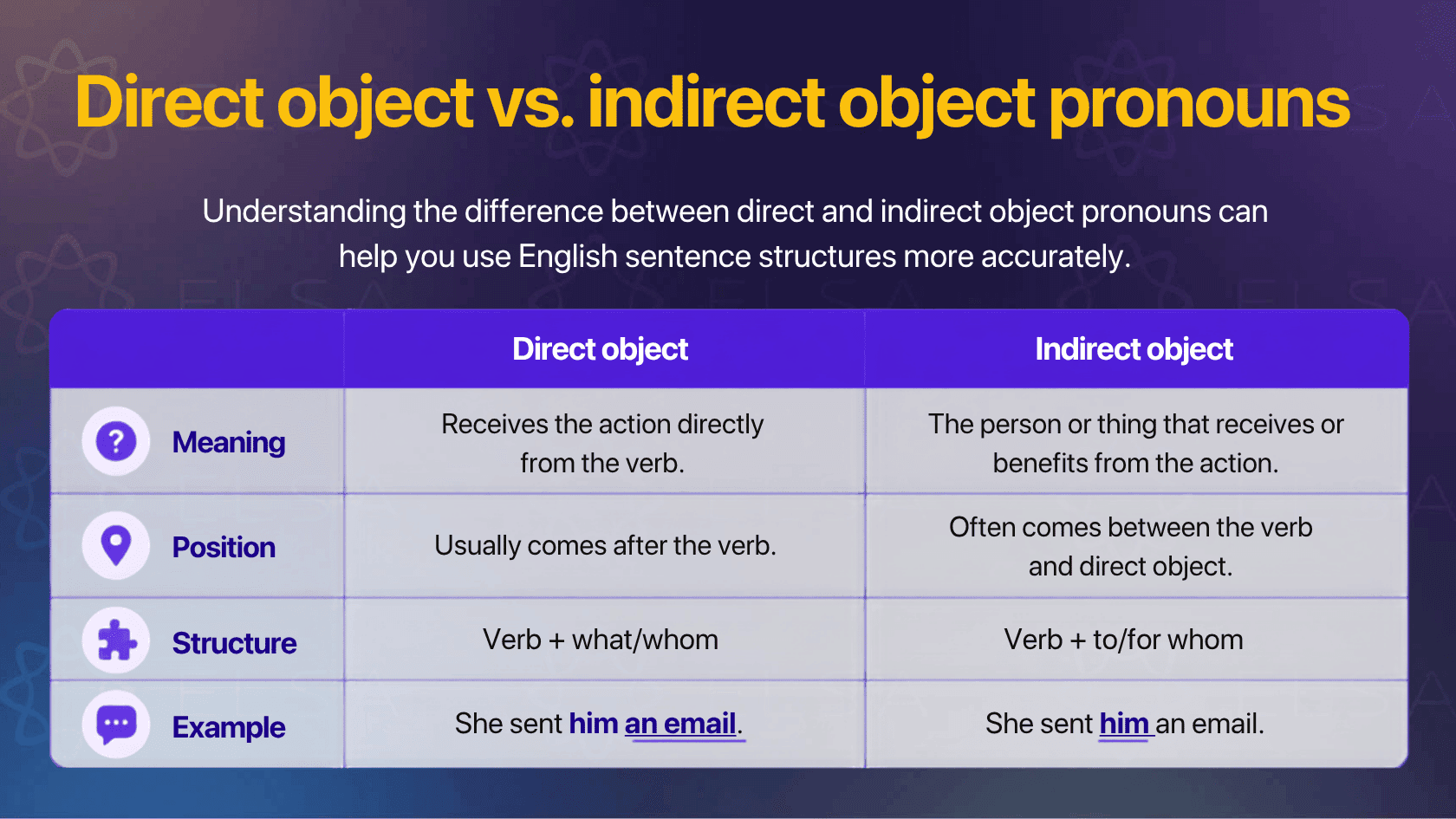
Direct object pronouns English and indirect objects both receive something from the action, but they play different roles in a sentence. Understanding the difference between direct and indirect object pronouns can help you use English sentence structures more accurately.
| Direct object | Indirect object | |
| Meaning | Receives the action directly from the verb | The person or thing that receives or benefits from the action. |
| Position | Usually comes after the verb. | Often comes between the verb and direct object. |
| Structure | Verb + what/whom | Verb + to/for whom |
| Example | She sent him an email. | She sent him an email. |
Common mistakes with object pronouns
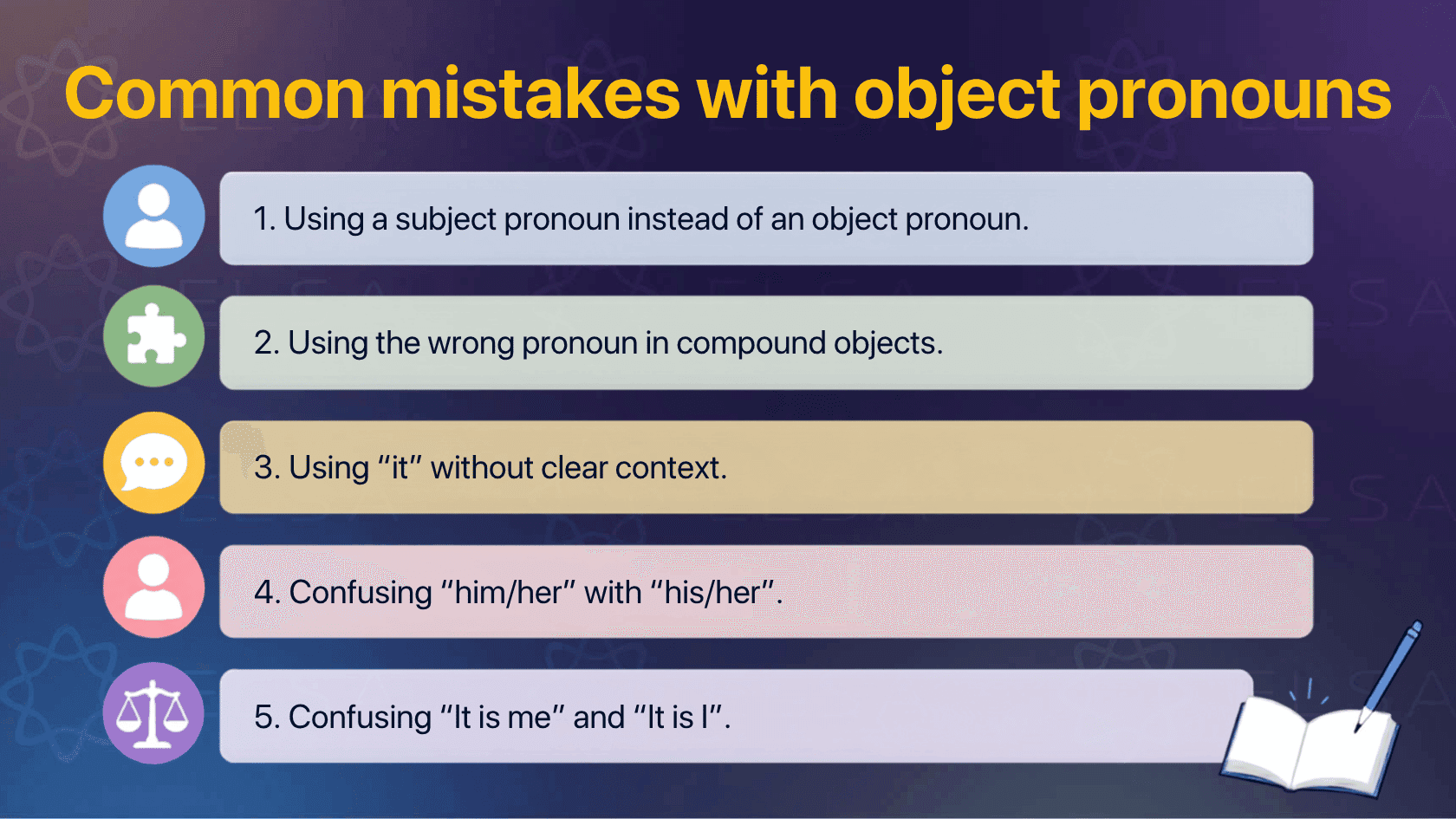
- Using a subject pronoun instead of an object pronoun.
- Using the wrong pronoun in compound objects.
- Using “it” without clear context: Avoid using the pronoun it when the reader or listener cannot tell what it refers to. Instead, repeat the noun when necessary for clarity.
- Confusing “him/her” with “his/her”: Him and her can function as object pronouns, while his and her can show possession.
- Confusing “It is me” and “It is I”: “It is me” is the standard and natural form in everyday modern English. “It is I” is grammatically traditional but sounds formal or old-fashioned in most modern contexts.
>>> Read more: What are indefinite pronouns? How to use them correctly?
Object pronouns are simple once you understand their role in a sentence. With regular practice, you can use them more naturally and confidently in both spoken and written English. For more practical English grammar tips and lessons, visit the Grammar category on the ELSA Speak blog and keep improving your English skills.